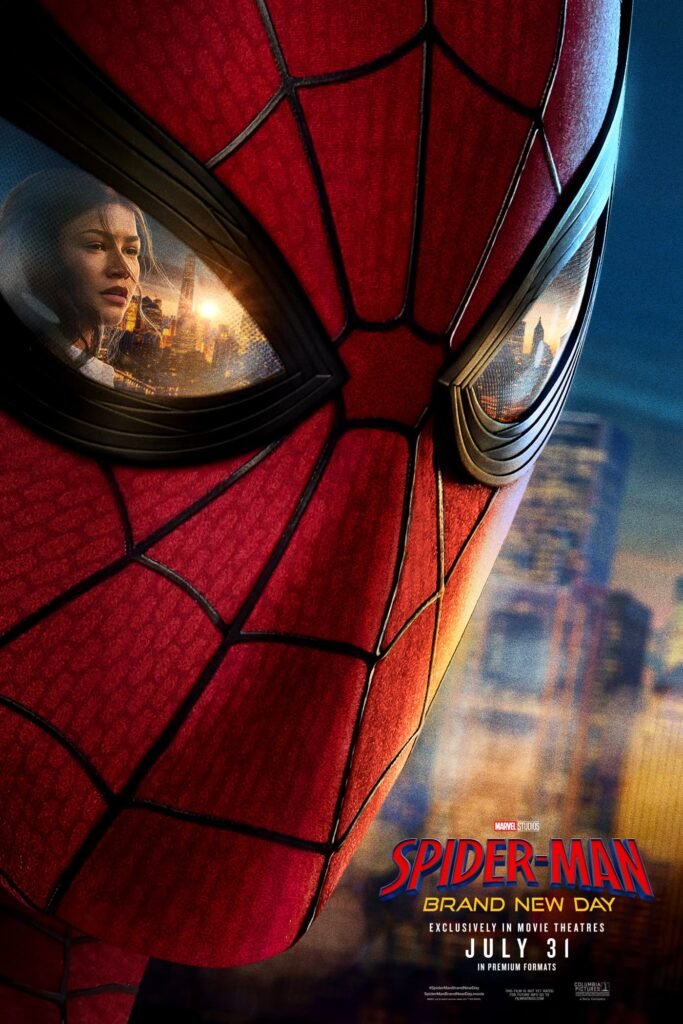
It’s a massive year to be a Spider-Man fan. On one side, Tom Holland swings back into the MCU on July 31, 2026 with Spider-Man: Brand New Day — the most stripped-back, character-driven Spider-Man film since the original Sam Raimi trilogy. On the other, Sony Animation has confirmed Spider-Man: Beyond the Spider-Verse is locked for June 18, 2027, bringing Miles Morales’ trilogy to its conclusion. Both films have the internet absolutely buzzing with theories, and we’ve dug through the trailers, CinemaCon footage, and the comic history to break down the biggest ones.
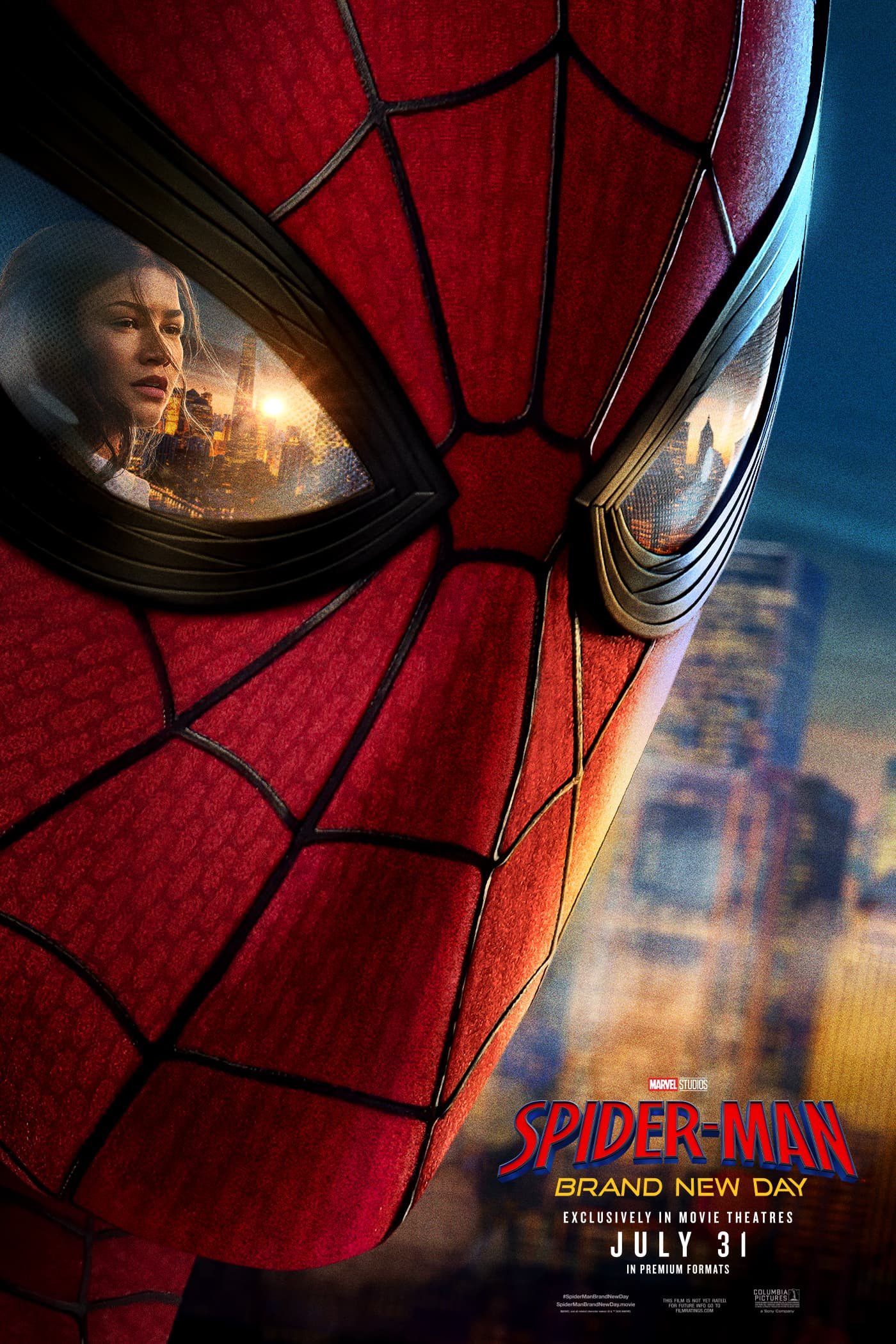
Spider-Man: Brand New Day — What We Know
Set four years after the events of No Way Home, Peter Parker is living completely anonymously. No one remembers he exists — not Ned, not MJ, not Happy. He’s back to being a broke nobody who happens to secretly protect New York every night. The first trailer showed him lurking outside a college party, watching Ned laugh with friends who will never know Peter was the best man at that wedding that never happened.
The film is directed by Destin Daniel Cretton (Shang-Chi) and stars Tom Holland, Zendaya (as an MJ who no longer knows Peter), Jacob Batalon, Jon Bernthal as the Punisher, Michael Mando reprising Scorpion, Sadie Sink in an undisclosed role, and Mark Ruffalo’s Bruce Banner making an appearance. Four villains — Scorpion, Tarantula, Boomerang, and Tombstone — are confirmed, all of them making their live-action debut in a meaningful way for the first time.
But the biggest talking point from the trailer isn’t the villains. It’s Peter’s powers mutating. He’s growing organic webbing — shooting it involuntarily in his sleep, waking inside a cocoon of silk he doesn’t remember spinning. The MCU is finally going where the comics went two decades ago, and fans are losing their minds about it.
Theory #1: Peter Is Transforming Into Man-Spider
The most widely discussed theory right now is that Brand New Day is adapting “The Other” — a 2005 Marvel Comics arc in which Peter Parker literally dies and is reborn as something more spider than human. In the comics, this transformation involves Peter developing stingers in his wrists, enhanced senses beyond anything he’d had before, and a terrifying confrontation with a spider-deity called The Great Weaver.
The trailer shows Peter’s mutation happening involuntarily — the organic webbing, the cocoon, what appears to be extra eyes forming. GamesRadar noted the visual language maps almost perfectly onto the “Neogenic Nightmare” arc from Spider-Man: The Animated Series, where Peter’s DNA destabilises and he begins transforming into a Man-Spider hybrid. The MCU has never done this. If Cretton is going there, this is the most ambitious body-horror Spider-Man story ever put to screen.
Why it could be true: The film’s subtitle “Brand New Day” comes directly from a 2008 Marvel Comics run that reset Peter’s life after a deal with Mephisto erased his marriage and identity — which maps onto the Strange spell perfectly. “The Other” ran just before that era. Cretton has openly talked about wanting to explore what it means to be Peter Parker when absolutely nobody is watching.
Theory #2: The Punisher Is Not the Enemy — He’s a Dark Mirror
Jon Bernthal’s Frank Castle returning is one of the most electrifying casting choices of the year. But the trailer doesn’t show Punisher as a straightforward villain — it shows him as a complicating force. Peter is anonymous, alone, and operating without oversight. Frank Castle is also anonymous, alone, and operating without oversight. The difference is that Castle kills.
The prevailing theory is that the film uses Punisher as a philosophical antagonist rather than a physical one — a man who looked at the same broken world Peter sees every day and made a different choice. Given that Peter is now more powerful than ever and increasingly isolated from any moral anchor (no Tony, no Strange, no MJ who remembers him), the question of why he still holds the line against lethal force has never been more pointed.
Some fans speculate Scorpion orchestrates events specifically to push Spider-Man toward crossing that line — and Punisher shows up as the proof of what happens when a masked vigilante stops caring about the rule.
Theory #3: Sadie Sink Is Playing Anya Corazon (Spider-Girl)
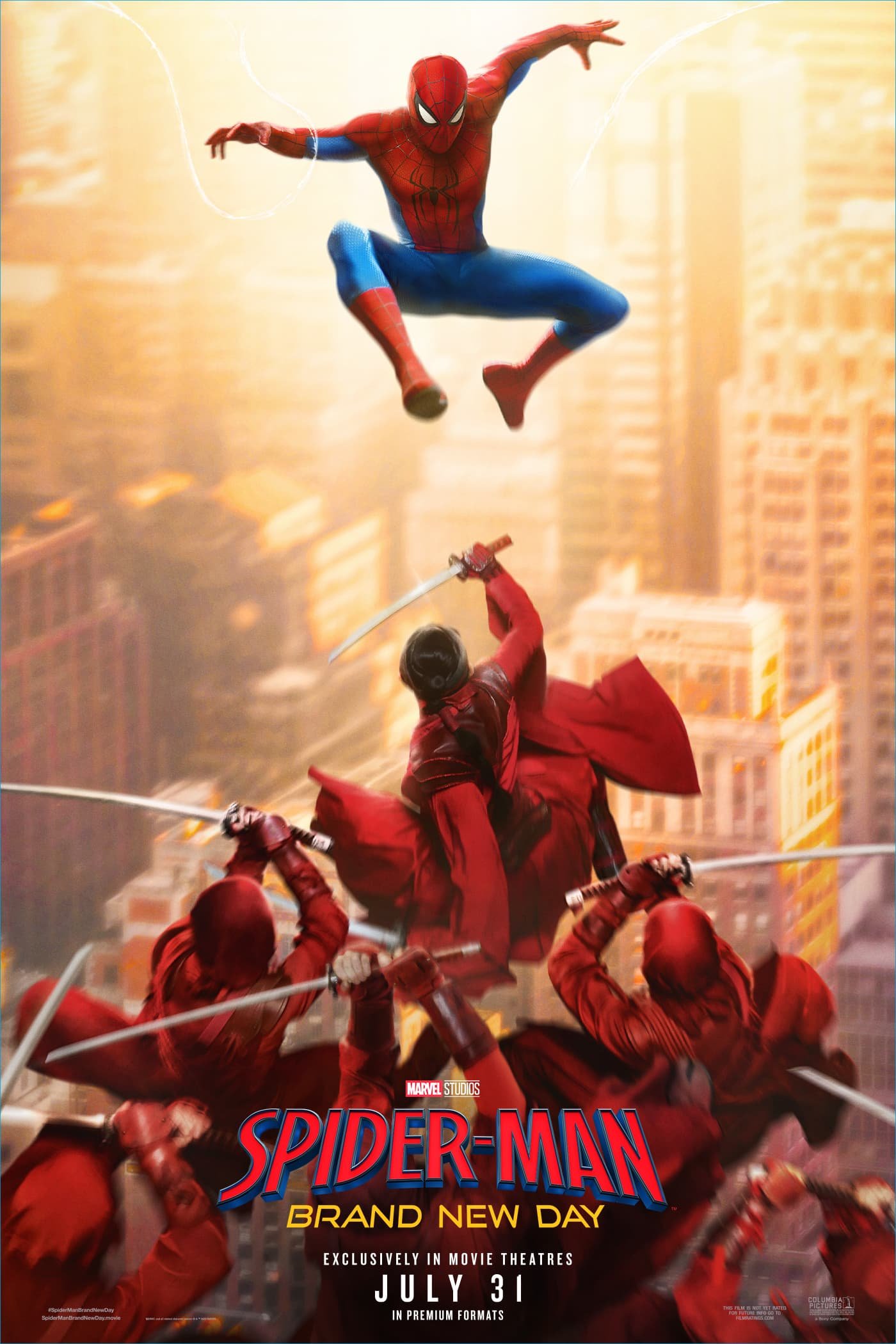
Sadie Sink’s role is being kept under wraps, which naturally has set every corner of the Spider-Man internet on fire. The most popular theory by a significant margin is that she’s playing Anya Corazon, also known as Spider-Girl — a teenager who develops spider-powers through a mystical connection rather than a radioactive bite, and who eventually joins a legacy of spider-heroes.
The reasoning: the MCU has been systematically building its next generation of heroes (Kate Bishop, America Chavez, Ms. Marvel), and Spider-Girl is a natural addition. Sink’s age fits. Anya Corazon’s comic origin involves a secret society called the Spider Society — which, given the multiverse events of No Way Home and the broader Spider-Verse films, would land with enormous resonance for fans of both branches of Spider-Man cinema.
The minority theory? She’s playing Felicia Hardy — Black Cat — with an origin story reframed for a younger Peter. Either way, Sink’s casting is clearly not a throwaway role.
Theory #4: Brand New Day Sets Up Avengers: Secret Wars
Screen Rant noted that Brand New Day‘s July 2026 release date places it as an immediate prequel to Avengers: Secret Wars. In the comics, Spider-Man plays a pivotal role in Secret Wars — he’s one of the few heroes who understands what’s happening during the incursion events, and his relationship to the multiverse (post-No Way Home, post-exposure to Spider-Verse reality) positions him as uniquely suited to understand the threat.
The theory is that Peter’s mutation is not random — it’s the multiverse itself responding to his anomalous status. When Strange’s spell fractured reality in No Way Home, something came back with the villains. Something that’s been slowly changing Peter’s biology ever since. By the time Secret Wars arrives, Peter won’t just be a guy in a suit. He’ll be something the multiverse recognises.
Keep Reading: What the End of Daredevil: Born Again Season 2 Really Means for Spider-Man 4 · Masters of the Universe (2026) Review: Is He-Man Worth Watching? · Lanterns Finale Explained: Who Killed Hal Jordan? (Season 2 Status)
Spider-Man: Beyond the Spider-Verse — The Theories
Across the Spider-Verse ended on one of the most brutal cliffhangers in animated film history. Miles Morales, trapped in Earth-42 — a universe where a spider-bite never created a Spider-Man — is face to face with an alternate version of himself who became the Prowler instead. His family doesn’t know where he is. Gwen is assembling a team. Miguel O’Hara is furious. The sequel has an impossible amount to resolve.
Theory #5: Miles Becomes the Villain — Temporarily
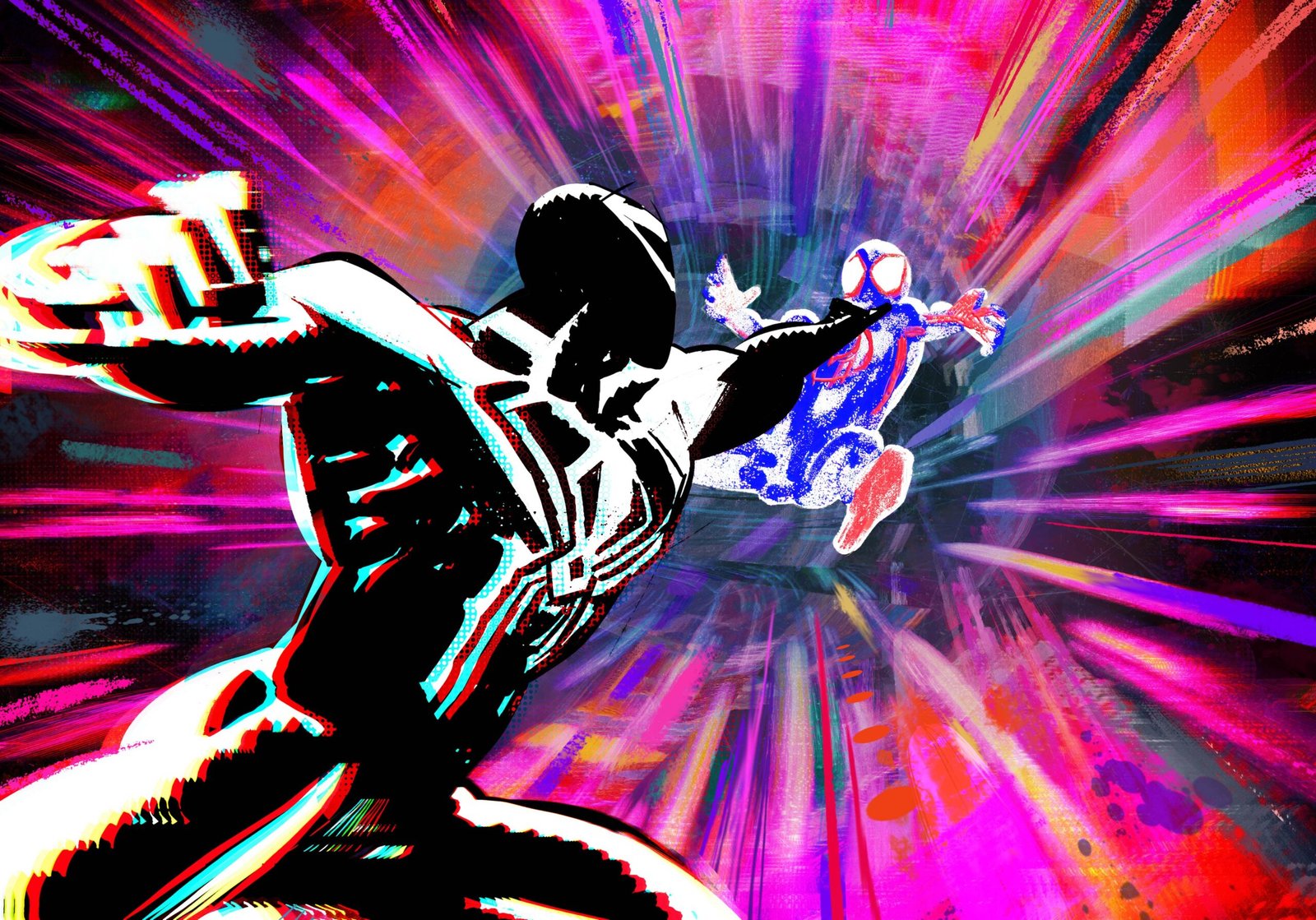
The CinemaCon footage shown this week confirmed what fans have theorised since Across dropped: Miles trapped in Earth-42 is shown with alternate versions of himself and his Uncle Aaron, the Prowler. The footage suggests Miles may need to lean into the Prowler identity to survive — to become the villain of his own universe in order to find a way home.
This tracks with the trilogy’s central thesis: every Spider-Man is defined by loss and sacrifice. Miles’ story has always been about whether he can be the hero his way rather than following the canon event template. If he has to wear the Prowler suit, commit acts that look villainous from the outside, in order to ultimately protect his family — that’s the most emotionally devastating version of his arc possible, and exactly the kind of storytelling Lords and Miller have been building toward.
Theory #6: Miguel O’Hara Gets a Full Redemption Arc — and Dies for It
Miguel O’Hara is the most complex figure in the Spider-Verse trilogy. He’s not a villain — he genuinely believes maintaining canon events is the only way to preserve reality. But his methods are authoritarian, his grief has curdled into obsession, and he targeted Miles with a cruelty that was hard to watch.
The dominant theory in the fan community is that Miguel will spend most of Beyond as an antagonist before a late-film revelation recontextualises his actions — and that his arc ends in sacrifice. Poster analysis by fans on Reddit and Dexerto noted that characters appear split into two groups flanking Miles: Gwen, Hobie, Pavitr, and Peter B. on one side (his allies), and Miguel, Ben Reilly, and Jessica Drew on the other (the opposition). That opposition doesn’t necessarily mean villain — it means conflict that needs resolution.
The most heartbreaking version of this theory: Miguel sacrifices himself to break a canon event — proving that the rules he’d been enforcing at the cost of Miles’ happiness were always breakable, and that he just needed someone willing to try.
Theory #7: Gwen Stacy’s Death Is a Canon Event — For Miles
This is the theory nobody wants to be true, which is exactly why so many people believe it. Gwen Stacy dying is the most iconic event in Spider-Man mythology. In every universe, on every branch of the multiverse tree, a Gwen Stacy dies — it’s practically baked into the laws of the Spider-Verse.
The entire emotional engine of the trilogy has been building a real relationship between Miles and Gwen — something genuine, earned, and tender across two films. If the canon event the Spider-Society was protecting wasn’t Jefferson Davis’ death but Gwen’s, it would reframe everything Miguel did in Across as a brutal act of mercy — trying to spare Miles the knowledge of what was coming.
Phil Lord and Chris Miller have said the film is the “most emotional” of the trilogy. That’s either a reassurance or a warning, depending on how much you trust them.
Two Spider-Man Films, One Massive Moment for the Character
What’s remarkable about 2026 and 2027 is that we’re getting two completely different visions of Spider-Man operating at the highest level simultaneously. Brand New Day strips Peter back to his loneliest, most vulnerable state and asks what heroism looks like when there’s nobody left to witness it. Beyond the Spider-Verse asks whether the rules of what a hero must sacrifice are actually rules at all — or just stories people told themselves.
Both answers matter. Both films have our full attention. Spider-Man: Brand New Day opens in cinemas on July 31, 2026. Spider-Man: Beyond the Spider-Verse arrives on June 18, 2027.
Keep Reading: MCU Phase 6 Hype Rankings — Every Confirmed Project Ranked · Every Marvel & DC Movie and TV Show Coming in 2026 — The Complete Guide · Every Wolverine Comic to Read Before the Insomniac Game Drops
Frequently Asked Questions
Is Sadie Sink playing Anya Corazon (Spider-Girl) in Brand New Day?
That’s one of the theories covered — Theory #3 argues Sadie Sink is playing Anya Corazon, also known as Spider-Girl.
Is Peter Parker transforming into Man-Spider in Brand New Day?
That’s Theory #1 in the guide’s roundup of theories about the film.
Does Spider-Man: Brand New Day set up Avengers: Secret Wars?
That’s Theory #4, arguing Brand New Day sets up Avengers: Secret Wars.
Is the Punisher the villain in Spider-Man: Brand New Day?
Theory #2 argues the Punisher is not the enemy, but rather a dark mirror to Spider-Man.
Pull your own Marvel cards.
Grab an MTG Marvel Play Booster on Amazon and build the deck yourself.
Nerd Snack Monthly
The month ahead, in one email.
Next month’s movie, anime and game release dates, plus the collectibles worth buying. Free. Unsubscribe anytime.
Related Posts:
Talk to us
Got a question, a tip or a request? Email us.
A real person reads every message at hello@nerdsnack.com, and we usually reply within 1–2 business days.
Prefer a form? Use our contact page.
Get authentic Japanese snacks, anime candy, and nerd-themed food delivered to your door. Use code NERDSNACK for 15% off your first box.