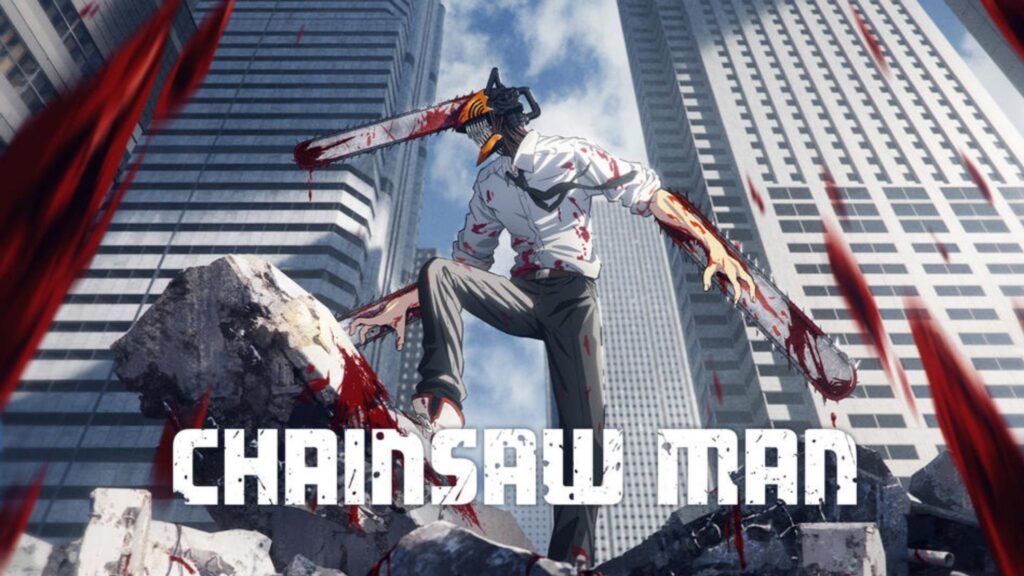
There is no anime quite like Chainsaw Man. That’s not marketing copy — it’s a structural fact. The series operates by rules that no other shounen manga has attempted: main characters die without ceremony, emotional catharsis is deployed and then immediately undercut, and the protagonist’s motivations remain stubbornly, almost defiantly, small. Denji doesn’t want to save the world. He wants to eat good food and touch a girl’s chest.
That premise is a setup, and Tatsuki Fujimoto spends the entire series delivering the punchline — a punchline that turns out to be more complicated than anyone expected. This guide covers the Chainsaw Man anime, the manga, the confirmed film, and what to expect from the franchise in 2026.
What Is Chainsaw Man?
Chainsaw Man is a manga by Tatsuki Fujimoto, serialized in Weekly Shonen Jump. It ran in two parts: Part 1 from December 2018 to December 2020 (97 chapters, compiled into 11 volumes), and Part 2 from July 2022 to the present, serialized digitally on Shonen Jump+. The English editions are published by VIZ Media.
The anime adaptation of Part 1 was produced by MAPPA — the studio behind Attack on Titan: The Final Season, Jujutsu Kaisen, and Vinland Saga Season 2 — and premiered October 11, 2022. It ran for 12 episodes through December 27, 2022, covering the first arc of Part 1.
The story is set in an alternate Japan where Devils — supernatural entities born from human fear — are a constant threat. Devil Hunters employed by a government agency called Public Safety are tasked with exterminating them. Denji is a teenager who has grown up in poverty, working as a Devil Hunter alongside his pet Devil Pochita (who takes the form of a small dog with a chainsaw in place of its tail) to pay off his deceased father’s debt.
When Denji is killed by the yakuza and their Devil allies, Pochita merges with him, transforming him into a hybrid: a human with a rip cord in his chest that, when pulled, causes chainsaws to erupt from his face and arms. This is Chainsaw Man. It’s as unhinged as it sounds, and that’s the point.
The MAPPA Anime — Season 1 (2022)
MAPPA’s adaptation set an immediate tone. The studio treated the material with a cinematic ambition that was, at the time, unusual for a shounen premiere: each episode had a different ending theme and animation style, the action sequences were rendered with an unusual blend of traditional animation and CG that divided viewers but delivered moments of genuine visual impact, and the direction leaned into the source material’s specific brand of horror-inflected absurdity.
The 12-episode Season 1 covers the Public Safety arc — Denji’s recruitment into the Devil Hunter organization, his partnership with the chain-smoking handler Makima and the emotionally volatile Aki Hayakawa, and his first encounters with the supernatural hierarchy of the Chainsaw Man world. Alongside him is Power, a Blood Fiend who provides the series’ most consistent comedic energy and, unexpectedly, one of its most affecting emotional arcs.
The season ends partway through Part 1’s narrative — the story is not resolved, and the ending functions more as a season break than a conclusion. If you watch Season 1 without context, the finale will feel abrupt.
Main Characters
Denji — The protagonist. An 16-year-old who transforms into Chainsaw Man. His motivations are deliberately mundane — food, physical affection, belonging — and Fujimoto uses that simplicity to say something unexpectedly pointed about how people with nothing are manipulated by people who offer them anything.
Makima — Denji’s handler and one of the most discussed characters in recent manga. Her apparent warmth and the reality beneath it are the central tension of Part 1. Revealing more would constitute a serious spoiler.
Power — A Blood Fiend assigned to the same division as Denji. Chaotic, self-serving, and genuinely funny. Her evolution across Part 1 — from comic relief to something considerably more — is one of the manga’s best executed arcs.
Aki Hayakawa — A senior Devil Hunter with a specific personal vendetta against particular Devils. The straightest character in the series, which Fujimoto uses to devastating effect.
Keep Reading: Best Anime of 2026: Every Great Show This Year, Ranked · Top 10 Anime Villains of All Time, Ranked
Keep Reading: Best Manga to Read After Watching the Anime: 10 Essential Picks · Delicious in Dungeon: The Complete Guide to the Anime Everyone Is Watching · Best Spring 2026 Anime to Watch — Complete Season Guide
The Reze-Hen Film (Confirmed)
A theatrical film adaptation of the Bomb Girl arc — known in Japanese as “Reze-hen” — has been confirmed by MAPPA. The Bomb Girl arc is a self-contained story within Part 1 that introduces Reze, a young woman with her own explosive Devil hybrid abilities who crosses paths with Denji in a story that functions as the manga’s most overt romance — and one of its most structurally clever sequences.
Choosing to adapt the Bomb Girl arc as a film rather than continue the series in a television format is a bold structural decision. The arc is roughly 15 chapters — long enough for a feature film, too short for a full season. The film announcement suggests MAPPA has a long-term plan for the franchise that involves alternating formats, similar to how Demon Slayer used its Mugen Train film.
No release date has been confirmed for the Reze-hen film as of May 2026. The announcement came with a brief teaser visual but no production timeline.
Part 1 vs Part 2 — What the Manga Does Next
Part 1 ends with Chapter 97 and is widely considered a complete story — it has a beginning, middle, and end that function independently of Part 2. If you want to read the manga and stop at a natural endpoint, Part 1 is it.
Part 2 began in July 2022 and is ongoing. It shifts focus to a new protagonist — Asa Mitaka, a high school girl who becomes host to the War Devil — while Denji returns in a diminished, complicated capacity. Part 2 is more ambitious in some respects and more uneven in others. It divides the fanbase more sharply than Part 1, which had near-universal acclaim.
For anime-only viewers: the Season 1 anime covers Part 1 through the end of the Public Safety arc (roughly Chapter 40). The Reze-hen film will cover the Bomb Girl arc (Chapters 40–53). Additional television seasons would be needed to complete Part 1.
Where to Watch
Crunchyroll — Season 1 available subbed and dubbed in English.
Amazon Prime Video — Also available in some regions with both audio options.
The English dub is notable — the casting is strong across the board, and Denji in particular benefits from a voice performance that captures the character’s odd sincerity. Both versions are worth experiencing.
Should You Read the Manga Before the Film?
Absolutely. If the Reze-hen film follows the same continuity as the Season 1 anime — which is the reasonable assumption — it will pick up from where Season 1 ended and adapt the Bomb Girl arc in sequence. Reading the 15-chapter arc before the film arrives will give you context for the film’s structure, but the film should also be legible cold for anyone who watched Season 1.
The Bomb Girl arc is also where Fujimoto is arguably at his most controlled as a writer. It’s worth reading independently of any film adaptation.
Final Verdict
Chainsaw Man is one of the most genuinely original things in the last decade of shounen manga, and the MAPPA anime is a worthy adaptation of it. Season 1 is only 12 episodes and covers the opening act of a much larger story — which means now is an ideal time to start, before the Reze-hen film brings a new wave of attention to the franchise.
Watch Season 1. Read Part 1 of the manga. And when the film date is announced, mark your calendar — Reze’s arc is the chapter of this story that most people, once they’ve finished it, want to see most.
Frequently Asked Questions
When did the Chainsaw Man anime by MAPPA premiere?
Season 1 aired in 2022.
Is there a Chainsaw Man movie?
Yes — a confirmed film adapting the Reze arc (the Reze-hen film).
What does Denji want in Chainsaw Man?
He doesn’t want to save the world — his motivations stay stubbornly small, like wanting to eat good food, reflecting the series’ unusual approach to a shounen protagonist.
Should you read the Chainsaw Man manga before the Reze film?
The guide addresses this directly in a dedicated ‘Should You Read the Manga Before the Film?’ section, alongside what Part 2 of the manga does differently from Part 1.

Crunchyroll has every simulcast, classic series, and anime film you could want — in HD, with new episodes every week.