
Most people assume their old Pokemon cards are worthless. They see a circle rarity symbol and move on. That assumption has cost collectors hundreds of dollars. Some of the most valuable Pokemon cards ever printed are commons, sitting in binders and shoeboxes right now. Here are ten commons worth pulling out and checking before you donate that old collection.
What Makes a Common Worth Money?
Four factors drive value on low-rarity cards. First: print run. First Edition and Shadowless WOTC-era runs were dramatically smaller than Unlimited — the same card in a different print can be worth ten times as much. Second: condition. Commons were handled constantly by kids who never sleeved them, so high-grade copies are genuinely rare. Third: demand. Some commons are culturally iconic in ways that drive collector interest regardless of rarity symbol. Fourth: misprints. Error cards from any rarity tier carry a significant premium among collectors who chase printing anomalies.
1. Pikachu — Base Set 1st Edition (#58)
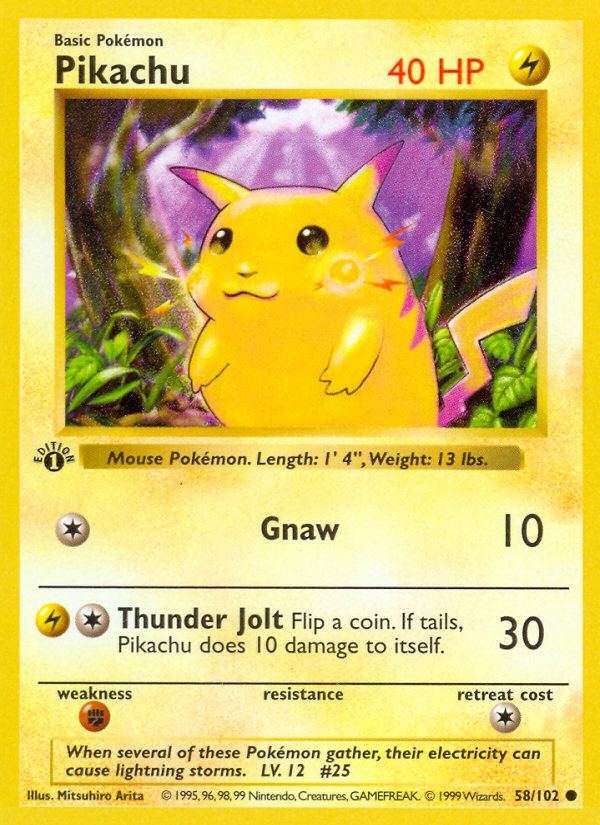
The most obvious entry, but one most people still get wrong. Base Set Pikachu is a common — circle rarity, #58 — and in Unlimited condition it is worth next to nothing. But a 1st Edition copy with the stamp on the left side? PSA 8 copies sell for $40–80. PSA 10: over $200, and climbing. The Shadowless version (no drop shadow under the art box) sits between the two, typically $15–40 in mid-grade. How to check: look for the 1st Edition stamp below the card art on the left side. No stamp but no shadow means Shadowless. A shadow under the art box means Unlimited.
2. Base Set Shadowless Starters — Bulbasaur, Charmander, Squirtle
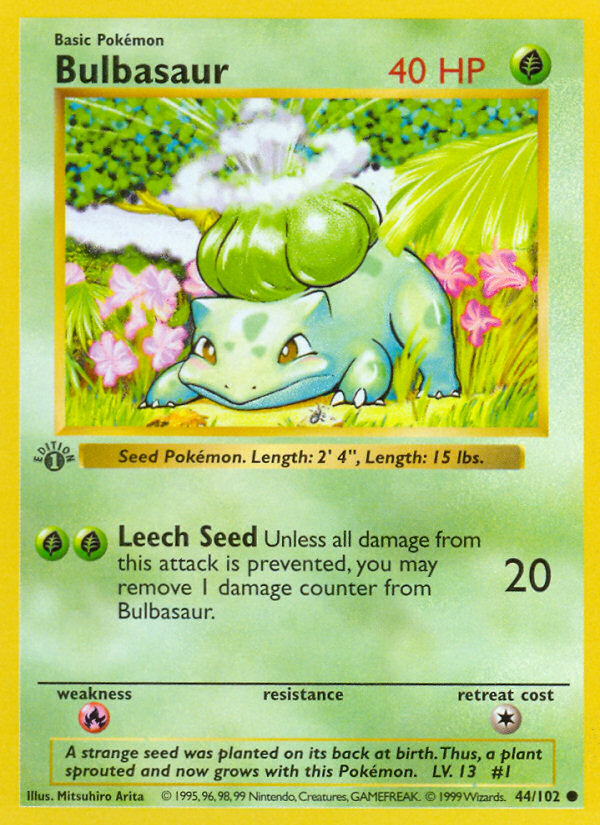
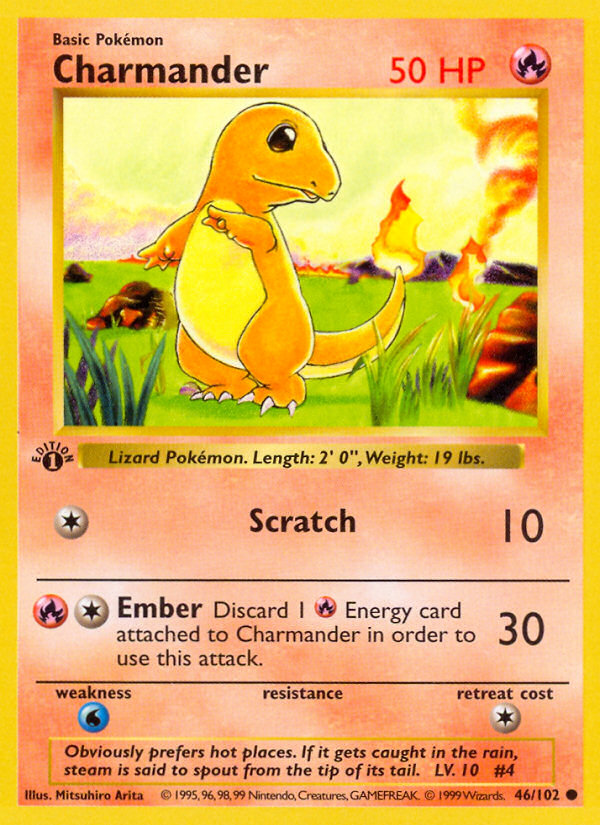
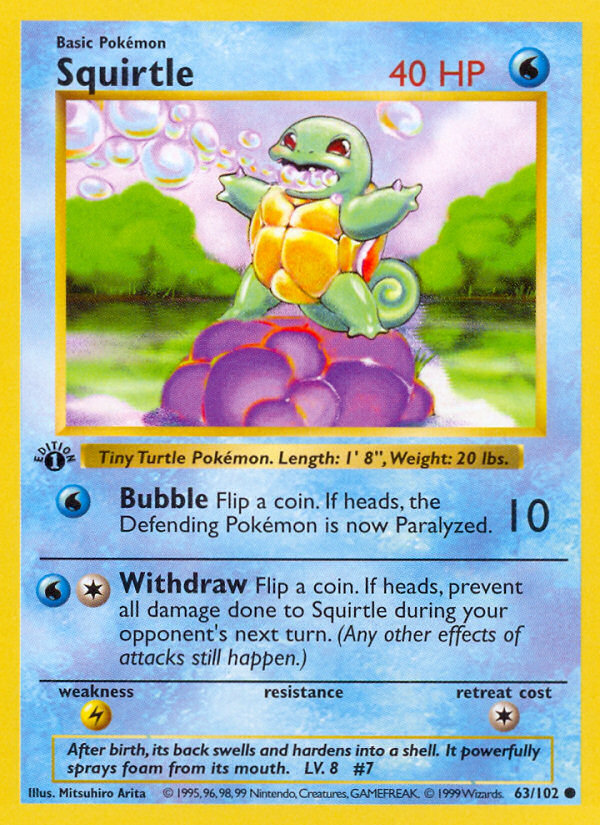
All three original starters are commons in Base Set, and Shadowless copies of each have developed serious collector followings. Mid-grade PSA 7–8 Shadowless Bulbasaurs sell for $20–50 regularly. Raw copies in excellent condition fetch $10–20. Charmander (#46) and Squirtle (#63) follow the same logic. If you have all three Shadowless starters you are looking at $50–120 total depending on condition — not bad for cards with a circle rarity symbol.
3. Magnemite — Base Set 1st Edition (#53)
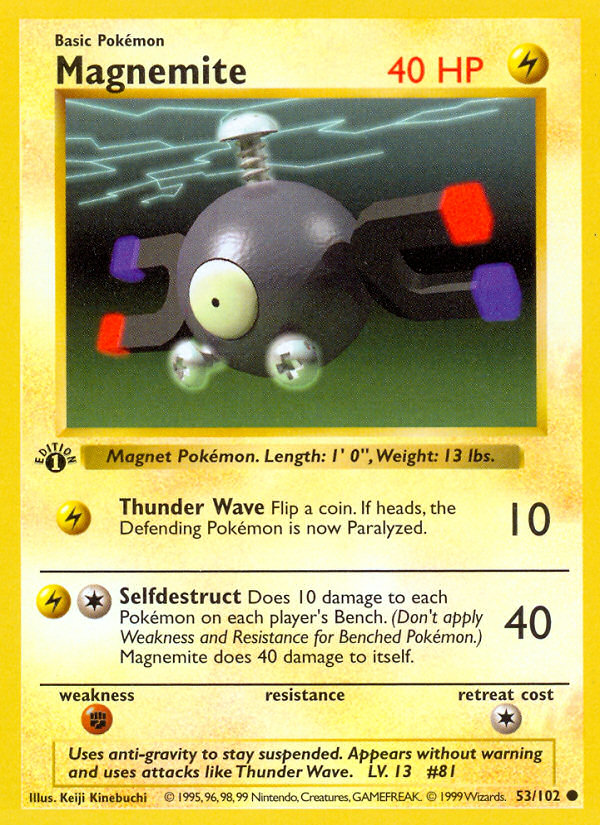
Magnemite does not get the cultural attention that Pikachu does, which is why raw 1st Edition copies are still findable at reasonable prices in old collections — but graded copies have been appreciating steadily. A PSA 9 1st Edition Magnemite has sold for over $100. The same principle applies to Diglett (#47), Machop (#52), and Ponyta (#60). Any 1st Edition Base Set common in PSA 8+ condition is worth checking current sold listings on eBay before you trade it away.
4. Jungle Set 1st Edition Commons
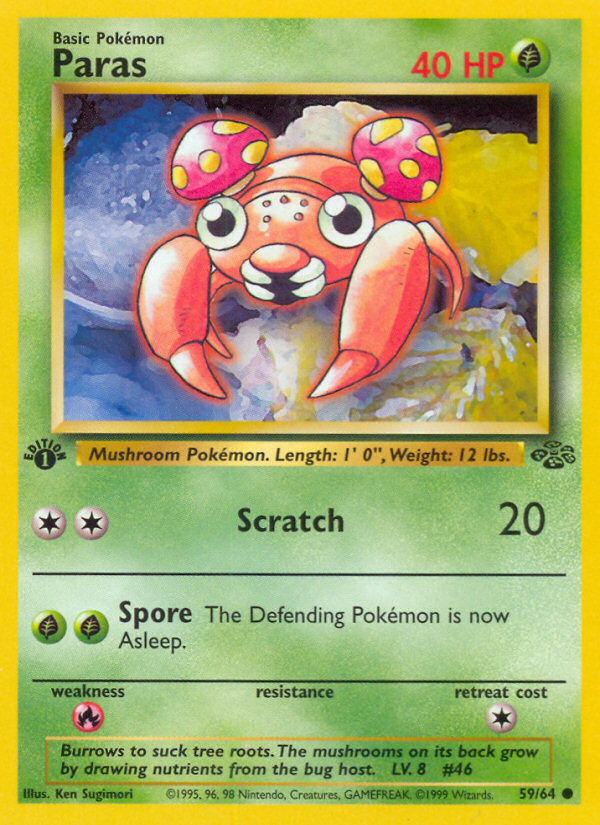
The Jungle set is less discussed than Base Set but 1st Edition Jungle commons have been quietly appreciating for years. Oddish (#59), Paras (#57), and Venonat (#63) in 1st Edition PSA 9 condition regularly sell for $30–80. The full 64-card 1st Edition Jungle set is a collector goal for serious WOTC-era completionists, which creates sustained demand for every card in the set regardless of rarity. If you have cards with the Jungle set symbol and a 1st Edition stamp, pull them out and check individually.
Keep Reading: Pokemon TCG Pocket Paradox Drive: Best Cards and What to Pull · TMNT Arrives in MTG: Everything You Need to Know
5. Fossil Set Error Cards — Geodude and Psyduck
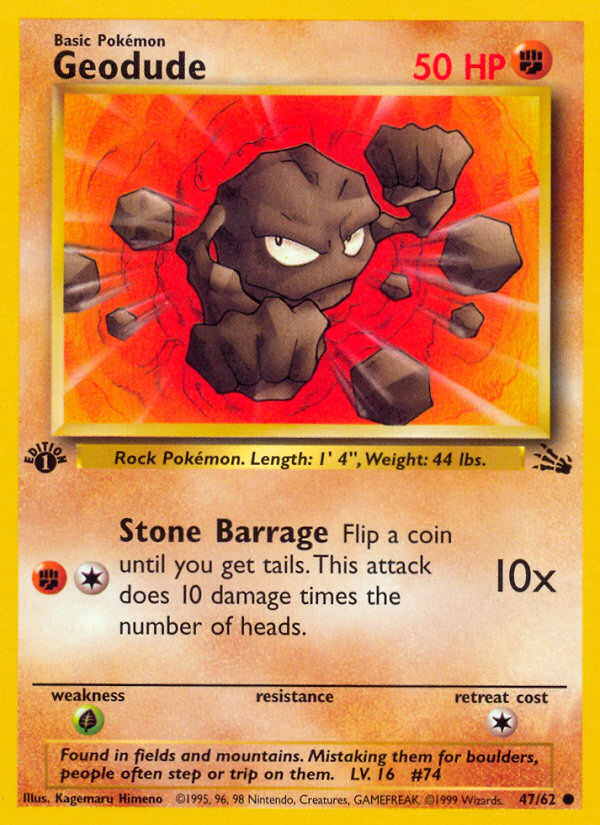
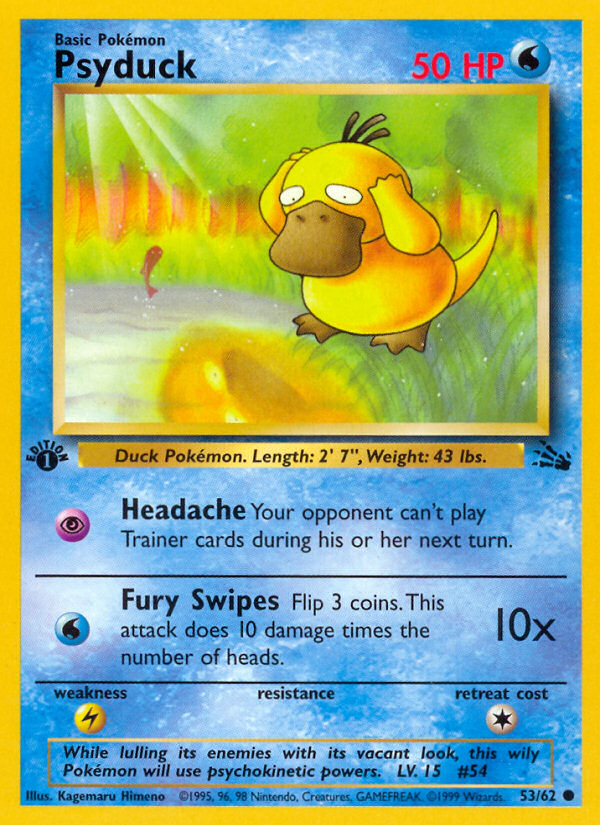
The Fossil set had several notable printing errors affecting common-rarity cards. The most documented is the Geodude misprint — some Fossil Geodude cards were printed without the 1st Edition stamp despite coming from 1st Edition packs. Error cards carry a premium over standard versions, and confirmed error copies in high grade sell for multiples of what a standard copy commands. Psyduck (#53 in Fossil) also has a documented off-center print variant. If any Fossil commons look visually different from standard — text placement, symbol position, color — get them appraised before selling.
Keep Reading: Pokémon Delta Reign: Release Date, Price, Chase Cards and What to Preorder · Pitch Black Chase Cards: Most Valuable Pulls (Pokémon TCG) · Pokemon TCG Mega Evolution: Chaos Rising - Top Chase Cards
6. No Rarity Symbol Cards — The Rarest Accident in Pokemon History
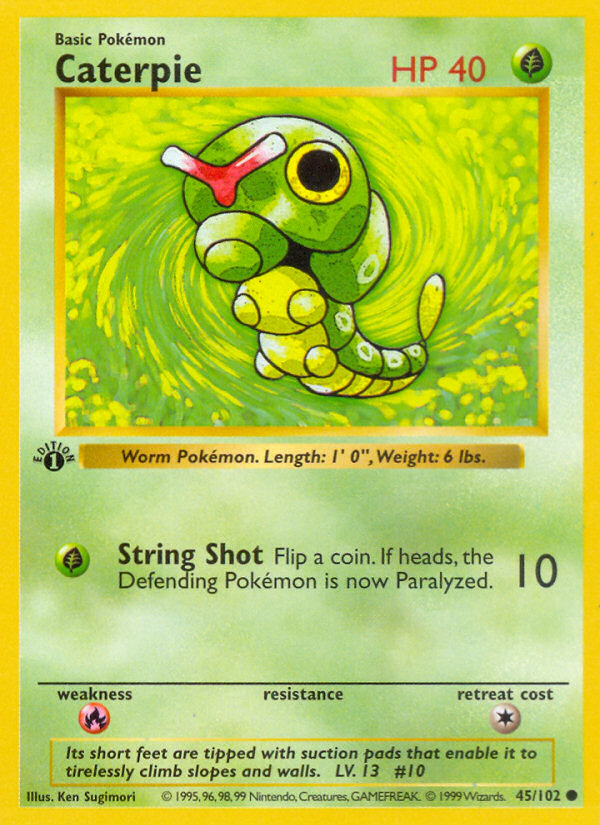
The most valuable entry on this list by a wide margin. A small number of Base Set cards were printed without any rarity symbol — no circle, diamond, or star in the bottom right corner. These are believed to be test prints or quality control errors that escaped into packs. No Rarity Symbol versions of common Pokemon like Caterpie and Weedle have sold for thousands of dollars. A No Rarity Symbol Bulbasaur sold at auction for over $3,500. These are extraordinarily rare, but if you have a Base Set card with no symbol in the bottom right corner, get it authenticated immediately.
7. Japanese Topsun Cards (1995)
Before the official Pokemon TCG launched in 1996, Japanese candy company Topsun produced 150 Pokemon cards included in gum packages — widely considered the first Pokemon cards ever commercially produced. Many feature common Pokemon like Caterpie, Weedle, and Pidgey. Blue-back Topsun variants (the earlier, rarer print) of even common Pokemon have sold for $50–300 depending on condition. If you have Pokemon cards from mid-1990s Japanese merchandise that look visually different from standard TCG cards — simpler art, different borders, no set symbol — search “Topsun Pokemon” immediately.
8. Marill — Black Star Promo (#29)
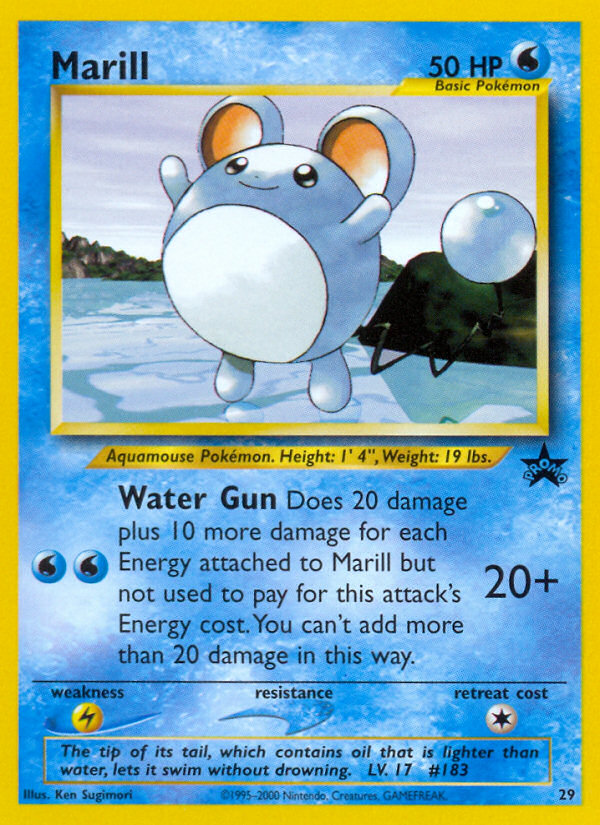
Marill appeared in the second Pokemon movie before Generation 2 officially released in the West, making it one of the most culturally significant early promo cards. The Black Star Promo Marill (#29) was distributed at events and through Nintendo Power magazine — limited distribution with common-tier artwork and a meaningful collector premium attached. PSA 10 copies have sold for $50–100. Surprising for a card handed out free at Pokemon events in the late 1990s that most recipients lost in a pile without a second thought.
9. Modern Competitive Commons — Comfey and Bibarel
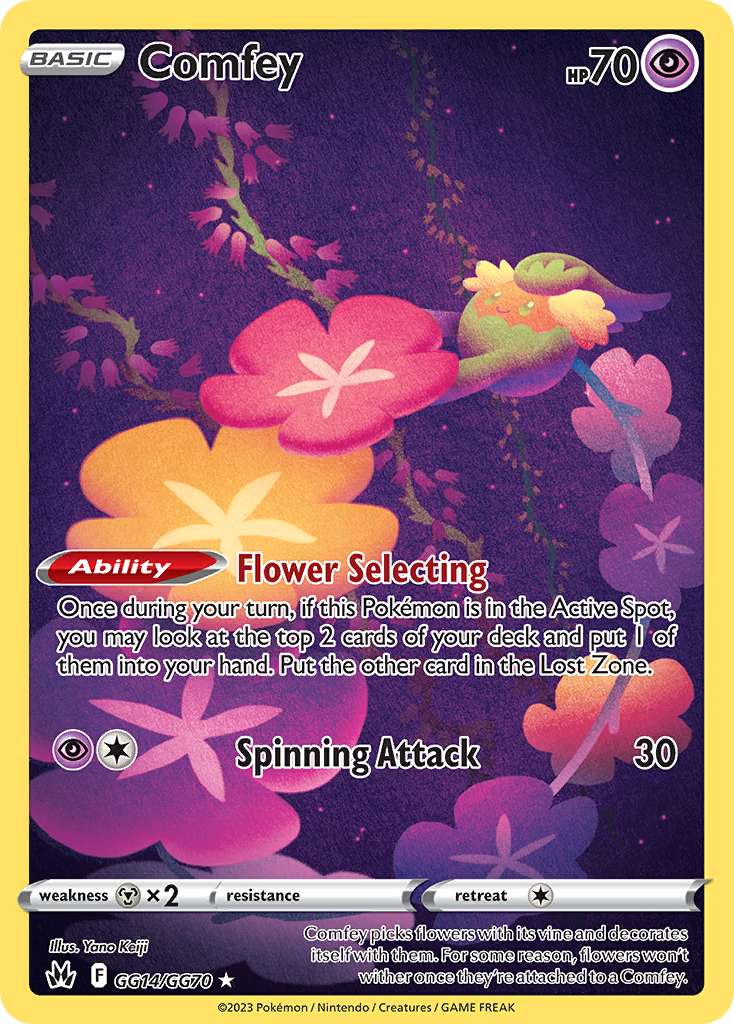
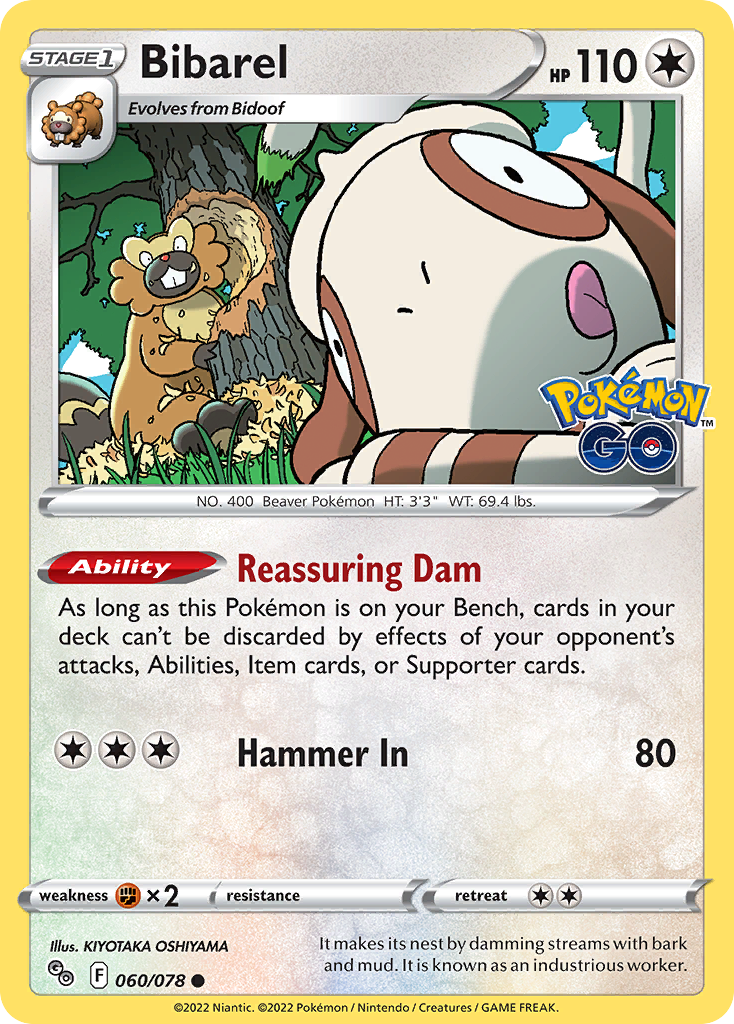
Not every valuable common comes from the WOTC era. Comfey from Crown Zenith became a cornerstone of Lost Zone competitive decks, driving its price to $5–8 for a common-rarity card. Bibarel from Brilliant Stars sustained $3–6 purely from tournament demand as a draw engine staple across multiple archetypes. These will not fund a vacation, but finding 20 copies of Comfey in a bulk lot you bought for pennies each is a real scenario that catches collectors off guard regularly — especially when sorting bulk from recent sets.
10. Foreign Language Base Set Commons
The final category that surprises people: non-English WOTC-era commons, particularly Italian, Spanish, German, and French Base Set cards. These language variants were printed in smaller quantities than English editions and have developed collector followings among completionists chasing every language variant. An Italian 1st Edition Pikachu in PSA 9 has sold for over $150. Spanish 1st Edition Bulbasaur PSA 9: over $80. If you have Pokemon cards with non-English text from the Base Set era, treat them with the same care you would give an English 1st Edition and check recent sold prices before letting them go.
How to Check Your Cards Right Now
The fastest method: eBay’s sold listings filter. Not asking prices — completed sales only. Search the card name, set name, and any relevant variant (1st Edition, Shadowless, PSA grade) then sort by sold. This tells you what someone actually paid, not what a seller hopes to get. For potentially significant cards, TCGPlayer and PriceCharting also track historical sales data. If you find something valuable, consider grading through PSA or Beckett before selling — a raw card in excellent condition typically sells for 30–50% less than a graded equivalent, and grading fees pay for themselves on cards worth $50 or more.
Final Verdict: Pull Out That Old Binder
The most common story in Pokemon collecting is someone donating a childhood collection for nothing, then discovering a 1st Edition Base Set common they thought was worthless sold for $80 at auction. The information gap between casual owners and serious collectors is enormous, and it costs people real money every day. Spend 30 minutes going through any old Pokemon cards you have with this list as a reference. The upside is real. The downside is 30 minutes. That is an easy trade.
Frequently Asked Questions
Which old common Pokemon card is worth checking for value?
Base Set 1st Edition Pikachu (#58) tops the list of commons worth real money, followed by the Base Set Shadowless starters (Bulbasaur, Charmander, Squirtle).
Is Base Set 1st Edition Magnemite worth money?
Yes — Magnemite (#53) from the Base Set 1st Edition is on the list of valuable old commons.
Are there valuable Pokemon error cards from the Fossil set?
Yes — Geodude and Psyduck are called out as Fossil Set error cards worth checking.
What makes an old Pokemon common card worth money?
The guide covers this directly in a ‘What Makes a Common Worth Money?’ section explaining the factors collectors look for.


TCGPlayer has the best prices on Magic, Pokemon, Dragon Ball, and Riftbound singles — with seller ratings and buyer protection.