Collecting has always rewarded the patient and the observant. But some of the most valuable items in the hobby are not rare sports cards or first-edition novels — they are objects that most people dismissed as junk, tossed into garage sale bins, or simply ate for breakfast. From misprinted government currency to a cereal box sporting an Olympic champion, the collectibles market has a long history of assigning serious money to things that were never meant to be kept. Here are five categories of strange collectibles that have proven, repeatedly, to be worth real money.
1. Mint Error Coins
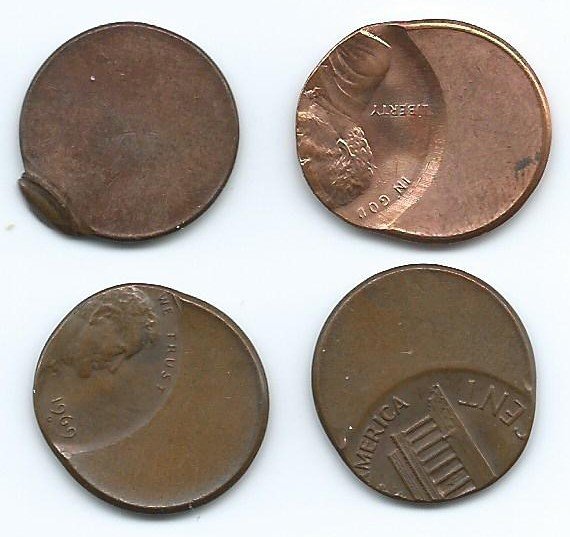
The United States Mint strikes billions of coins each year, and the overwhelming majority are flawless. But machinery fails, human operators make mistakes, and the occasional coin escapes quality control bearing a defect that should never have existed. These are mint error coins, and they are among the most aggressively collected items in American numismatics.
Errors come in dozens of forms. An off-center strike occurs when the coin blank is not properly seated beneath the die, resulting in a design that is visibly shifted — sometimes dramatically so. A clipped planchet happens when the metal strip feeding into the blanking press overlaps itself, producing a coin with a curved or straight segment missing from its edge. Die caps, brockages, and wrong-planchet errors (a dime struck on a cent blank, for instance) represent the more spectacular end of the spectrum.
The value of an error coin depends on the type, severity, and denomination. A Lincoln cent struck 50 percent off-center might sell for $50 to $150. The same level of off-center on a quarter could reach $300 to $600. Genuine wrong-planchet errors — particularly those involving two different metals — routinely bring $1,000 or more at auction. Double-denomination errors, where a coin has been struck twice on two different die pairs, have sold for tens of thousands of dollars. The key is authentication: the Professional Coin Grading Service and Numismatic Guaranty Company certify errors, and a slabbed, certified error is worth dramatically more than a raw one.
2. Vintage PEZ Dispensers
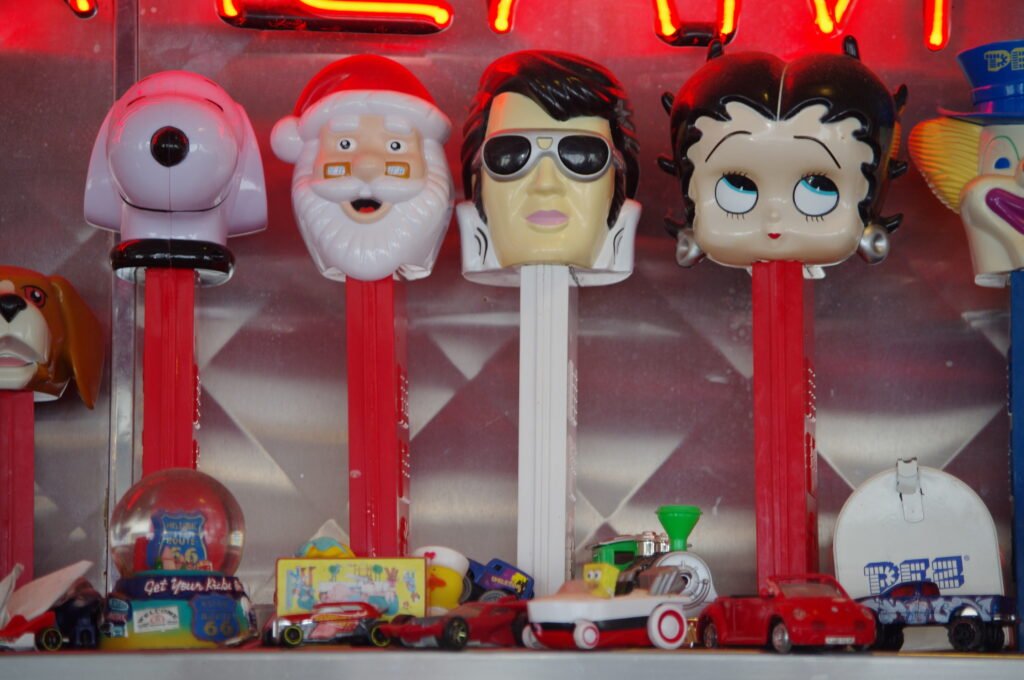
PEZ was invented in Vienna in 1927 as a peppermint breath mint — the name is a contraction of the German word Pfefferminz. The iconic dispenser was introduced in 1948 as a cigarette lighter substitute, featuring a simple rectangular brick with no character head. The character heads came later, beginning in the early 1950s, and with them came one of the most dedicated collector communities in the hobby.
The dividing line in PEZ collecting is the foot: dispensers manufactured before approximately 1987 have no plastic feet on the base of the stem, while later versions do. No-feet dispensers, particularly those from the 1950s and 1960s, are significantly more valuable than their footed counterparts. The condition of the character head, the color of the stem, and the presence of original packaging all influence value dramatically.
Among the most valuable individual dispensers is the Space Gun, a futuristic pistol-shaped model from the early 1950s. Complete examples in excellent condition have sold for over $10,000. The Astronaut B from the 1960s, the Make-A-Face set, and early licensed character dispensers such as original Mickey Mouse and Popeye variants also command strong four-figure prices. Even more common vintage dispensers in excellent condition consistently sell for $50 to $500, making PEZ one of the more accessible serious collecting hobbies for those willing to learn the nuances of dating and authentication.
3. The Inverted Jenny Stamp
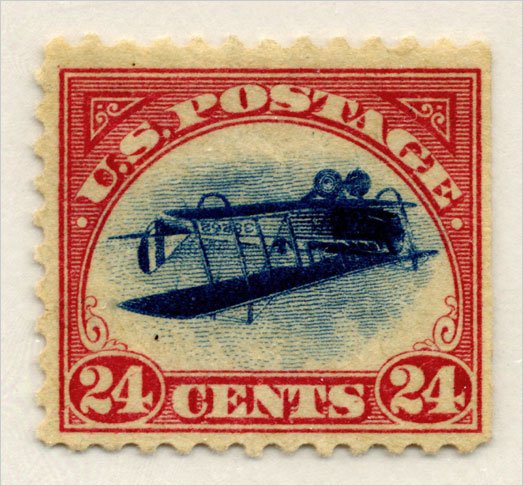
On May 13, 1918, a Washington, D.C. stamp collector named William T. Robey walked into a post office and purchased a sheet of 100 newly issued 24-cent airmail stamps. He immediately noticed something wrong: the Curtiss JN-4 “Jenny” biplane in the center of each stamp was printed upside down. Robey had stumbled onto one of the most famous production errors in the history of American philately.
The sheet was the only one known to exist with this particular invert error — all others had been caught and destroyed by postal inspectors. Robey sold the sheet within days for $15,000 (roughly $320,000 in today’s dollars), and the stamps have been changing hands at increasingly dramatic prices ever since. The sheet was soon broken up and individual stamps distributed among collectors and dealers.
Today, approximately 100 of the original 100 stamps are still accounted for, tracked by philatelic organizations as they move through auctions and private sales. Individual examples in fine condition regularly sell for $400,000 to $700,000. A block of four sold for $2.97 million at a Robert A. Siegel auction. The stamp is both a philatelic rarity and a piece of American postal history — the first airmail service between Washington, New York, and Philadelphia launched the same day the stamps went on sale. For serious stamp investors, an Inverted Jenny represents the pinnacle of the American market.
Keep Reading: Most Valuable Sonny Angel Figures Worth Real Money (2026) · Most Valuable Funko Pops Worth Real Money (2026) · What Collectibles Are Actually Worth Buying in 2026 — Rated Buy, Watch, or Skip
4. Vintage Wheaties Cereal Boxes
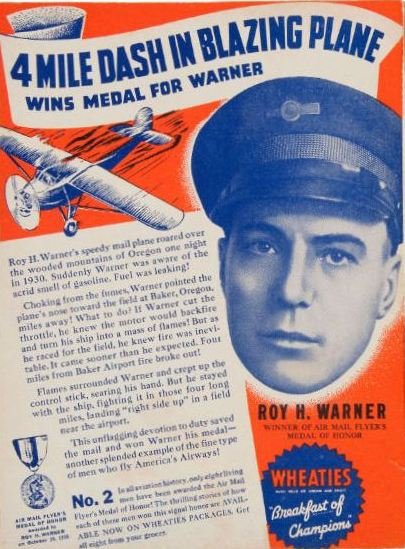
Wheaties introduced athlete endorsements on its packaging in 1934, making Lou Gehrig one of the first sports figures to appear on a cereal box. The tradition continued through the following decades, capturing Muhammad Ali, Michael Jordan, Mary Lou Retton, and hundreds of other champions at the height of their careers. What General Mills intended as marketing has become, over time, a documentary archive of American sports history — and a legitimate collecting category with a devoted following.
The value of a Wheaties box depends on three primary factors: the athlete featured, the condition of the box, and whether it is unopened or empty. Unopened boxes — still containing the original cereal — represent the most desirable examples, as they demonstrate that the item was set aside intentionally and never subjected to the moisture that destroys most cardboard over time. The Michael Jordan boxes from the 1988 and 1989 editions are among the most sought after, with mint unopened examples selling for $200 to $500. Early boxes from the 1930s and 1940s in any condition are extremely scarce and have sold for thousands of dollars at auction.
Regional box variants, promotional one-off editions, and foreign-market boxes add further depth to the hobby. The Wheaties collecting community overlaps heavily with sports memorabilia collectors, who are accustomed to paying premium prices for authenticated items. PSA and BGS now encapsulate cereal boxes the same way they grade trading cards, and a PSA 9 Jordan box commands a very different price than a raw, ungraded equivalent. Like many paper collectibles, condition is everything — and storage matters enormously.
5. Vintage Metal Lunch Boxes
Steel lunch boxes were a staple of American childhood from the late 1940s through the early 1980s, when a series of state-level legislative hearings — prompted by complaints that metal edges caused injuries — effectively ended their production. Manufacturers switched to plastic, and the era of the lithographed steel lunch box was over. What remained behind in attics and garage sales was the foundation of what would become a serious antiques and memorabilia market.
The first character-themed lunch box appeared in 1950, featuring Hopalong Cassidy. It sold 600,000 units and launched a category that would eventually encompass nearly every major television character, film, and cultural phenomenon of the following three decades. The Aladdin and American Thermos companies produced the bulk of them, and the quality of the lithography on the better examples is remarkable for mass-produced consumer goods.
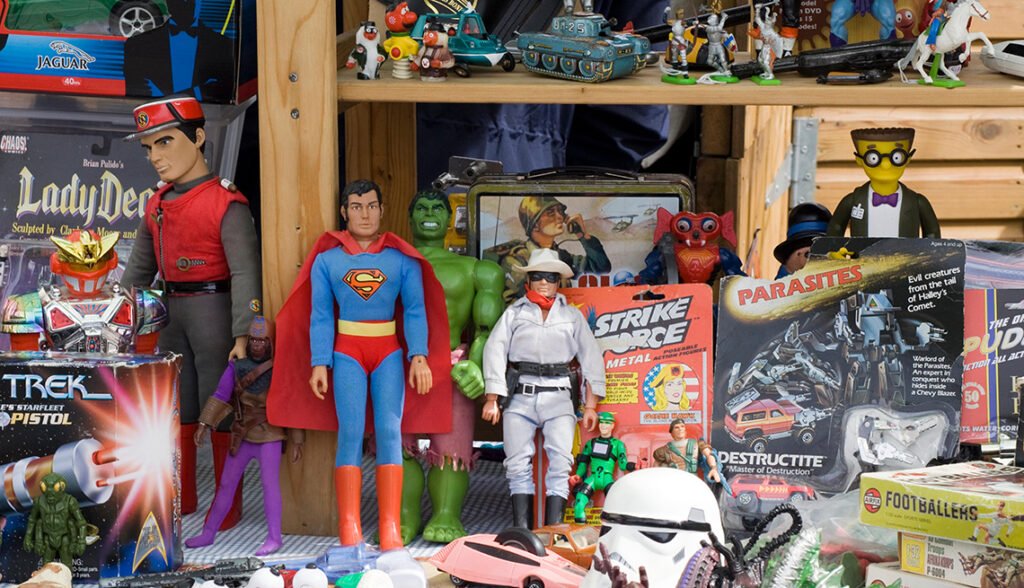
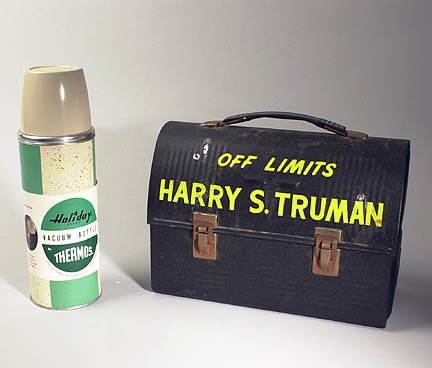
Among the most valuable is the 1954 Superman box, which has sold for over $13,000 in excellent condition. The 1963 Dudley Do-Right box, the 1966 Batman dome box, and the 1969 Yellow Submarine box are all highly prized. Political and historical themed boxes — such as the Truman commemorative example — occupy a niche but loyal collector base. Condition, completeness (most collectors require the matching thermos), and the absence of rust are the primary value determinants. A box that appears worthless to the uninformed eye can be worth hundreds or thousands of dollars to the right buyer — which is precisely what makes the category so compelling.
What These Collectibles Have in Common
Each of these five categories shares a common trait: the objects were made for everyday use, not for preservation. Error coins were meant to circulate. PEZ dispensers were meant to be emptied. Stamps were meant to frank envelopes. Cereal boxes were meant to be eaten from. Lunch boxes were meant to carry sandwiches to school. The ones that survived in excellent condition did so by accident or by the foresight of a single person who recognized something unusual. That combination of rarity, cultural resonance, and documented value is what separates a genuine collectible from a curio — and it is what keeps serious buyers and sellers engaged in these categories decade after decade.
If you are approaching any of these markets as a buyer, authentication and condition grading are non-negotiable. Each category has established third-party grading services, and a certified example will always command a premium over a raw one. Research the specific variants before committing to a purchase, and buy from auction houses or dealers with verifiable track records. The strange collectibles market rewards knowledge above all else.
Keep Reading: What Collectibles Are Actually Worth Buying in 2026 — Rated Buy, Watch, or Skip · Dragon Ball Super: Beerus Is Coming Back After 6 Years — Everything Confirmed · How to Spot Fake Trading Cards: 6 Tests That Actually Work (Pokemon, MTG & One Piece)
Frequently Asked Questions
What is the Inverted Jenny stamp?
A 1918 printing error stamp with the Curtiss JN-4 ‘Jenny’ biplane printed upside down — one of the most famous printing errors in American philatelic history, with only 100 known examples.
Who first discovered the Inverted Jenny stamp error?
William T. Robey, a Washington D.C. stamp collector, who purchased a sheet of 100 newly issued 24-cent airmail stamps on May 13, 1918 and noticed the printing error.
Are vintage PEZ dispensers worth real money?
Yes — they’re included on the list of strange collectibles actually worth real money.
Are vintage metal lunch boxes valuable collectibles?
Yes — they round out the list of five strange collectibles worth real money.
The Weekly Pull
The biggest card price moves, every Friday.
The week’s biggest card and collectible price moves, plus the movie, anime and game releases worth knowing about. Sign up and get our free Black Friday 2026 price-to-beat cheat sheet. Free. Unsubscribe anytime.
Related Posts:

Talk to us
Got a question, a tip or a request? Email us.
A real person reads every message at hello@nerdsnack.com, and we usually reply within 1–2 business days.
Prefer a form? Use our contact page.
Everything we recommend, curated in one place — from anime merch to gaming gear and snacks.