Verdict: Goku’s diet is “everything, in bulk.” After the 21st World Martial Arts Tournament, a 12-year-old Goku ate 50 full-course meals (57 in the English dub) and still wanted dessert. Saiyans have no particular favorite food, but they clearly prefer meat. There’s no official calorie count, though rough math puts a Saiyan day at 60,000 to 100,000 calories. Yakiniku is the closest a human can get.
Updated October 1, 2026 · Canon details from Dragon Ball and the Daizenshuu guidebooks, via the Dragon Ball Wiki · Calorie figures are NerdSnack estimates, not official numbers
Who this is for: Dragon Ball fans curious how much Goku really eats, and anyone who wants to try a Saiyan-sized feast without ending up in the hospital.
| Question | Short answer |
|---|---|
| How much does Goku eat? | 50 full-course meals in one sitting, at age 12 |
| Favorite food? | None in particular, but Saiyans prefer meat |
| Calories per day? | No official number. Our estimate: 60,000 to 100,000 |
| Can Saiyans get fat? | It’s much harder for them than for humans |
| Does Vegeta eat as much? | Yes, the appetite is a Saiyan trait |
How much does Goku eat?
More than anyone else in the series, from the very start. After the 21st World Martial Arts Tournament, 12-year-old Goku put away 50 full-course meals (57 in the English dub) and still wanted dessert. Across Dragon Ball, Saiyan meals end in towers of empty plates.
Hunger hits him just as hard. As a kid, Goku got too weak to do much of anything when he went too long without food. Gohan, who’s half-Saiyan, only started eating like his dad after he became a Super Saiyan.
The Daizenshuu 4 guidebook says Saiyans have no particular favorite food, though they seem to prefer meat. In other words, Goku’s diet is whatever’s in front of him, with extra meat.
How many calories do Saiyans eat?
There’s no official number, so here’s the math. The Dragon Ball Wiki puts the Saiyan appetite at 30 to 40 times a human’s. With a typical adult eating about 2,000 to 2,500 calories a day, that works out to roughly 60,000 to 100,000 calories a day.
The tournament meal lands in the same range. Even at a modest 1,500 calories per full-course meal, 50 of them come to 75,000 calories in one sitting.
Can Saiyans get fat? Rarely. Their strength and fighting burn huge amounts of energy, and their metabolism makes it much harder for them to gain fat or even get indigestion. That’s how Goku eats like this and still looks like Goku.
Why is yakiniku the best way to eat like a Saiyan?
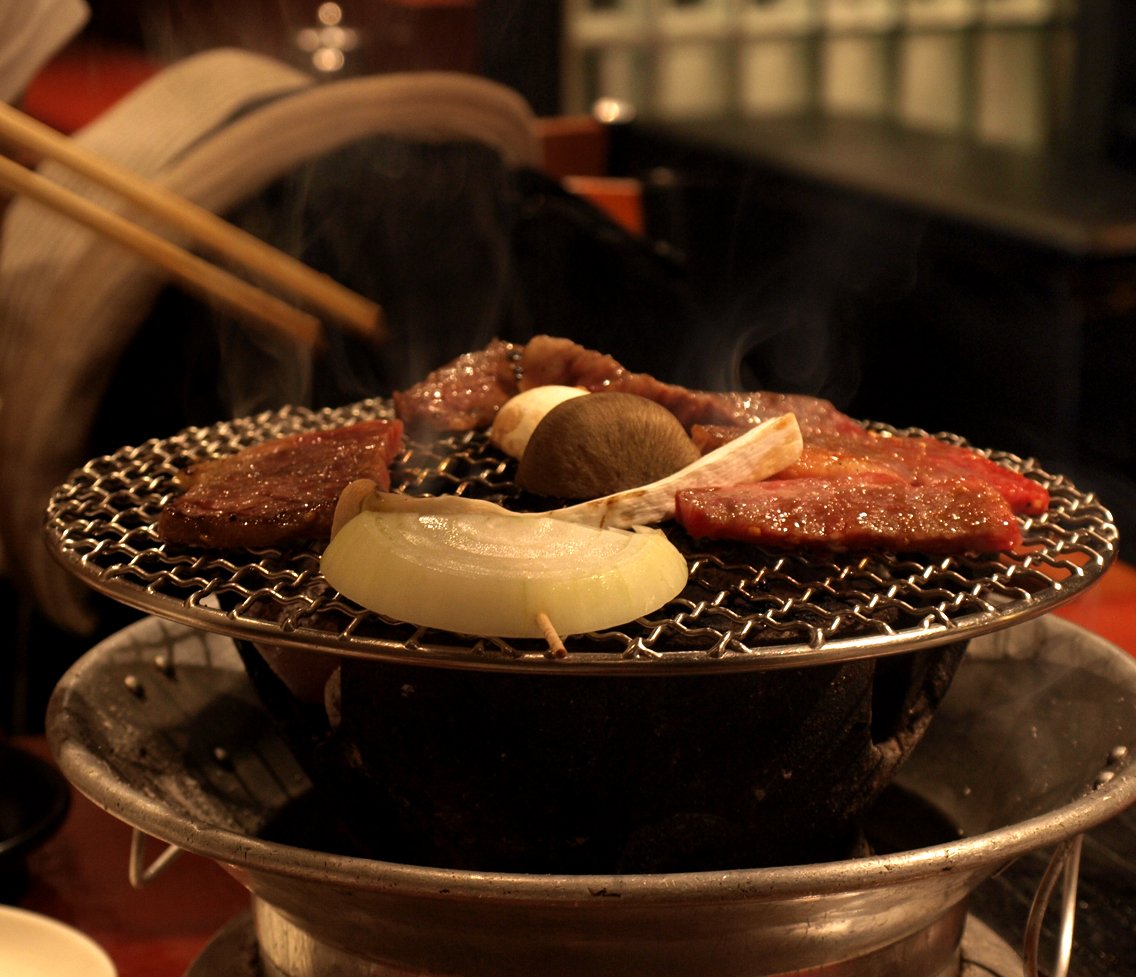
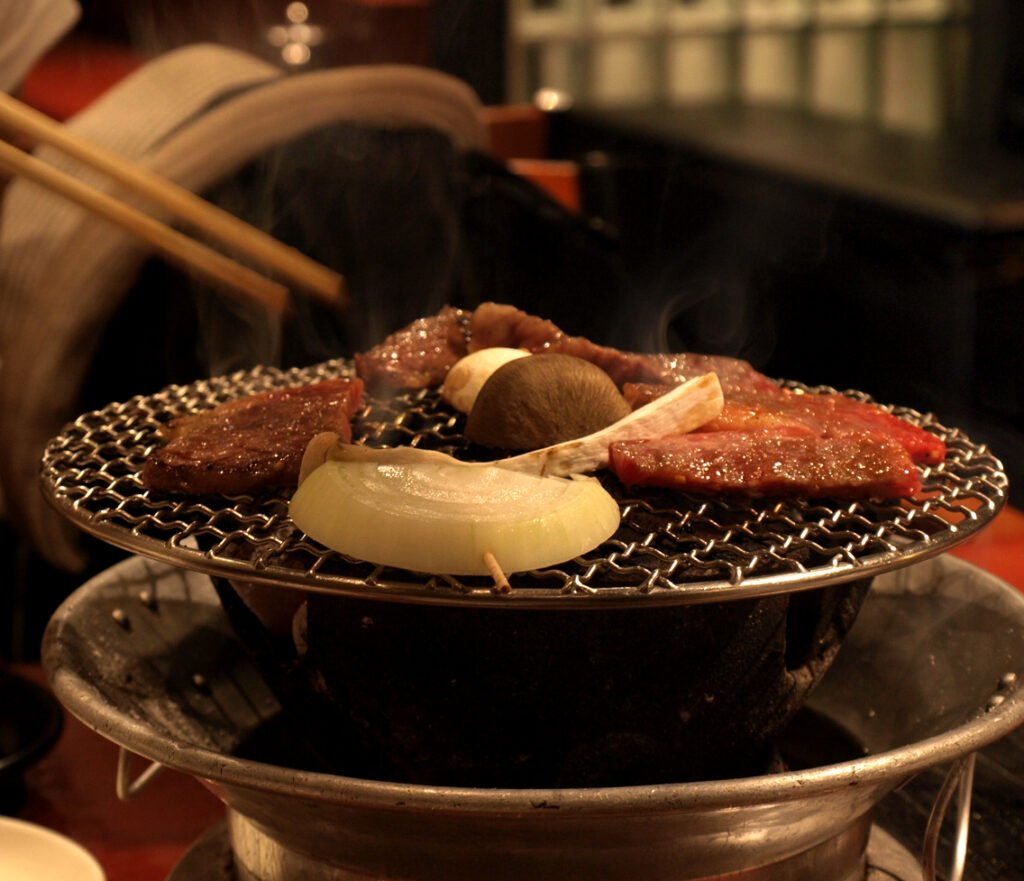
Yakiniku grilling over a charcoal shichirin. Photo: mypicture via Wikimedia Commons (CC BY-SA 3.0), cropped.
Because Saiyans prefer meat, and yakiniku is a meal built almost entirely from meat. Yakiniku, literally “grilled meat,” is Japanese barbecue: thin slices of beef, pork and offal grilled at the table and eaten with dipping sauce, rice and pickles.
It also matches how Saiyans eat. Plates keep arriving, you keep grilling, and the meal has no natural end point. It’s easy to track, too, since every piece off the grill is one countable bite.
Anime fans have another reason to order it: harami (skirt steak) is Aoi Todo’s favorite food in our Jujutsu Kaisen food guide.
Keep Reading: Luffy Diet: What Luffy Eats and How Much (One Piece) · The Attack on Titan Potato Challenge: Eating Like Sasha Blouse for a Day · Jujutsu Kaisen Food: Every JJK Character's Favorite Food
How do you build a Saiyan yakiniku feast?
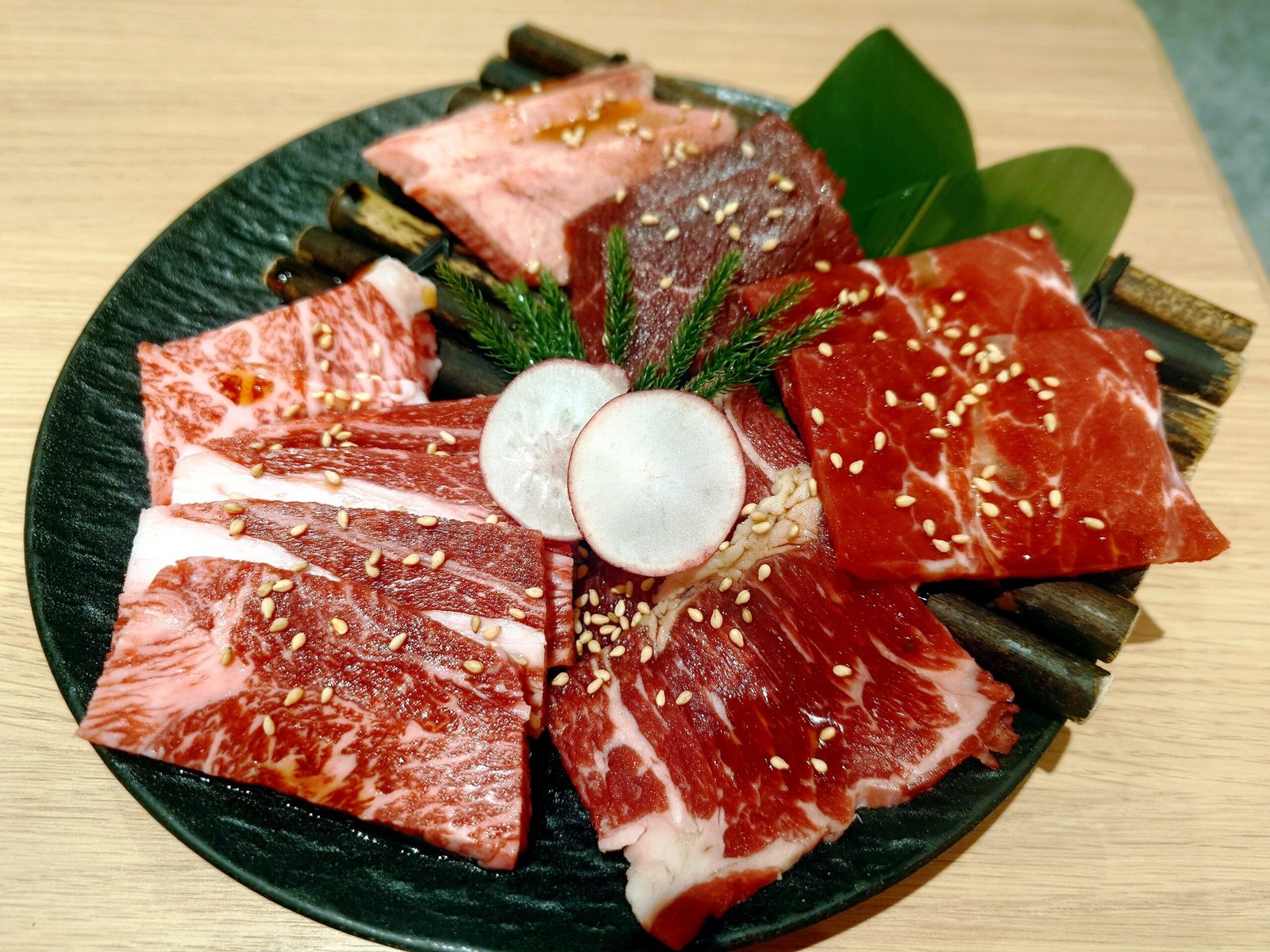
Assorted beef cuts for yakiniku. Photo: Ceeseven via Wikimedia Commons (CC BY-SA 4.0), cropped.
Aim for 5,000 to 6,000 calories over two to three hours. That’s two to three times what an adult eats in a day, and still only about a tenth of our low-end Saiyan estimate. It’s the most Saiyan meal a normal person can reasonably try.
The cuts: center your order on kalbi (marinated short rib) and harami (skirt steak), both rich, high-flavor yakiniku staples. Add tongue (tan) for a leaner, chewier contrast and rosu (rib eye) for marbling. If there’s a wagyu option, get at least one plate. Goku doesn’t order the cheapest cut. He orders everything.
The rice: eat white rice between meat servings, not instead of them. It resets your palate so you can keep going. It’s also on theme: Goku’s son is named Gohan, the Japanese word for cooked rice.
The sides: kimchi, pickles and namul (seasoned vegetables) cut through the fat that starts building up around the 2,000-calorie mark. Don’t skip them.
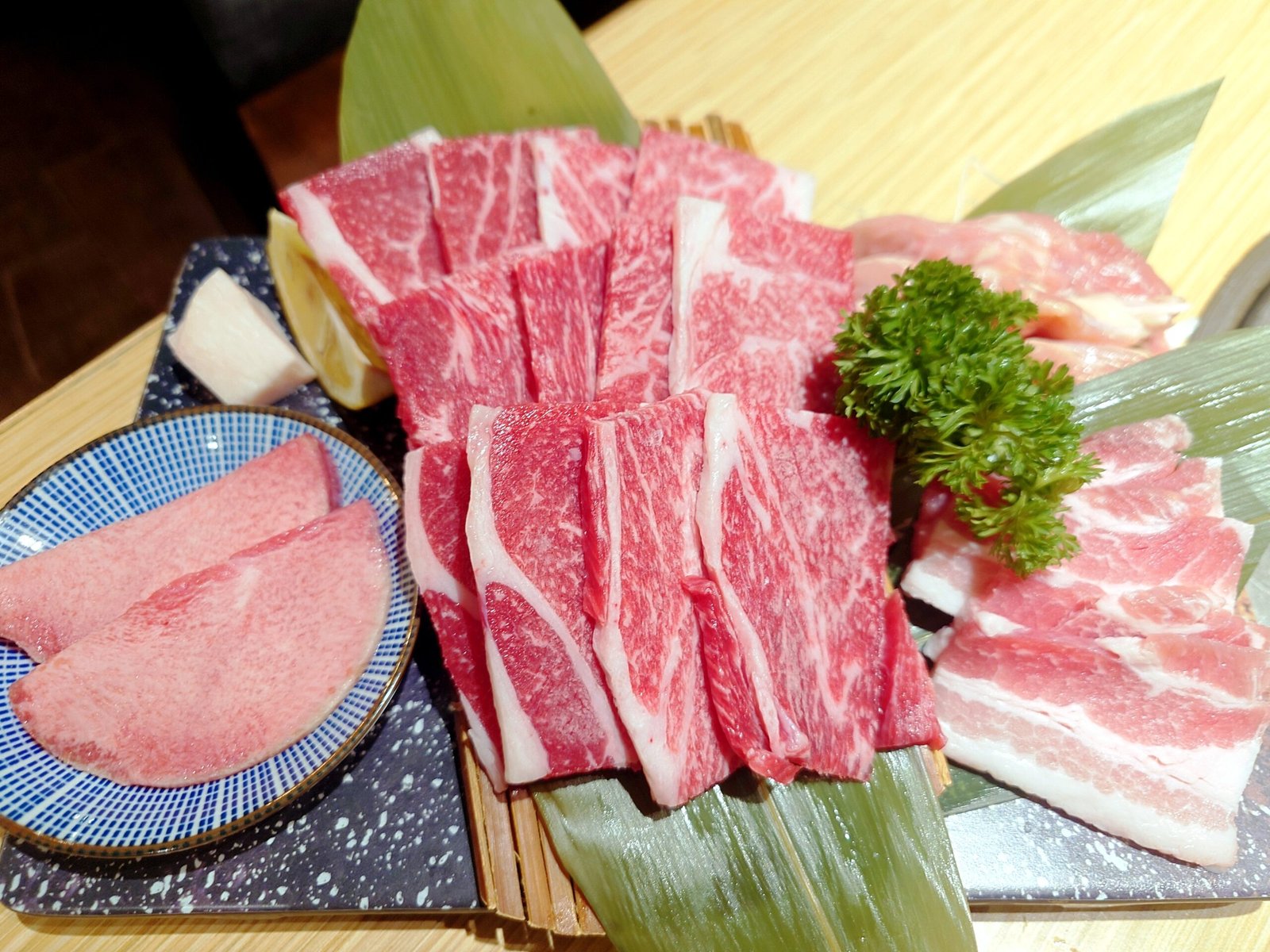
Beef, pork and chicken for a mixed yakiniku spread. Photo: Ceeseven via Wikimedia Commons (CC BY-SA 4.0), cropped.
To do it at home, you need a grill surface at the table. Iwatani’s Aburi stovetop grill pan ($42.99 on Amazon, sold by Iwatani) is made for Korean and Japanese barbecue.
What happens when you actually try it?
The first hour is genuinely fun. Tableside grilling keeps you busy: watching the fat edges of the kalbi char, timing the flip on the tongue. The food keeps coming, you keep eating, and you understand why this is a celebration meal.
Around the 90-minute mark, the fat catches up. The marbling that made the first hour great starts to feel heavy, and your fullness signals stop being polite. That’s where the challenge really starts.
Goku would push straight through, and that’s the gap between human and Saiyan biology. The goal isn’t to match him. It’s to eat a serious meal well past where most people stop, and to stop when you feel sick. This isn’t a speed-eating contest.
After the meal, walk slowly for 30 minutes. Goku would train. You won’t, and that’s fine.
Frequently Asked Questions
What is Goku’s diet?
Everything, in huge amounts. The Daizenshuu 4 guidebook says Saiyans have no particular favorite food, but they seem to prefer meat.
How much does Goku eat?
After the 21st World Martial Arts Tournament, 12-year-old Goku ate 50 full-course meals (57 in the English dub) in one sitting and still wanted dessert.
How many calories do Saiyans eat a day?
There’s no official number. If Saiyans eat 30 to 40 times as much as humans, as the Dragon Ball Wiki puts it, that’s roughly 60,000 to 100,000 calories a day.
Can Saiyans get fat?
It’s much harder for them than for humans. Their metabolism burns through food fast and even protects them from indigestion.
Does Vegeta eat as much as Goku?
Yes. The huge appetite is a Saiyan trait, not just a Goku quirk. Even half-Saiyan Gohan started eating like his dad once he became a Super Saiyan.
Next step: find a yakiniku spot with an all-you-can-eat menu and order the kalbi and harami first. For more anime food, see our Jujutsu Kaisen food guide, the Ichiraku ramen challenge and the Luffy diet challenge, plus everything confirmed about the new Dragon Ball Super anime.
Sources: Goku’s tournament meal from Dragon Ball’s 21st World Martial Arts Tournament arc. Saiyan appetite, metabolism and Daizenshuu 4 details from the Dragon Ball Wiki, checked October 1, 2026. Calorie figures are NerdSnack estimates. Amazon price checked October 1, 2026. Photos: Wikimedia Commons, credited under each image.
The Weekly Pull
The biggest card price moves, every Friday.
The week’s biggest card and collectible price moves, plus the movie, anime and game releases worth knowing about. Sign up and get our free Black Friday 2026 price-to-beat cheat sheet. Free. Unsubscribe anytime.
Related Posts:


Talk to us
Got a question, a tip or a request? Email us.
A real person reads every message at hello@nerdsnack.com, and we usually reply within 1–2 business days.
Prefer a form? Use our contact page.
Get authentic Japanese snacks, anime candy, and nerd-themed food delivered to your door. Use code NERDSNACK for 15% off your first box.