Verdict: Demon Slayer’s favorite foods come from the official fanbooks and the anime’s “Taisho Secret” segments. Tanjiro loves angelica tree sprouts (tara no me), Nezuko loves konpeito candy, Zenitsu loves sweets and high-quality eel, and Rengoku’s favorite is miso soup with sweet potatoes. Here’s every main character and Hashira, plus a Demon Slayer meal plan you can actually eat.
Updated October 2, 2026 · Favorite foods from the official Demon Slayer fanbooks and Taisho Secrets, via the Kimetsu no Yaiba Wiki
Who this is for: Demon Slayer fans who want to know what the Corps eats, and anyone planning a themed watch party before the next Infinity Castle movie.
What are the Demon Slayer characters’ favorite foods?
Almost every main character has an official favorite, most of them listed in the first fanbook:
| Character | Favorite food |
|---|---|
| Tanjiro Kamado | Tara no me (angelica tree sprouts) |
| Nezuko Kamado | Konpeito sugar candy |
| Zenitsu Agatsuma | Sweets and high-quality eel (kabayaki) |
| Inosuke Hashibira | Tempura |
| Kanao Tsuyuri | Ramune (drink), and all of Aoi’s cooking |
| Genya Shinazugawa | Watermelon |
| Kyojuro Rengoku | Miso soup with sweet potatoes |
| Giyu Tomioka | Simmered salmon and daikon |
| Shinobu Kocho | Ginger tsukudani |
| Mitsuri Kanroji | Pork cutlets and omurice |
| Tengen Uzui | Fugu (pufferfish) sashimi |
| Muichiro Tokito | Furofuki daikon |
| Sanemi Shinazugawa | Ohagi (red bean mochi) with matcha |
| Gyomei Himejima | Takikomi gohan (seasoned rice) |
| Obanai Iguro | Tororo kombu (shaved kelp) |
What do Tanjiro, Nezuko, Zenitsu and Inosuke eat?
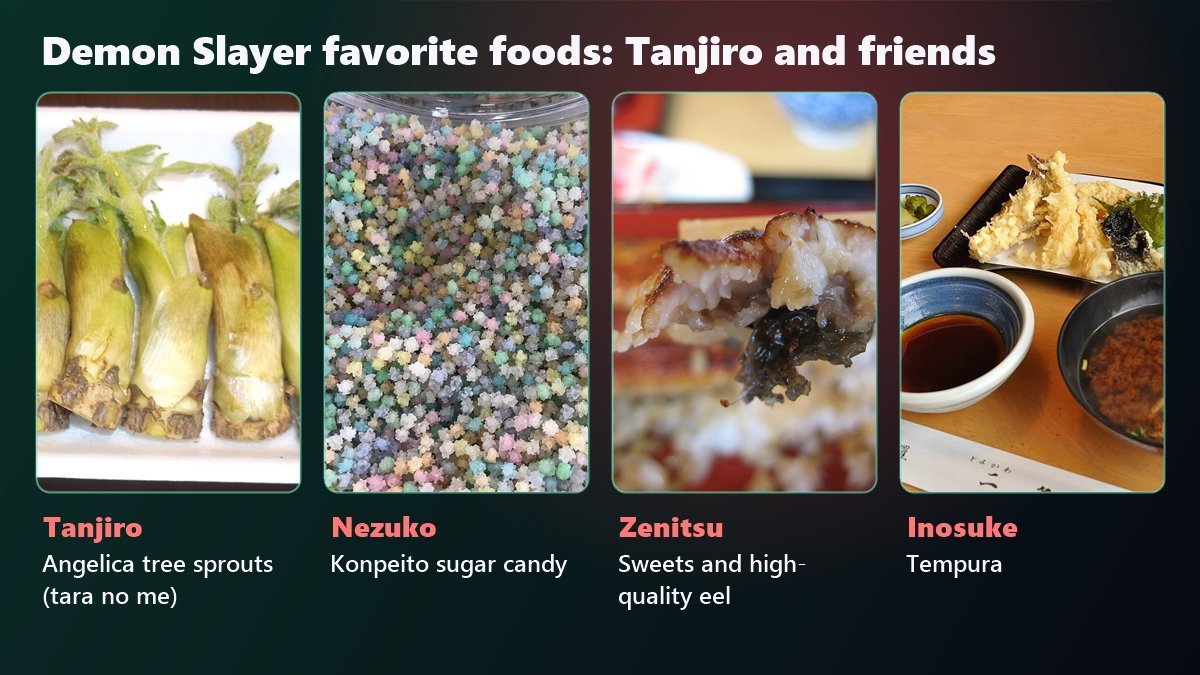
Tara no me, konpeito, eel kabayaki and tempura. Photos via Wikimedia Commons: Kentin (CC BY-SA 4.0), Islandsislands (CC0), naotakem (CC BY 2.0), Ocdp (CC0), cropped. This banner is shared under CC BY-SA 4.0.
Tanjiro’s favorite is tara no me, the spring sprouts of the Japanese angelica tree, usually eaten as tempura. According to the fanbook, even when he stays composed, you can see his nostrils flare when they’re on the table.
Nezuko’s favorite is konpeito, the tiny star-shaped Japanese sugar candies. As a demon she doesn’t eat for most of the series, which makes it a bittersweet detail.
Zenitsu loves sweets and expensive food, especially high-quality eel (kabayaki). The fanbook jokes that he’d be chubby if he weren’t a swordsman, and Tanjiro’s later status report says he did gain about 5 kg (11 lb) after retiring. A Taisho Secret adds that his favorite onigiri filling is salmon.
Inosuke loves tempura. He wolfs it down while resting at the Wisteria family house and uses it as motivation during training.
What are the Hashira’s favorite foods?
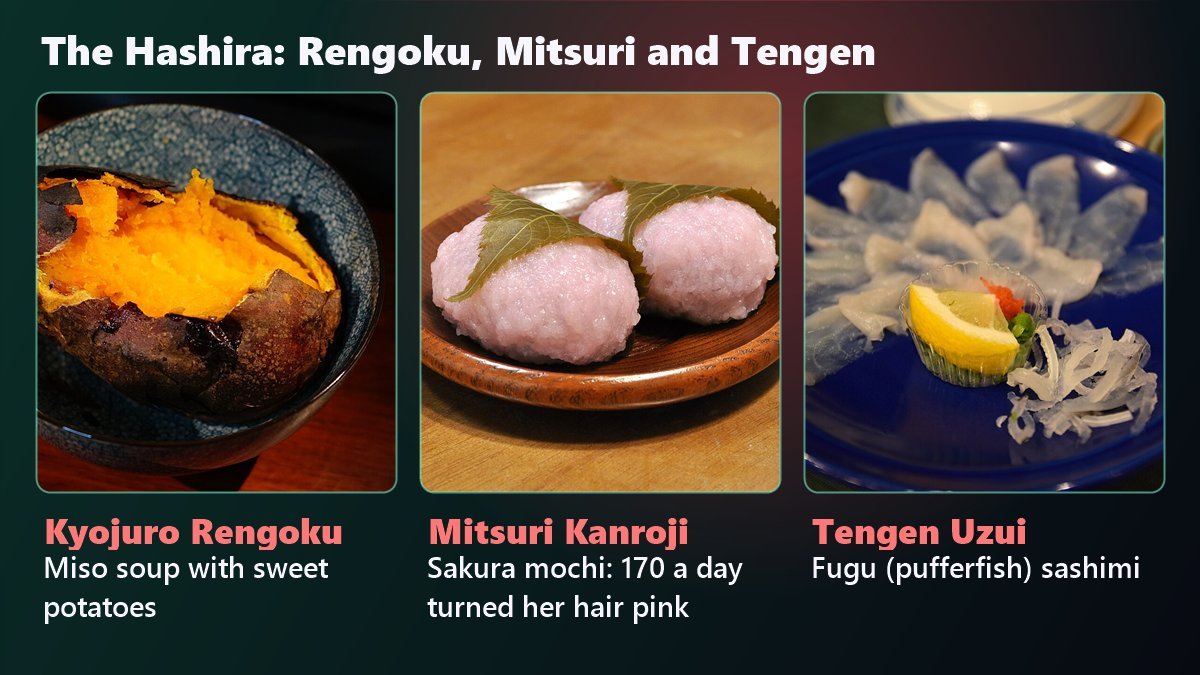
Sweet potato, sakura mochi and fugu sashimi. Photos via Wikimedia Commons: Silentpilot (CC0), Ocdp (CC0), Raita Futo (CC BY 2.0), cropped.
Kyojuro Rengoku
Miso soup with sweet potatoes. A Taisho Secret adds that his favorite lunch is grilled sea bream with sweet potato rice. He’s also behind one of the series’ best food moments: putting away a stack of bento boxes on the Mugen Train and shouting “Umai!” (delicious) after every bite.
Mitsuri Kanroji
Her favorites are pork cutlets and omurice, according to a Taisho Secret. Her most famous food fact is sakura mochi: another Taisho Secret says her pink-and-green hair came from eating 170 sakura mochi a day for eight months.
Tengen Uzui and Giyu Tomioka
Tengen’s favorite is fugu sashimi, fittingly flashy for the Sound Hashira. Giyu’s is simmered salmon with daikon, and a bonus page in Volume 5 says a fresh plate of it once made him smile.
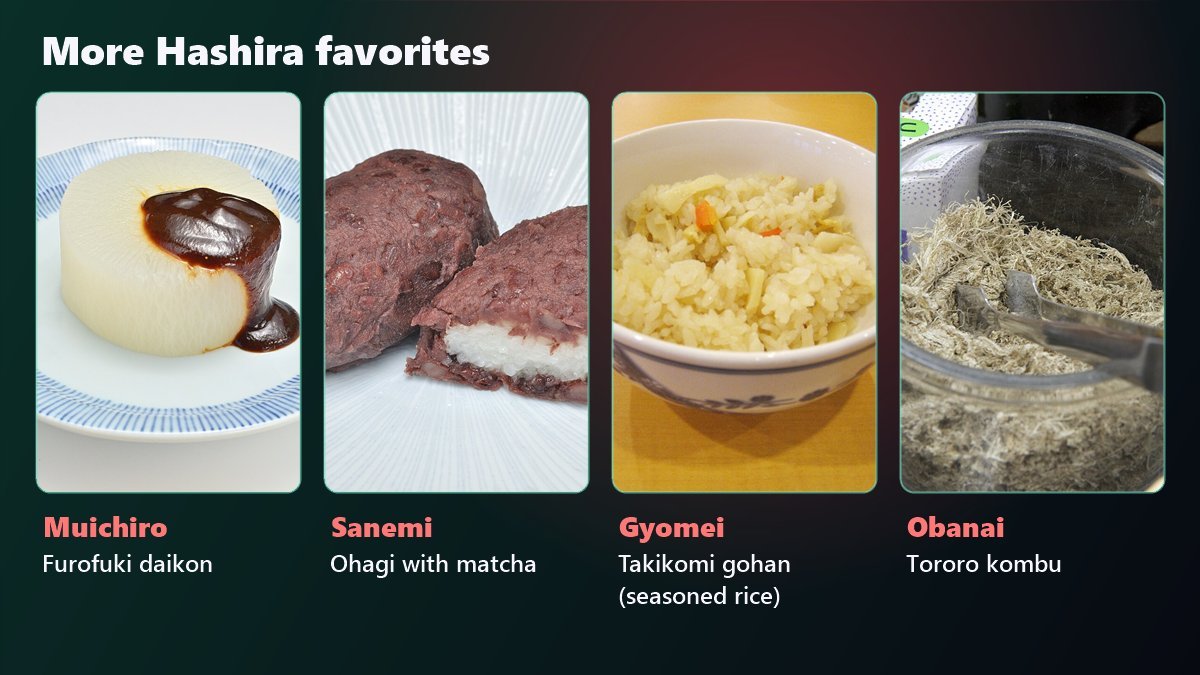
Furofuki daikon, ohagi, takikomi gohan and tororo kombu. Photos via Wikimedia Commons: Ocdp (CC0), Ocdp (CC0), Lombroso (public domain), Hiroshi Ishii (CC BY 2.0), cropped.
Muichiro, Sanemi, Gyomei, Obanai and Shinobu
- Muichiro Tokito: furofuki daikon, thick daikon slices simmered and topped with miso.
- Sanemi Shinazugawa: ohagi (red bean mochi), which he likes with matcha.
- Gyomei Himejima: takikomi gohan, rice cooked with seasonings and vegetables.
- Obanai Iguro: tororo kombu, fine shavings of vinegared kelp.
- Shinobu Kocho: ginger tsukudani, ginger simmered in soy and sugar.
Keep Reading: Jujutsu Kaisen Food: Every JJK Character's Favorite Food · One Piece Food: Every Straw Hat's Favorite Food · The Apothecary Diaries Food Challenge: Maomao's Real Medicine Recipes
How do you eat like a Demon Slayer for a day?
Build each meal around a different character. Most of these are easy to find at a Japanese restaurant or an Asian grocery:
| Meal | What to eat | Whose favorite |
|---|---|---|
| Breakfast | Miso soup with sweet potatoes, and salmon onigiri | Rengoku, Zenitsu |
| Lunch | Tempura, including tara no me in spring | Inosuke, Tanjiro |
| Snack | Ohagi with matcha, or konpeito | Sanemi, Nezuko |
| Dinner | Pork cutlets or omurice, with simmered daikon | Mitsuri, Muichiro |
| Dessert | Watermelon and a bottle of ramune | Genya, Kanao |
Skip the fugu unless a licensed chef is preparing it. Pufferfish is poisonous if it’s cut wrong.
Where do Demon Slayer’s favorite foods come from?
Mostly from the official fanbooks, with extra details from the anime’s Taisho Secret segments. The first fanbook is out in English as Demon Slayer: Kimetsu no Yaiba—Corps Records (VIZ, September 2023, 256 pages), which is $13.59 on Amazon, sold by Amazon, and includes a bonus manga.
Frequently Asked Questions
What is Tanjiro’s favorite food?
Tara no me, the sprouts of the Japanese angelica tree. His nostrils flare when they’re on the table.
What is Nezuko’s favorite food?
Konpeito, small star-shaped Japanese sugar candies.
What is Rengoku’s favorite food?
Miso soup with sweet potatoes. His favorite lunch is grilled sea bream with sweet potato rice.
Why is Mitsuri’s hair pink and green?
According to an anime Taisho Secret, she ate 170 sakura mochi a day for eight months.
What is Giyu’s favorite food?
Simmered salmon and daikon. A fresh plate once made him smile.
Next step: pick a Hashira and cook their favorite before your next rewatch. For more, see our Infinity Castle review, the best Demon Slayer merch, and more anime food in our One Piece favorite foods and Jujutsu Kaisen food guides.
Sources: favorite foods from the official Demon Slayer fanbooks, Volume 5 extra pages and the anime’s Taisho Secrets, as compiled by the Kimetsu no Yaiba Wiki, checked October 2, 2026. Book details and Amazon price checked October 2, 2026. Photos: Wikimedia Commons, credited under each image.
The Weekly Pull
The biggest card price moves, every Friday.
The week’s biggest card and collectible price moves, plus the movie, anime and game releases worth knowing about. Sign up and get our free Black Friday 2026 price-to-beat cheat sheet. Free. Unsubscribe anytime.
Related Posts:

Talk to us
Got a question, a tip or a request? Email us.
A real person reads every message at hello@nerdsnack.com, and we usually reply within 1–2 business days.
Prefer a form? Use our contact page.
Get authentic Japanese snacks, anime candy, and nerd-themed food delivered to your door. Use code NERDSNACK for 15% off your first box.