
The Fantastic Four is the most ambitious Commander precon in the Marvel Super Heroes set. Four legendary commanders. Four distinct playstyles. One box. Each member of Marvel’s First Family enables a fundamentally different strategy within the same 99-card shell — from Mister Fantastic’s high-complexity triggered ability copying to The Thing’s pure beatdown plan. Here is a complete guide to all four builds, plus the cuts and upgrades that make each version the best it can be.
Keep Reading: Every MTG Marvel Commander Precon Ranked · Best New Cards in MTG Marvel Super Heroes
Why Four Commanders in One Box Is Such a Big Deal
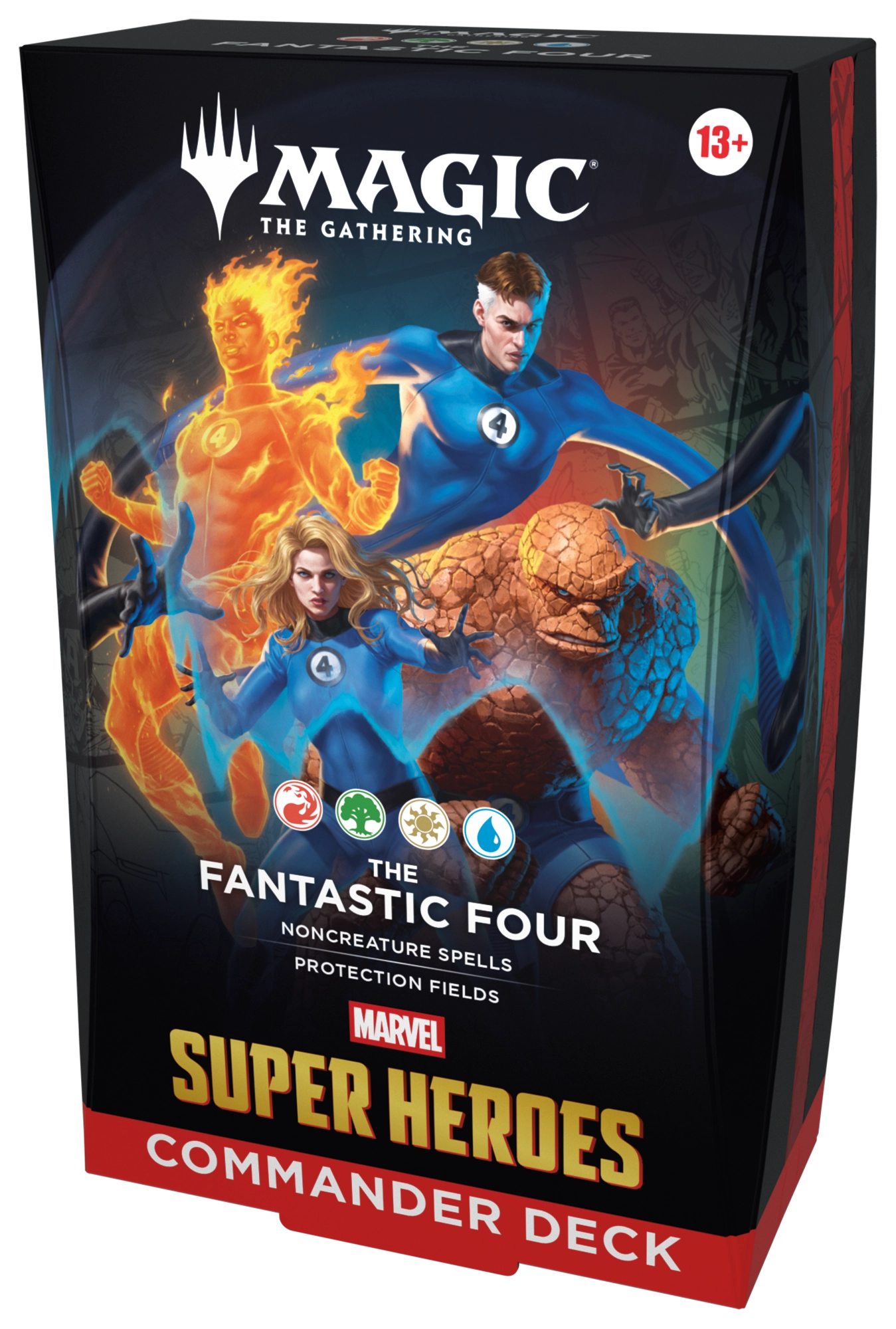
Most Commander precons offer one commander with one or two alternate options that play similarly. The Fantastic Four is different. Swapping between Mister Fantastic, Invisible Woman, Human Torch, and The Thing is not a cosmetic choice — it is a fundamental change to the deck’s strategy, win condition, and how opponents interact with it. Each commander functions as a modifier applied to the same core card pool.
This design is similar to the TMNT Commander deck, which similarly offered four commanders with four identities in a single box. That deck was celebrated precisely for this feature. The Fantastic Four takes the same approach with characters who have arguably more narrative and mechanical divergence between them than the Turtles did.
Commander 1: Mister Fantastic — The Combo Build

Mister Fantastic is the highest-ceiling commander in the box. His core ability copies triggered abilities — when triggered abilities you control resolve, Reed Richards can generate additional copies, creating chains of value that rapidly outpace what a table can respond to.
This is the build for experienced players who understand the stack, trigger timing, and how to sequence a chain of copied effects into a game-ending position. Strionic Resonator becomes a second independent trigger copier. Lithoform Engine copies anything on the stack. Thousand-Year Storm turns each instant and sorcery into an exponential sequence. In the hands of a player who knows what they are doing, Mister Fantastic creates turns that opponents cannot interrupt because the trigger chain resolves faster than anyone can track.
Win Condition: Accumulated copied trigger value → overwhelming board advantage → combat or direct damage win.
Best For: Experienced Commander players, spellslinger and combo enthusiasts, anyone who wants maximum complexity and the highest power ceiling in the box.
Commander 2: Invisible Woman — The Control Build

Sue Storm leads the most defensive build available in the box. Her abilities center on protection — making key permanents invisible to opponents, generating phasing effects that dodge interaction, and building a shell that accumulates value behind a wall that becomes increasingly difficult to breach as the game progresses.
The Invisible Woman build is deceptively powerful at the table. It looks passive and nonthreatening, which encourages opponents to focus elsewhere while your board develops quietly. By the time the table realizes how much advantage has accumulated behind the protection shell, the gap is frequently insurmountable. This is the political player’s version of the Fantastic Four — you win by being ignored until it is too late.
Win Condition: Protected value accumulation → incremental advantage → overwhelming board state while opponents fight each other.
Best For: Control players, defensive strategists, players who enjoy winning through patience and incremental advantage.
Commander 3: Human Torch — The Aggro Build

Johnny Storm takes the four-color shell in an aggressively different direction. His abilities deal direct damage, generate flame tokens, and punish defensive players who assume they are safe behind blockers. The Human Torch build is the most linear of the four — play threats, deal damage, activate abilities, repeat — and is deliberately the simplest to pilot without losing coherence.
This is the right choice when you want to take the Fantastic Four precon to a new player or casual table and just play something fun and linear. The damage-dealing nature of the strategy also means you are winning before opponents fully develop their own engines, which gives the Torch build a time advantage the other three commanders do not naturally have.
Win Condition: Early damage pressure → direct burn and token aggression → reduce all opponents to zero before they stabilize.
Best For: New players, aggressive playstyle fans, casual tables focused on clean gameplay and fun interactions.
Commander 4: The Thing — The Beatdown Build
Ben Grimm does not do subtlety. The Thing’s abilities are centered on high power and toughness, fighting effects that eliminate blockers by having creatures simply punch them out of the way, and a ground-based attrition strategy that grinds opponents out through sheer durability. He is the Commander equivalent of walking into a room and punching everyone until the room is clear.
The Thing build rewards players who want the clearest possible win condition: make your creatures as large as possible, attack, keep attacking, and win through combat damage. The deck’s noncreature spell core still generates value under Ben Grimm, but the aggressive posture means you are converting that value into board size rather than control or combo lines.
Win Condition: Large creatures → combat dominance → straightforward damage win.
Best For: New players, Timmy-style players who love big creatures, anyone who wants the clearest board-based win condition in the box.
Keep Reading: MTG Marvel Super Heroes: Everything We Know Week of June 9 · MTG Universes Beyond: Every Crossover Set Ranked
10 Cards to Cut
ETB-tapped lands (3–4) — Four-color mana is the deck’s greatest structural challenge. Every land entering tapped is a development setback in a deck that wants to be doing things on every turn. Cut any unconditionally tapped lands and replace with Triomes, Pathways, or Shocklands.
Generic creatures without triggered abilities — The Fantastic Four deck rewards triggered abilities specifically. Any creature providing only a static body without a “whenever” clause contributes significantly less than creatures with triggers the deck can copy or amplify.
Overcosted copy effects — The modern card pool has copy effects at lower mana costs than precons typically include. Evaluate each copy spell against its market equivalent and upgrade the highest-cost ones first.
Situational single-use protection spells — One-time protection requiring specific conditions underperforms compared to always-on options like Heroic Intervention or Teferi’s Protection.
Colorless mana rocks that do not fix colors — Four-color decks need every mana rock to help fix the color base. Purely colorless rocks take slots that flexible color-producing rocks would fill more effectively.
10 Upgrades — Core Additions for All Four Commanders
Card Advantage
Archmage Emeritus ($4–6) — Draws a card whenever you cast or copy an instant or sorcery. In a noncreature spell-heavy deck this draws multiple cards per turn. Applies to all four commander builds.
Niv-Mizzet, Parun ($8–10) — Deals one damage to any target whenever you draw a card and draws a card whenever an instant or sorcery is cast. A self-feeding engine that generates advantage and damage simultaneously.
Copy Effects (Mister Fantastic and Human Torch Priority)
Strionic Resonator ($3–5) — Copies any triggered ability for two mana. With Mister Fantastic already copying triggers, this creates a second independent copy engine on demand.
Lithoform Engine ($4–6) — Copies spells, activated abilities, and triggered abilities from a single permanent. The all-in-one copy engine that excels in the Mister Fantastic build and remains impactful for Human Torch.
Thousand-Year Storm ($8–12) — Copies each instant or sorcery you cast once for each spell already cast this turn. Creates exponential spell sequences under Mister Fantastic.
Protection (Invisible Woman Priority)
Teferi’s Protection ($25–35) — Phases your entire board out until your next turn. Survives board wipes, mass removal, and targeted interaction simultaneously. The definitive protection spell for the Sue Storm build.
Vanishing ($2–3) — Enchantment aura that gives a permanent phasing for sustained protection. Makes critical permanents immune to most interaction.
Combat (The Thing Priority)
Branching Evolution ($8–12) — If one or more +1/+1 counters would be placed on a creature you control, place twice that many. The Thing appreciates becoming significantly larger.
Inscription of Abundance ($1–2) — Flexible green instant that grows a creature, fights a creature, or gains life depending on modes chosen. Essential combat utility for the beatdown build.
Mana Base (All Builds)
Raugrin Triome / Ketria Triome ($8–12 each) — Three-color lands that cycle when unnecessary. Essential mana fixing for a four-color deck. Replace the two weakest ETB-tapped lands immediately.
Final Verdict on The Fantastic Four
The Fantastic Four is the best Commander precon released in 2026 in terms of value per dollar and gameplay variety per box. Not the most powerful — that is Doom Prevails — but the most fun across repeated sessions, with the highest replay value and the widest range of gameplay experiences available from a single $74.99 purchase. Four commanders means the deck surprises your opponents every time they think they have figured out your strategy. The Collector’s Edition at $150 in Surge Foil is the most visually impressive physical product in the entire set.
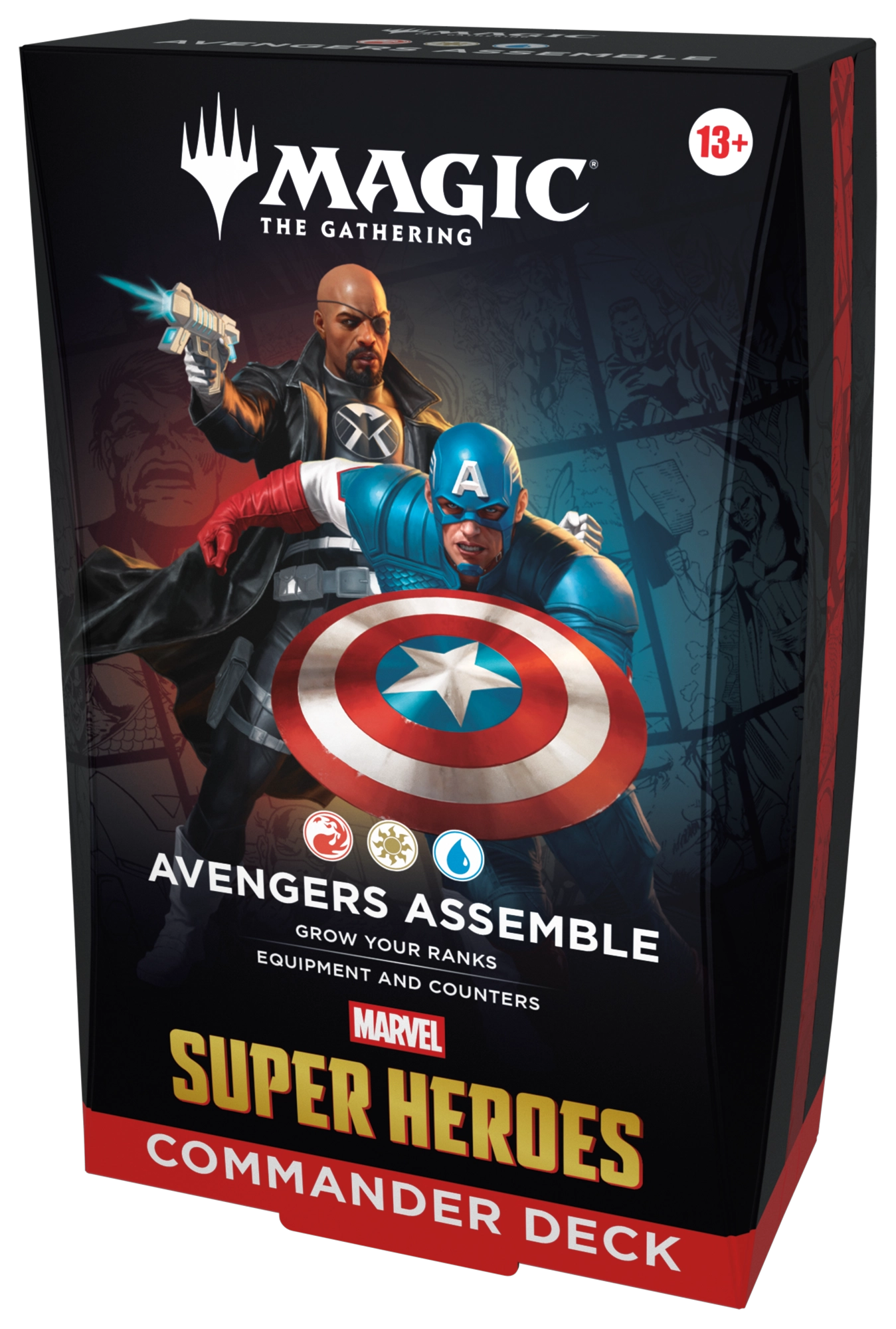
Keep Reading: Avengers Assemble Precon: Full Guide and Upgrades · Wakanda Forever Precon: Full Guide and Upgrades


TCGPlayer has the best prices on Magic, Pokemon, Dragon Ball, and Riftbound singles — with seller ratings and buyer protection.