Magic: The Gathering’s first Marvel crossover — Marvel’s Spider-Man — released in September 2025 as a full 286-card Standard-legal expansion with its own draft format, token set, art series, and promos. Now, Marvel Super Heroes arrives as the second wave: 453 cards, a companion Commander set, and the entire Marvel universe expanded well beyond the Spider-Man corner of it. Here is an honest comparison of both sets and what they tell us about where Universes Beyond is heading.
Standout Cards From Both Sets
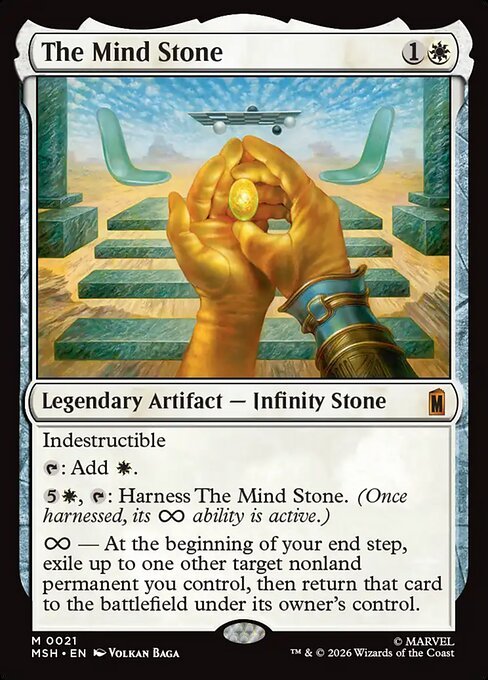
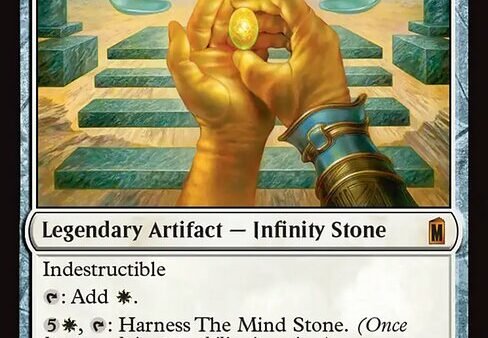
The Mind Stone
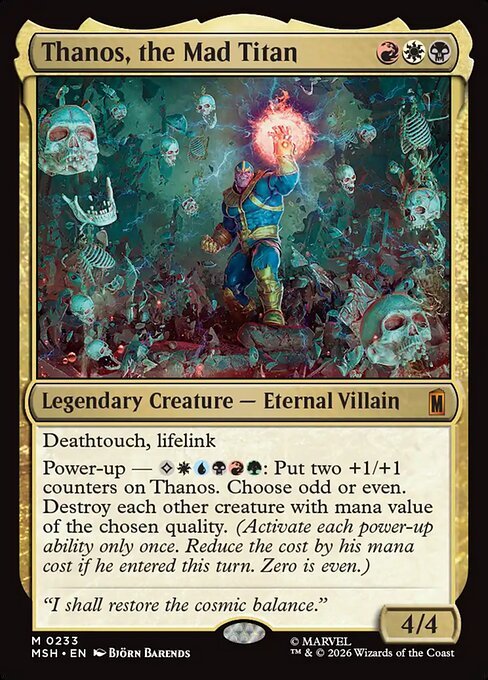
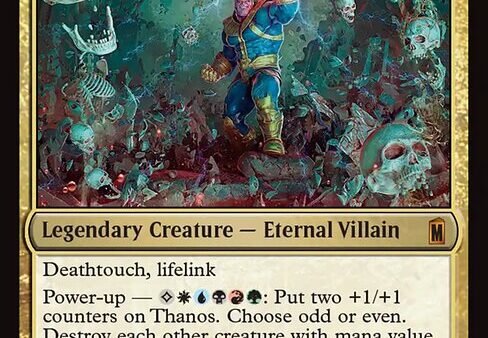
Thanos, the Mad Titan
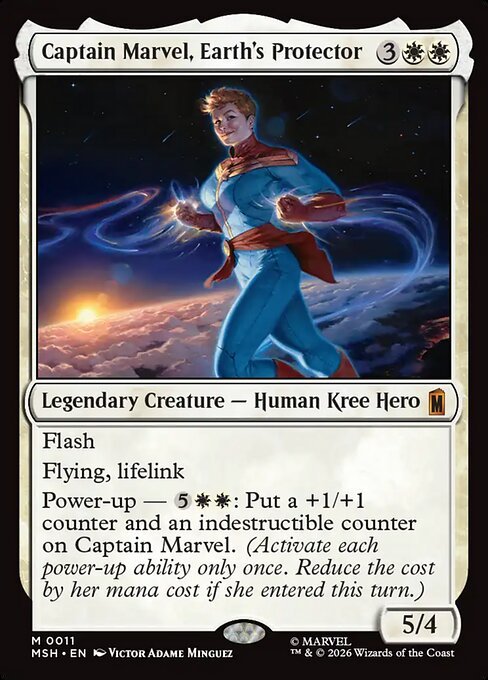
Captain Marvel, Earth’s Protector
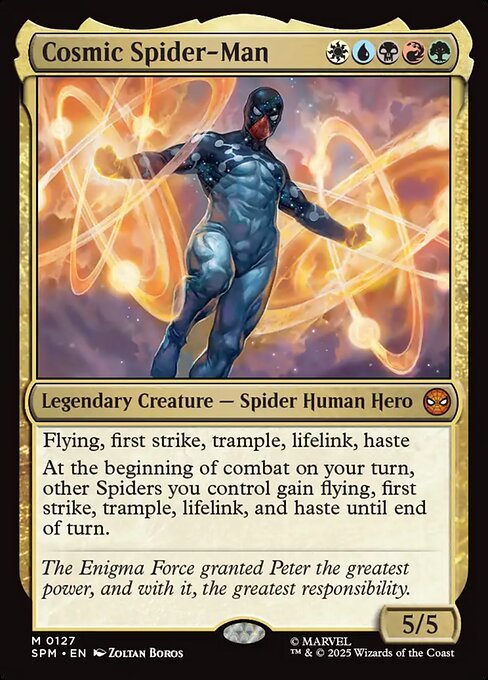
Cosmic Spider-Man
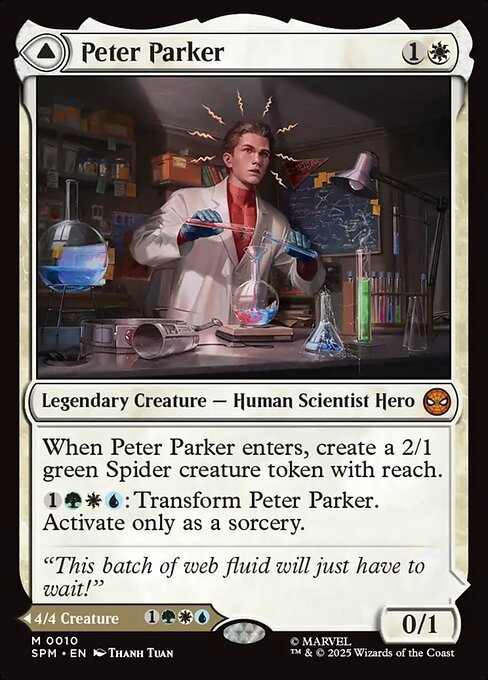
Peter Parker // Amazing Spider-Man
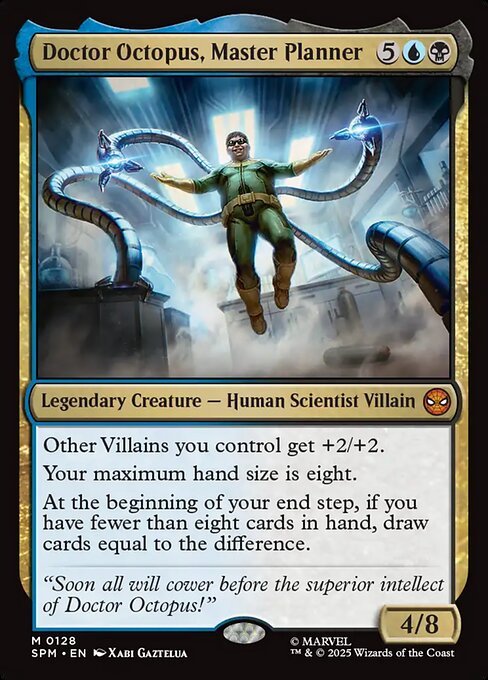
Doctor Octopus, Master Planner
Keep Reading: MTG Universes Beyond Tier List: Every Crossover Set Ranked (2020-2026) · MTG Marvel Super Heroes: Card List, Every Product & Prices (October 2026)
What the Spider-Man Set Was
Marvel’s Spider-Man, released in September 2025, was a full 286-card Standard-legal expansion (set code SPM) focused entirely on Spider-Man’s corner of the Marvel universe. The set included cards like Spider-Man, Web-Slinger; Aunt May; Doc Ock, Sinister Scientist; and a handful of supporting characters, with alternate art treatments and premium foiling.
It was not a full set, but a focused one — it had its own limited/draft format, a 100-card “Marvel Universe” masterpiece reprint set, plus companion token, art series, and promo sets. It didn’t include Commander precons or branch outside the Spider-Man cast, so for players who wanted the broader Marvel roster, it was a strong start but still just one corner of the universe — well-executed but ultimately limited in scope in scope.
The community reception was honest about this. The individual card designs were praised for mechanical creativity and flavor accuracy. Because the set was scoped entirely to Spider-Man’s cast, the design space was narrower than a full multi-team Marvel set — but it worked well within that focus, and the limited format gave it a real play product alongside its collector appeal.
What Marvel Super Heroes Changes
Marvel Super Heroes is a full Magic: The Gathering expansion — the same format as any standard set release. It has a complete draft environment. It introduces formal creature types (Hero and Villain) that establish a mechanical foundation for future Marvel releases. It has four Commander precon decks covering four corners of the Marvel universe. It has a full product lineup serving every player type from budget-conscious drafters to premium collectors.
The scope difference is not incremental — it is categorical. The Spider-Man drop asked “what would Marvel characters look like as Magic cards?” Marvel Super Heroes asks “what would Magic look like if the entire Marvel universe was part of it?” The answer involves 276 cards, three new mechanics, established creature types, and a Commander format that will be played for years.
Card Design Comparison
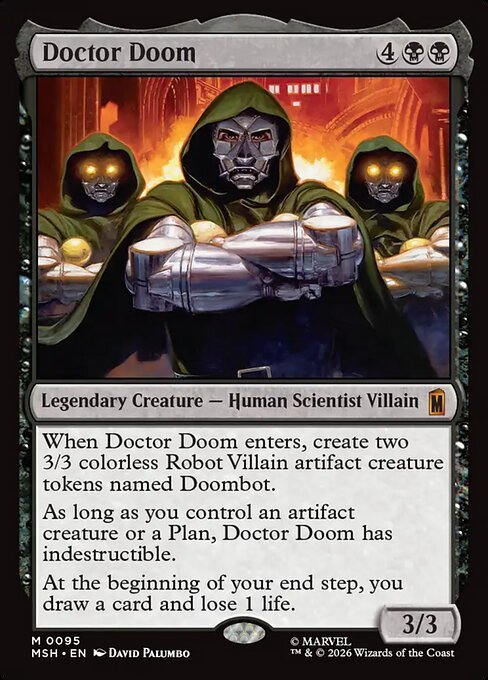
Spider-Man set: The designs were strong but were constrained by the single-corner focus on Spider-Man’s cast. Spider-Man, Web-Slinger was a generally praised design. Doc Ock captured the character’s planning and manipulation themes mechanically. Aunt May was a quiet fan favorite. But with fewer than 20 cards, there was no room for the kind of mechanic-wide design that defines a real set.
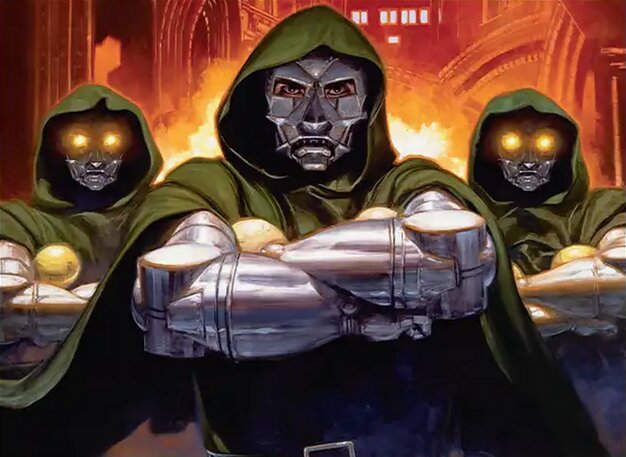
Marvel Super Heroes: The design space is incomparably larger. Bruce Banner transforming into The Incredible Hulk uses the Power-Up mechanic in a way that is both mechanically elegant and characterologically accurate. Thanos interacting with the Mind Stone is a multi-card payoff arc spread across the set. The Plans mechanic creates a literal “planning before a mission” mechanic that applies to both Heroes and Villains in contextually appropriate ways. Doctor Doom’s indestructibility while a Plan is active is one of the most flavorful mechanical designs in Universes Beyond history.
The gap in design ambition between the two releases is significant, and it reflects the difference between a small drop and a full expansion working from the entire Marvel character catalogue.
Competitive Implications
Spider-Man set: Spider-Man, Web-Slinger saw play in specific Commander builds and a few casual constructed formats. The competitive impact was minimal because the card pool was small and the mechanics were not deep enough to define a new archetype.
Marvel Super Heroes: Bruce Banner has been identified as a potential competitive concern in Pioneer and Modern. The Plans mechanic cycle is expected to define Commander deckbuilding within its archetypes for years. Hero and Villain as formal creature types create a foundation that every future Marvel release will build upon — meaning each new Marvel set will retroactively increase the value of cards from this one. The competitive footprint is orders of magnitude larger.
Value Comparison for Collectors
Marvel’s Spider-Man held value well as a Standard set with strong chase mythics — cards like Cosmic Spider-Man and Doctor Octopus, Master Planner command real secondary-market prices because of demand from both collectors and Standard players. Cards from the Spider-Man set occupy a specific collector niche tied to the wider MCU hype cycle.
Marvel Super Heroes will have a larger initial print run as a full Standard set, which typically means more supply and lower per-card prices at launch than its rarest chase cards will eventually settle to. However, those chase cards — borderless cosmic foil Mind Stone, alternate art Thanos and Doctor Doom Collector Booster exclusives, and any card from the Plans or Hero/Villain cycles that sees sustained competitive play — are expected to hold value at the level of major set staples, similar to how Marvel’s Spider-Man’s top mythics have performed.
Long-term, cards from Marvel Super Heroes that establish formal creature types (the first Hero typal payoffs, the first Villain typal payoffs) have historical precedent for holding value as future sets build on the established type. The Spider-Man drop does not have that foundation.
Which Is Worth Buying in 2026?
For players: Marvel Super Heroes. The Spider-Man set is a collector item. Marvel Super Heroes is a play product. If your goal is to play Magic with Marvel characters, the new set is unambiguously the right purchase.
For collectors: Both, for different reasons. The Spider-Man set has scarcity value and a defined limited print run. Marvel Super Heroes has broader market penetration and a longer support horizon — future sets will build on it and increase demand for its key cards retroactively.
For Commander players specifically: Marvel Super Heroes and do not look back. The Commander precons, the Hero and Villain type establishment, and the Plans and Teamwork mechanics all create a Commander environment with a companion Commander set (Marvel Super Heroes Commander) — something the Spider-Man set, focused on Standard and limited, did not include.
What This Tells Us About Universes Beyond
The progression from Marvel’s Spider-Man to Marvel Super Heroes shows Wizards of the Coast rolling out a major IP partnership in waves: a focused first set built around one corner of the universe, followed by a broader expansion that brings in the rest of the cast. Marvel’s Spider-Man tested market demand and design space for Marvel mechanics; Marvel Super Heroes is the full-roster follow-through.
This matters for predicting future Universes Beyond releases. A focused first expansion built around one character or team within a larger IP is a strong signal that a broader, full-roster expansion is already planned. Marvel’s two-set rollout — Spider-Man first, then the wider Marvel universe — may become the template for how Wizards approaches other large licensed properties.
The Bottom Line
Marvel’s Spider-Man was a strong full-set debut that demonstrated what Marvel characters could look like as Magic cards. MTG Marvel Super Heroes is what happens when Wizards applies the full resources of a major expansion release to that vision. The two products are not comparable in scope, and the community reception reflects that — Marvel Super Heroes is tracking as one of the most anticipated Universes Beyond releases in the format’s history.
MTG Marvel Super Heroes released June 23 on Arena and June 26 globally in tabletop. The Spider-Man set is available on the secondary market for collectors. For players, the choice is clear.
Keep Reading: MTG Marvel Super Heroes: Card List, Every Product & Prices (October 2026) · The 10 Most Valuable MTG Marvel Super Heroes Cards (October 2026)
Keep Reading: MTG Marvel Super Heroes: Card List, Every Product & Prices (October 2026)
Frequently Asked Questions
When did Marvel’s Spider-Man, MTG’s first Marvel set, release?
September 2025, as a full 286-card Standard-legal expansion with its own draft format, token set, art series, and promos.
How many cards are in MTG Marvel Super Heroes compared to Marvel’s Spider-Man?
Marvel Super Heroes has 453 cards plus a companion Commander set, versus 286 cards in Marvel’s Spider-Man — a significant expansion covering the entire Marvel universe rather than just Spider-Man’s corner of it.
Is MTG Marvel Super Heroes bigger than the original Spider-Man set?
Yes — it’s the second wave of Marvel content, with 453 cards and a companion Commander set compared to the first set’s 286 cards.
Pull your own Marvel cards.
Grab an MTG Marvel Play Booster on Amazon and build the deck yourself.
Add NerdSnack as a preferred source on Google
The Weekly Pull
The biggest card price moves, every Friday.
The cards that jumped or crashed in price this week, plus what’s releasing next. Sign up and get our free Black Friday 2026 price-to-beat cheat sheet. Free. Unsubscribe anytime.
Related Posts:
Talk to us
Got a card, a tip or a request? Email us.
A real person reads every message at hello@nerdsnack.com, and we usually reply within 1–2 business days.
Prefer a form? Use our contact page.
TCGPlayer has the best prices on Magic, Pokemon, Dragon Ball, and Riftbound singles — with seller ratings and buyer protection.