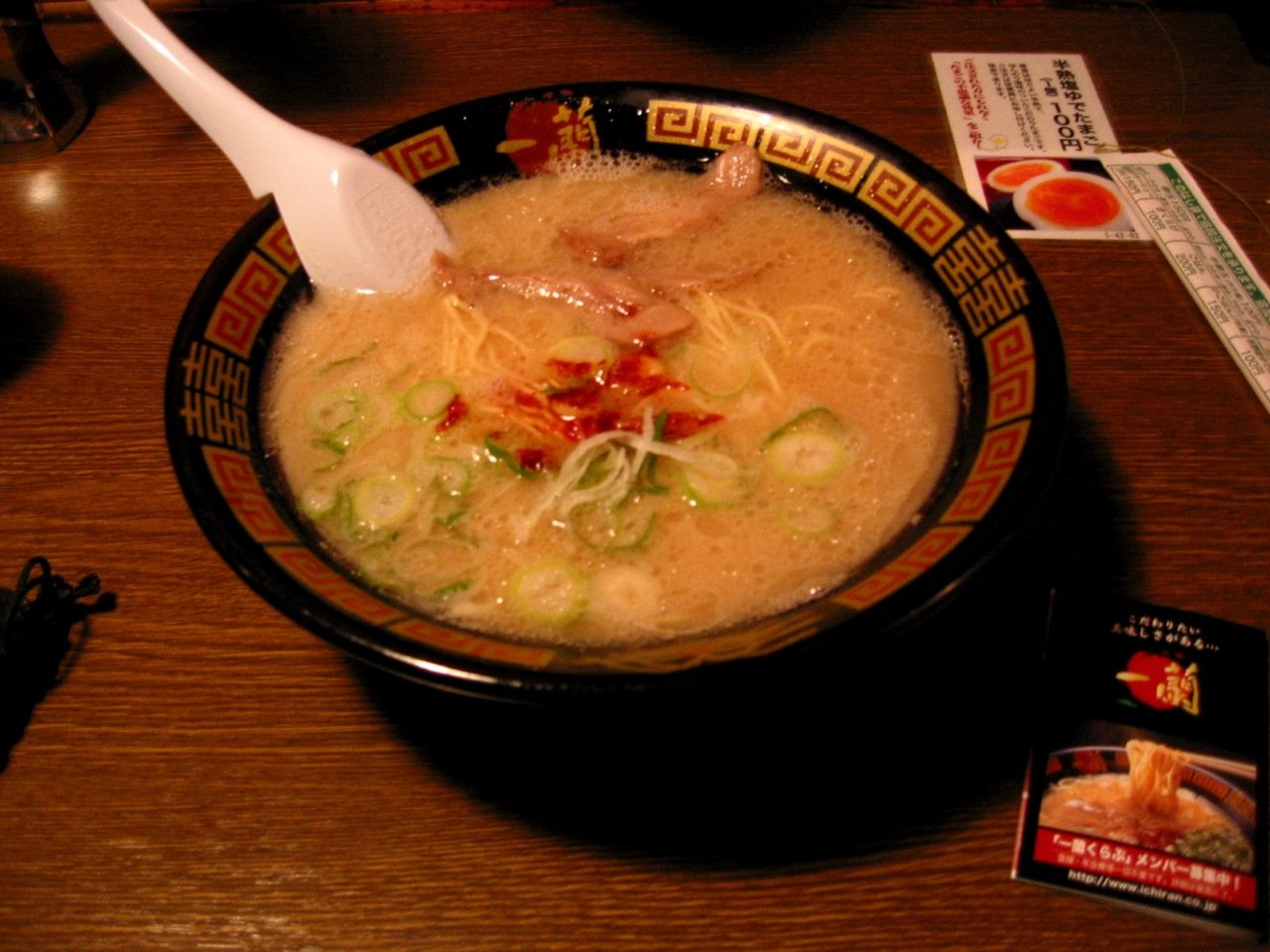
Ichiraku Ramen is more than a meal in the Naruto universe — it is Naruto Uzumaki’s sanctuary. The little noodle stand tucked under the Hokage Rock in the Hidden Leaf Village has been serving the show’s most iconic bowls since episode one. This is the recipe that gets it right at home.
The Ramen That Defined an Anime Generation
Few food moments in anime carry the emotional weight of Naruto sitting at Ichiraku’s counter. Created by mangaka Masashi Kishimoto and first introduced in the Naruto manga in 1999, the shop owned by Teuchi and his daughter Ayame became shorthand for comfort, belonging, and reward. Naruto ate there after his hardest missions, his loudest victories, and his quietest defeats.
The ramen served at Ichiraku is described throughout the series as a miso tonkotsu style — a hybrid that layers the deep pork richness of Hakata-style broth with the fermented complexity of white and red miso. It is heavier than a standard miso ramen, more nuanced than a straight tonkotsu, and recognisable by the distinctive narutomaki fish cake — the pink-swirled slices whose name is inseparable from the character who loves them.
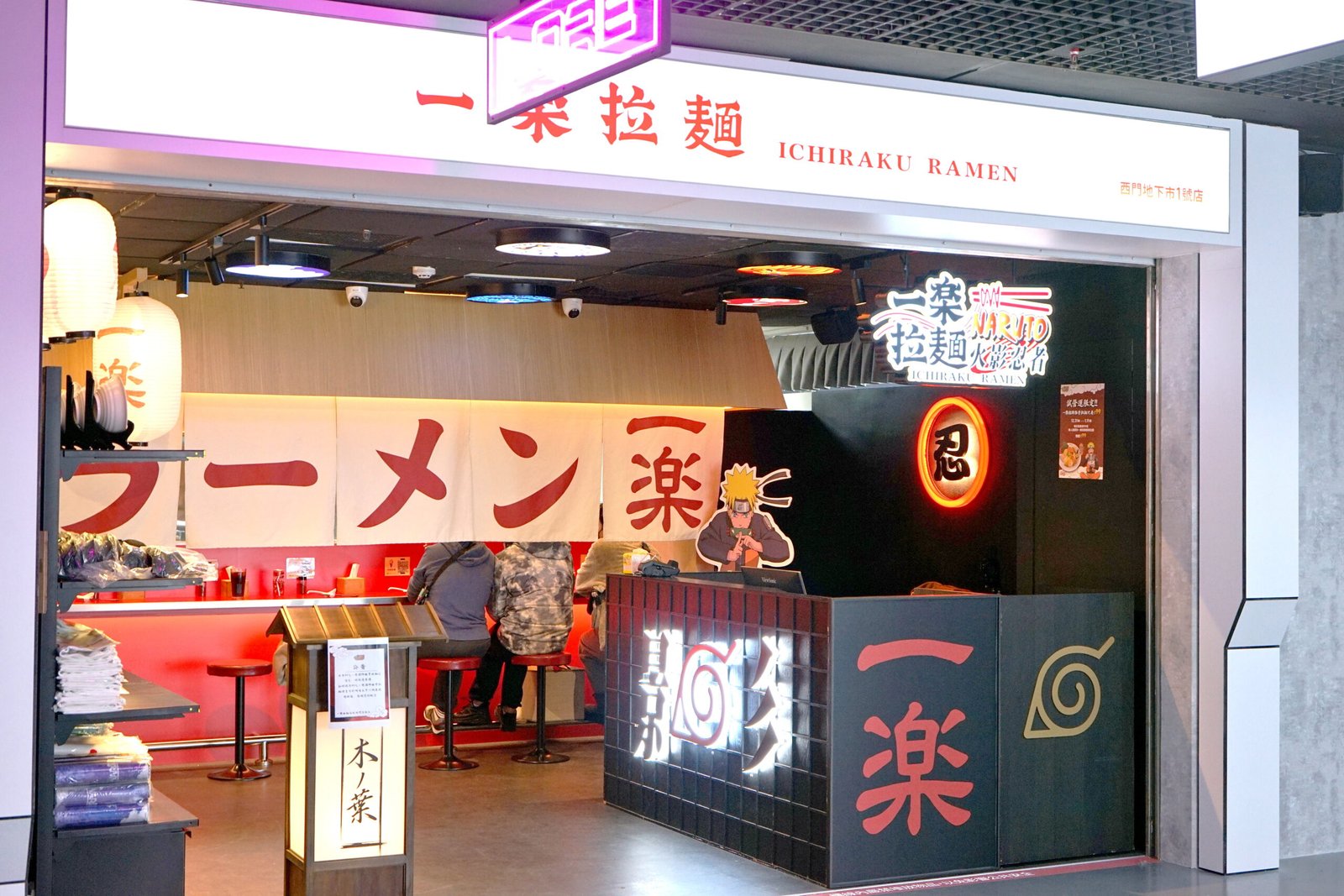
Ichiraku Ramen has since become a real-world brand, with licensed restaurants operating across Japan, Taiwan, and beyond — a testament to how deeply the shop embedded itself in the cultural memory of an entire generation of anime fans.
Before You Start: Understanding the Components
Ichiraku-style ramen is built in layers. Each element carries purpose, and shortcuts in the broth will show in the finished bowl. The recipe below produces a result close to the anime’s described flavour profile — deeply savoury, subtly sweet, with a long-simmered richness that develops during cooking.
The broth is the foundation. Pork bone broth provides the collagen-heavy base; miso paste adds fermented depth and body. Do not skip the toasted sesame oil — it gives the surface that characteristic sheen.
The noodles should be fresh where possible. Thin, straight ramen noodles — not wavy or flat — suit this broth best. Dried ramen noodles work well as a substitute.
The chashu takes the most time and rewards preparation the day before. Pork belly braised low and slow in soy, mirin, and sake develops a caramelised exterior and a texture that melts against the hot broth.
Narutomaki is non-negotiable if you want the Ichiraku look. The pink-swirled fish cake is available in Japanese grocery stores, Asian supermarkets, and online.
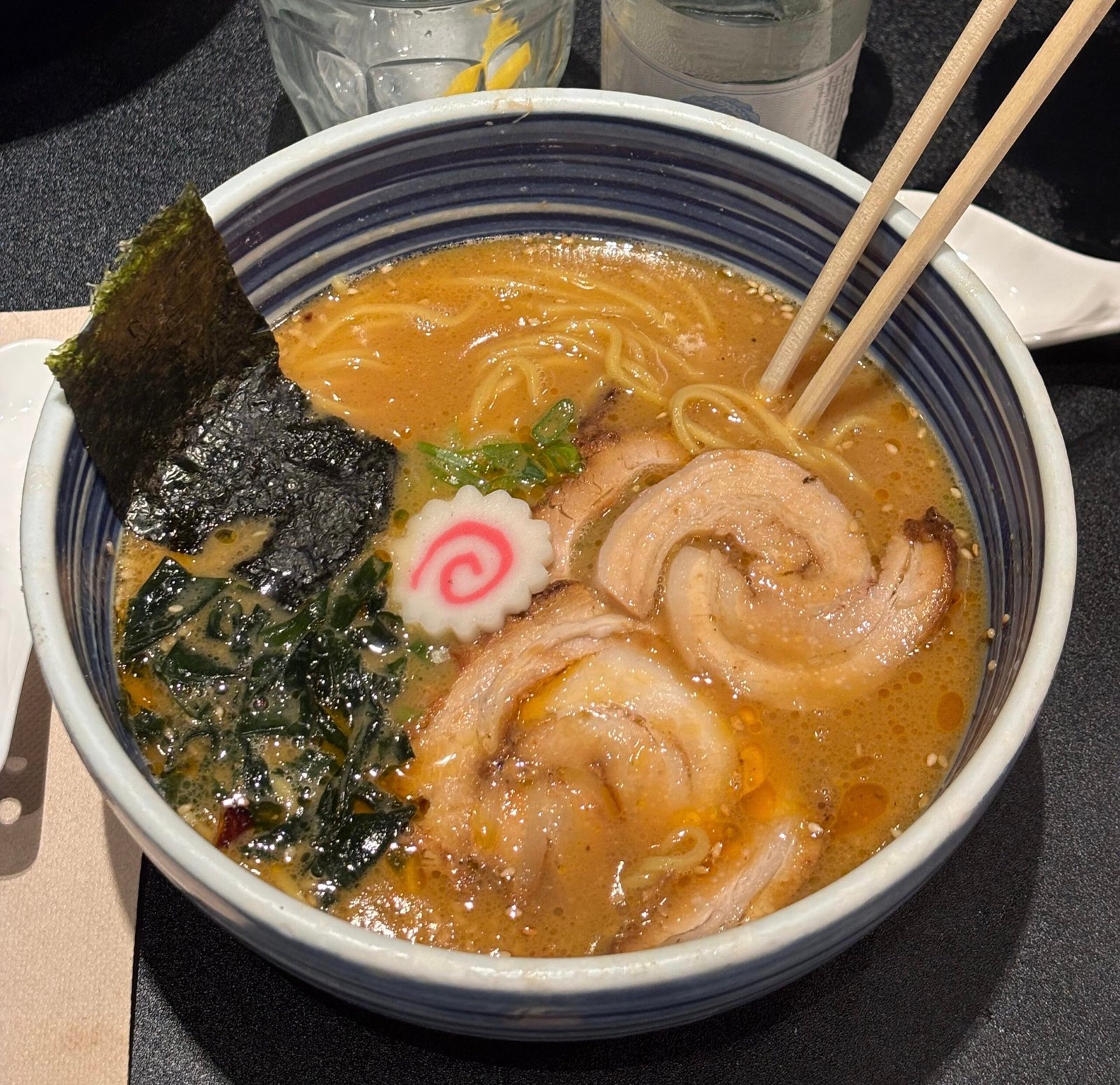
Ichiraku Miso Tonkotsu Ramen
Serves 2. Active time: 45 minutes. Chashu preparation: 3 hours (can be done the day before).
Ingredients
Chashu Pork
- 500 g pork belly, skin-on
- 4 tablespoons soy sauce
- 4 tablespoons mirin
- 2 tablespoons sake
- 1 tablespoon sugar
- 3 garlic cloves, crushed
- 1-inch fresh ginger, sliced
- 200 ml water
Miso Tare
- 3 tablespoons white miso paste (shiro miso)
- 1 tablespoon red miso paste (aka miso)
- 1 tablespoon soy sauce
- 1 tablespoon mirin
- 1 teaspoon toasted sesame oil
Broth
- 1 litre high-quality pork bone broth (tonkotsu-style; chicken broth works as a lighter substitute)
- 2 garlic cloves, grated
- 1-inch fresh ginger, grated
Noodles and Toppings (per bowl)
- 2 portions fresh or dried thin ramen noodles
- 3 to 4 slices chashu pork
- 3 slices narutomaki fish cake
- 1 ajitsuke tamago (soy-marinated soft-boiled egg), halved
- 2 green onions, finely sliced
- 2 sheets nori, cut into rectangles
- Toasted sesame seeds, to finish
Method
Keep Reading: Best Instant Ramen Ranked — The Definitive Nerd's Guide · Dubai Chocolate Cookie: Why It's Everywhere Right Now · Best Korean Snack Subscription Boxes, Ranked (2026)
Step 1 — Prepare the Chashu (Day Before Recommended)
Roll the pork belly tightly and tie with kitchen twine at 3 cm intervals. Combine soy sauce, mirin, sake, sugar, garlic, ginger, and water in a heavy-based pot or Dutch oven. Bring to a simmer and add the pork belly roll. Cover and braise over low heat for 2 to 2.5 hours, turning every 30 minutes, until the pork is completely tender when pierced. Remove, allow to cool in its braising liquid, then refrigerate overnight. Slice into 1 cm rounds when cold for clean, restaurant-quality cuts.
Step 2 — Make the Ajitsuke Tamago
Bring a small saucepan of water to a rolling boil. Lower eggs gently into the water and cook for exactly 6 minutes and 30 seconds. Transfer immediately to an ice bath for 5 minutes, then peel. Marinate in a mixture of 4 tablespoons soy sauce, 2 tablespoons mirin, and 200 ml water for at least 4 hours (overnight is ideal). The eggs will take on a rich amber colour and a deeply seasoned flavour.
Step 3 — Build the Miso Tare
Whisk together the white miso, red miso, soy sauce, mirin, and sesame oil in a small bowl until smooth. Set aside. The tare concentrates the seasoning — it is added to each bowl individually rather than cooked into the broth, which preserves the live enzymes in the miso and allows you to adjust seasoning per serving.
Step 4 — Heat the Broth
Add grated garlic and ginger to the pork broth in a saucepan. Bring to a gentle simmer over medium heat and cook for 10 minutes. Do not boil aggressively — a steady simmer keeps the broth clear and flavourful. Keep it hot until you are ready to serve.
Step 5 — Cook the Noodles
Bring a large pot of unsalted water to a full boil. Cook ramen noodles according to the packet — typically 2 to 3 minutes for fresh, 4 to 5 minutes for dried. Cook until just al dente; they will continue cooking slightly in the hot broth. Drain well and do not rinse.
Step 6 — Warm the Chashu
Heat a dry cast-iron or non-stick pan over high heat. Sear chashu slices for 30 to 45 seconds per side until the edges caramelise and char slightly. This step transforms the texture and adds a smoky layer that elevates the finished bowl.
Step 7 — Assemble the Bowls
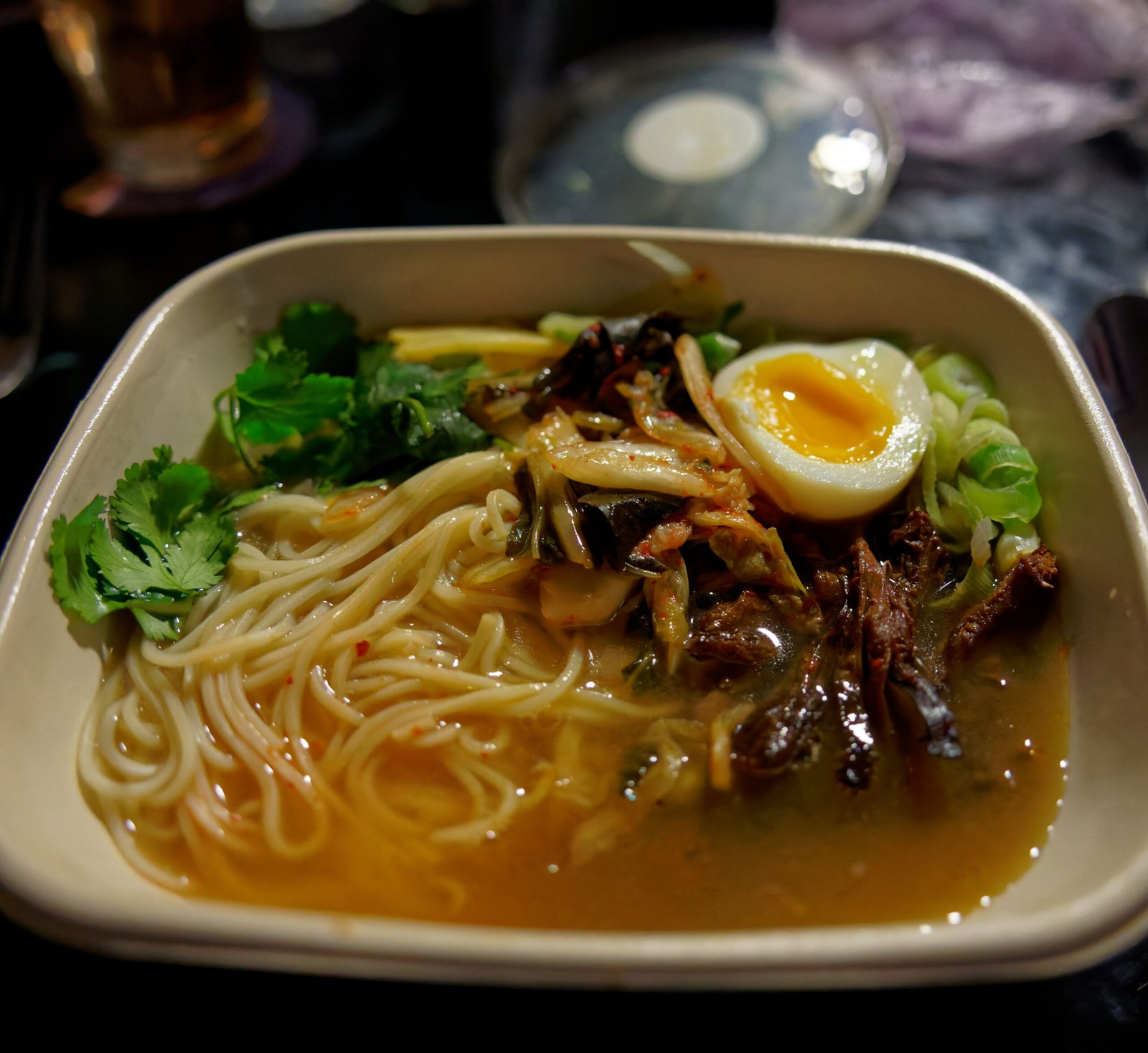
Warm your serving bowls with boiling water, then pour it out. Add 2 tablespoons of miso tare to each bowl. Ladle 400 ml of hot broth over the tare and stir to dissolve. Add the drained noodles. Arrange chashu slices, narutomaki, halved egg, nori, and green onion in clean sections across the surface. Finish with a pinch of toasted sesame seeds. Serve immediately.
Professional Notes
On the broth: If you cannot source true tonkotsu broth, use a good-quality chicken bone broth and add a tablespoon of butter to replicate some of the fat content. The miso tare does a great deal of the heavy lifting regardless.
On the noodles: Ramen noodles contain kansui (an alkaline salt) that gives them their characteristic springy texture and yellow colour. Substituting spaghetti or egg noodles will not produce the same result. Fresh ramen noodles are available in the refrigerated section of most Asian grocery stores.
On timing: This dish does not wait. Have all components hot and ready before assembling. The noodles absorb broth and swell within minutes — a ramen bowl assembled and then left sitting is a bowl lost.
Vegetarian variation: Replace pork broth with a kombu and dried shiitake dashi. Use marinated tofu or roasted king oyster mushrooms in place of chashu. The miso tare requires no modification.
Why This Recipe Works
The combination of white and red miso creates a tare with both sweetness and depth. White miso alone would be too mild against pork broth; red miso alone would overwhelm. The balance is what Ichiraku’s ramen represents within the story — contrasts held together in harmony, much like Naruto himself.
Narutomaki is not merely decorative. The fish cake contributes a subtle seafood note to each bite and an oceanic contrast to the richness of the pork. Its signature pink spiral, a visual reference embedded in the character’s name, is the finishing mark that makes this bowl unmistakably Ichiraku.
Keep Reading: The Ichiraku Ramen Challenge: Can You Actually Eat Like Naruto Uzumaki? · Best Instant Ramen Ranked — The Definitive Nerd's Guide · We Ranked Every Buldak Ramen Flavor So You Don't Have To
Frequently Asked Questions
What style of ramen is Ichiraku Ramen based on?
Ichiraku Miso Tonkotsu Ramen — rich tonkotsu broth, thin noodles, and precise toppings.
Where is Ichiraku Ramen located in the Naruto universe?
A little noodle stand tucked under the Hokage Rock in the Hidden Leaf Village.
Why is Ichiraku Ramen significant to Naruto’s character?
It’s more than a meal — it’s Naruto Uzumaki’s sanctuary, serving the show’s most iconic bowls since episode one.
Does this guide include professional cooking notes for the ramen recipe?
Yes — it has a dedicated ‘Professional Notes’ section alongside ‘Why This Recipe Works.’

Get authentic Japanese snacks, anime candy, and nerd-themed food delivered to your door. Use code NERDSNACK for 15% off your first box.