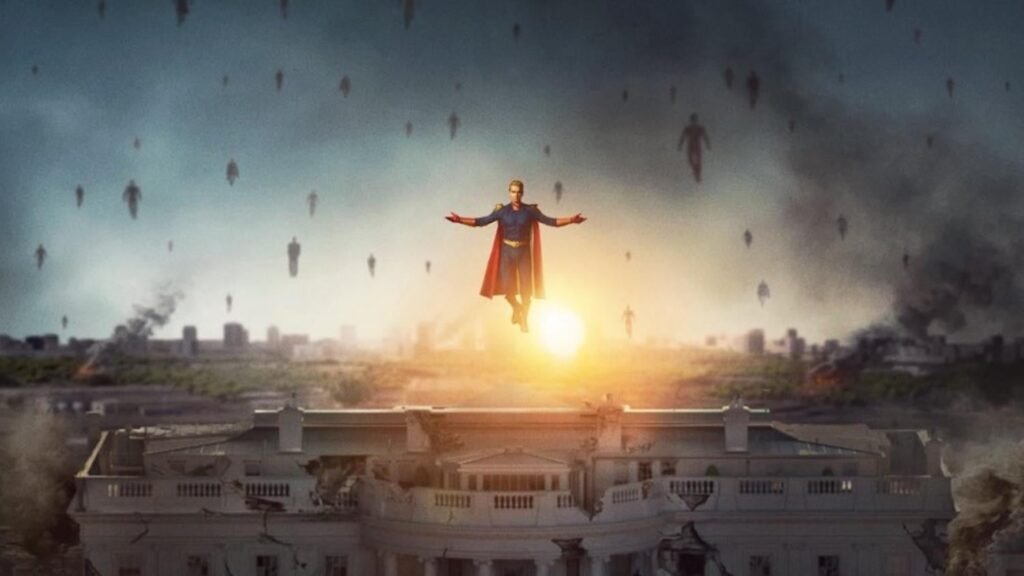
There was a moment — somewhere around Season One’s finale, Homelander standing on a rooftop with laser eyes and no moral compass — where The Boys felt genuinely dangerous. Not superhero-dangerous. Television-dangerous. The kind of show that makes you feel like you’re watching something that could actually get someone fired.
That show no longer exists. What replaced it took seven seasons to fully unravel, but by the time the finale credits rolled on Season Five, it was hard not to feel like something genuinely special had been squandered.
Seasons One and Two: When It Was Untouchable
The premise was deceptively simple. Superheroes are real. They are also deeply, irreparably corrupt — propped up by a corporation (Vought International) that weaponizes them as product rather than protectors. A small group of regular people with no powers, no resources, and no plan decide to take them down.
Season One holds an 85% critics score on Rotten Tomatoes. Season Two hit 97%. Those numbers reflect what the show was doing right: grounded character work, satire with actual teeth, and a villain in Homelander — played with terrifying precision by Antony Starr — who felt like the most compelling thing on television. The show’s politics were embedded in its story. They didn’t need to announce themselves.
The best superhero satire doesn’t just mock heroes. It makes you uncomfortably aware of why we need them to be real — and what it says about us that we invented them. Early The Boys understood that instinctively.
Season Three: The Cracks Begin
Season Three introduced Soldier Boy (Jensen Ackles) as a deconstruction of 1980s machismo — part Captain America parody, part walking culture-war flashpoint. The idea was solid. The execution was uneven.
What Season Three signaled more than anything was a shift in how the show treated its message. Seasons One and Two trusted the audience to draw the lines. Season Three started drawing them in marker. The satire, once sharp enough to cut without you noticing, started announcing itself. The subtlety that made the early seasons dangerous was quietly being traded for spectacle and statements.
It was still good television. But it was also the last season where “good” felt like an understatement.
Season Four: The Show Became Its Own Villain
Season Four is where the wheels came off publicly. The audience score on Rotten Tomatoes dropped to 54%. Critics who had championed the show for years started writing phrases like “preachy,” “cartoonish,” and “a Democratic campaign manifesto with a cape.”
Some of that criticism was bad-faith. The Boys has always been political — anyone claiming it suddenly “went political” in Season Four was not paying attention. But good-faith critics had a legitimate point: there is a difference between a show with politics and a show that is only its politics. The former uses story to say something. The latter uses story as an excuse to say it louder.
Season Four frequently crossed that line. Characters stopped feeling like people and started feeling like arguments. The corporate satire that made Vought so compelling in early seasons was swapped out for something blunter and less interesting. The show was screaming the thing it used to whisper, and screaming it less effectively.
Keep Reading: Luffy Diet: What Luffy Eats and How Much (One Piece) · What the End of Daredevil: Born Again Season 2 Really Means for Spider-Man 4 · Grand Regent Thragg: How the Invincible Comics and the Animated Series Tell a Different Story
Season Five: The Finale That Divided a Fandom
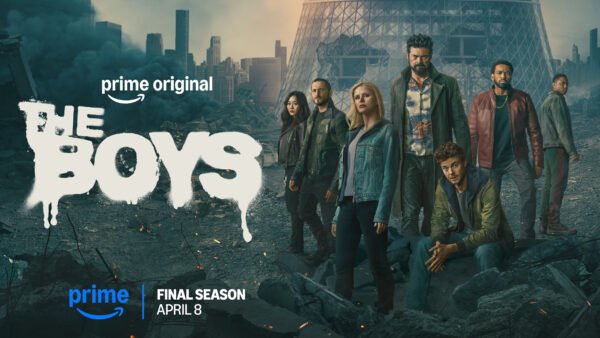
Season Five arrived as the announced final chapter. The trailers promised scorched earth. The posters showed Homelander looking down at a burning America. It should have been the culmination of everything the show had been building toward.
Instead, fans on Reddit and social media began comparing the season to Game of Thrones Season Eight — a reference no showrunner ever wants to see trending. Episode Seven became the lowest-rated episode in the entire franchise’s history on IMDb. The audience score for Season Five settled at 66%, better than Season Four’s 54% but a stark fall from where the show began.
The specific complaints were familiar by now:
- Weak pacing and episode-length filler that stalled momentum
- Repetitive storylines retreading beats from earlier seasons
- Excessive focus on Soldier Boy at the expense of the core cast
- The Gen V characters — set up across a whole spinoff series as key players — were absent from the finale entirely, a creative choice showrunner Eric Kripke had to publicly defend
- Cast members themselves reposted criticism, which rarely signals a confident production
The show was still drawing 57 million viewers per episode, which Kripke pointed to when dismissing the backlash. But ratings have never been proof that a show stuck the landing. Game of Thrones broke viewership records right up until the finale everyone hated.
So What Actually Went Wrong?
The Boys fell into a trap that catches a lot of ambitious television: it mistook escalation for depth.
The show’s original power came from small human stakes set against impossible power. Hughie losing his girlfriend in the first scene. Starlight navigating a world that worships heroes who privately abuse them. Billy Butcher’s grief weaponized into obsession. These were intimate stories wearing a superhero show’s clothing, and the contrast is what made it extraordinary.
As the seasons progressed, the scale grew and the intimacy shrank. The political commentary — always present, once effective — became the entire point rather than the backdrop. The characters who made you care stopped being the center of gravity. And a show that once felt like it could say anything started feeling like it could only say one thing, over and over, progressively louder.
That’s the real letdown. Not that The Boys was bad. It was never bad. But it was once genuinely great — one of the most surprising and necessary shows on television — and somewhere along the way it forgot what made it matter.
Keep Reading: What the End of Daredevil: Born Again Season 2 Really Means for Spider-Man 4 · Grand Regent Thragg: How the Invincible Comics and the Animated Series Tell a Different Story · Invincible Season 3: What Happened, What It Means, and What Comes Next
The boys themselves deserved better. So did we.
Frequently Asked Questions
How many seasons does The Boys have?
Five seasons, with the article arguing the show fell apart after starting strong in Seasons One and Two.
When did The Boys start to decline in quality?
Season Three, according to the article, is when the cracks began, worsening through Season Four and dividing the fandom by the Season Five finale.
Was The Boys always considered a great show?
Yes — Seasons One and Two are described as untouchable, with a Season One finale moment (Homelander on a rooftop) that made the show feel genuinely dangerous.
What went wrong with The Boys?
The article’s final section, ‘So What Actually Went Wrong?’, breaks down the specific reasons the show unraveled over its seven-season run.
Get authentic Japanese snacks, anime candy, and nerd-themed food delivered to your door. Use code NERDSNACK for 15% off your first box.