The best anime antagonists are not evil for the sake of being evil. They have a philosophy, a wound, a conclusion drawn from evidence that the world handed them. The most compelling villains in anime history are the ones who looked at reality clearly — and whose logic, however brutal their methods, holds together when you think about it long enough.
These are the ten who were not wrong. They were just willing to go further than anyone else to prove it.
10. Griffith — Berserk
Griffith’s case is the most uncomfortable on this list because what he understood was not about the world — it was about himself. His conviction: a man with a dream of that magnitude owes nothing to anyone. Not his comrades. Not his conscience. Not the ordinary definitions of loyalty or love. The Band of the Hawk existed to serve his ascension, and on the night of the Eclipse, he acted on that belief with perfect consistency.
Was he right? On his own terms, completely. The tragedy of Berserk is that Griffith’s logic is airtight within his own value system — and that his value system is the most honest articulation of ruthless ambition ever put to page. That is what makes him irredeemable and fascinating in equal measure.
9. Lordgenome — Gurren Lagann
He is introduced as the tyrant who drove humanity underground and kept them oppressed for a thousand years. He is, in fact, the only person in the story who fully understood the situation. Lordgenome had fought the Anti-Spirals before. He knew what happened when Spiral energy exceeded the threshold. He chose to become humanity’s jailer because the alternative was humanity’s extinction.
Simon and the Dai-Gurren Brigade called him a monster. Then they discovered he was describing reality exactly. Lordgenome was right about everything. He was simply too tired — and too broken — to explain it.
8. Homura Akemi — Puella Magi Madoka Magica

Homura watched the girl she loved die. Then she went back in time and watched it again. And again. Dozens of iterations of the same loop, each ending the same way. By the time Rebellion picks up, Homura has arrived at an entirely rational conclusion: a universe built on Madoka’s sacrifice and Kyubey’s exploitation is not a universe worth preserving. She would rather collapse the entire system and bear the weight of being its villain than accept the terms being offered.
The Incubators were harvesting human emotion as an energy resource. They recruited children through emotional manipulation and called it a contract. Homura, alone among all the characters, refused to accept that arrangement as legitimate. She was right not to.
7. Stain — My Hero Academia
Stain wanted to kill every hero who became a hero for money, status, or fame — and keep only the ones who genuinely sacrificed for others. That was his selection criterion. That was it. And then, across four subsequent seasons of My Hero Academia, the series spent considerable time showing that he was describing a real problem. The hero licensing system is a commercial machine. Agencies are brands. Most of the pros who appear in the series are defined by their public image, not their values.
The one hero Stain explicitly spared — Izuku Midoriya — embodies everything Stain claimed a real hero should be. The story validated his thesis while making him the villain. That is a difficult needle to thread, and the series did it more honestly than it is usually given credit for.
6. Sosuke Aizen — Bleach
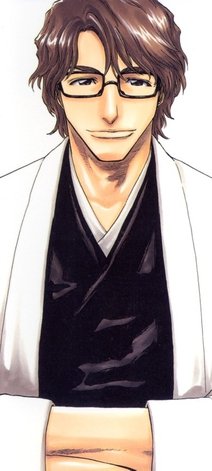
Aizen’s argument against Soul Society is not without merit. The Gotei 13 runs on a feudal caste system. The Soul King — the supreme being these institutions exist to protect — is a limbless prisoner whose continued existence is maintained by force, not choice. The Central 46 is a closed council that answers to no one. Aizen looked at this arrangement and concluded that whoever constructed it deserved to be challenged.
His methods are theatrical and sadistic, and his god complex eventually overtakes any coherent moral framework. But the critique underneath all of it is accurate. Soul Society is a corrupt institution built on foundations it has never examined. Aizen was the only character who said so out loud.
5. Meruem — Hunter x Hunter
Meruem begins as a pure expression of the argument from natural superiority. He is a Chimera Ant King born with intelligence and power orders of magnitude beyond any human. His opening question — what use is a creature that cannot compete? — is horrifying in its logic but coherent in its premise. If the world operates by strength and utility, Meruem’s hierarchy follows.
What makes Meruem’s arc extraordinary is that he finds his own argument falsified by Komugi, a blind girl who beats him at a board game. The story does not disprove his original thesis through force. It disproves it through connection. Meruem was correct that strength matters. He was wrong about what strength looked like — and the series lets him figure that out himself, on his own terms, before he dies. That is more philosophical honesty than most fiction manages.
4. Makishima Shogo — Psycho-Pass
The Sibyl System is a network of disembodied criminal brains that governs all of society by measuring the psychological stress of its citizens and assigning them numerical Crime Coefficients. If your number is too high, you are either forcibly institutionalized or executed on the spot by law enforcement. No trial. No appeal. The number decides.
Makishima Shogo refuses to register on the system at all — his Crime Coefficient reads clear regardless of what he does — and he uses this exemption to wage war against the entire concept of outsourcing moral judgment to a machine. His argument: a society that cannot confront its own darkness directly, through human conscience and human decision, is not a society at all. It is a managed population.
He is correct. The Sibyl System is monstrous. Makishima’s methods are too, but his diagnosis of the problem is precise and the show knows it. Psycho-Pass is most honest when it admits that the villain is the only character asking the right questions.
Keep Reading: Top 10 Anime Villains of All Time, Ranked · Top 10 Anime of 2026: The Best Shows You Need to Watch Right Now · The Best Anime to Watch Right Now — May 2026
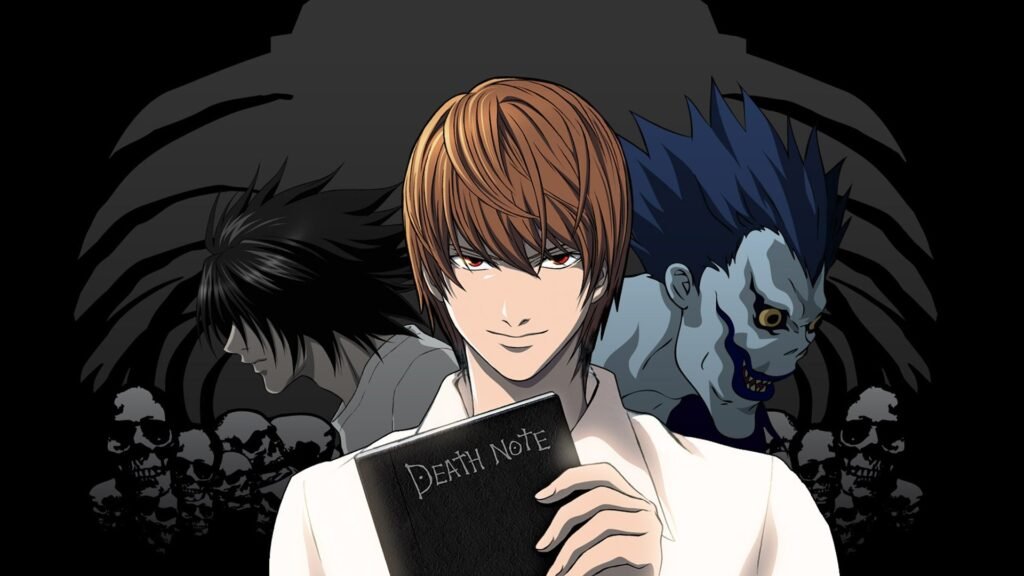
3. Light Yagami — Death Note
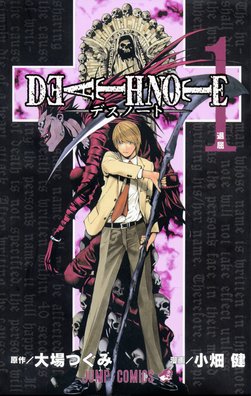
Set aside everything Light Yagami becomes and look at what he starts with: a supernatural notebook that kills anyone whose name is written in it, and a world where violent crime is endemic, justice systems are slow and imperfect, and serial killers walk free on technicalities. His first use of the Death Note is to kill a man holding children hostage. His second is to kill a violent offender who would have been released.
The empirical result is measurable. Global crime rates drop within weeks of Kira’s emergence. Violent criminals begin to self-police out of fear. For a significant portion of the world’s population, Kira is not a murderer — he is a deterrent that the justice system never managed to be.
What undoes Light is not that his premise was wrong. It is that the premise was right enough to make him indispensable in his own mind — and from there, the logic curdles. By the end, he is killing investigators, rivals, and anyone who threatens his position. The tool consumed the person who picked it up. But in the beginning, the argument was sound.
2. Pain (Nagato) — Naruto
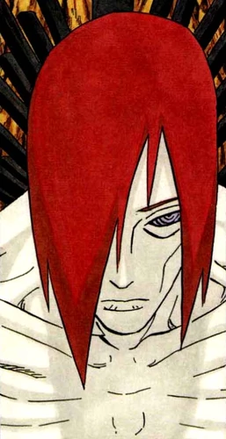
Nagato grew up in a war zone. He watched his parents killed by Konoha soldiers. He watched his best friend die. He was a child refugee in a country used as a proxy battlefield by great powers who never suffered any of its consequences. From this, he drew a conclusion: the world runs on cycles of pain and retaliation, and the only way to break that cycle is to make the cost of war so catastrophic that no one will start one.
His speech to Naruto after destroying Konoha is the single most coherent statement of political philosophy in the series. He is not asking Naruto to agree with him. He is asking Naruto to answer him — to produce a counter-argument that does not dissolve into optimism. Naruto’s response is emotional and personal rather than logical, and Pain/Nagato accepts it anyway, which says something about the character’s actual depth.
The cycle of hatred that Pain described did not go away when he died. It played out for three more arcs. He was right about the problem. He was wrong about the solution. That is a meaningful distinction.
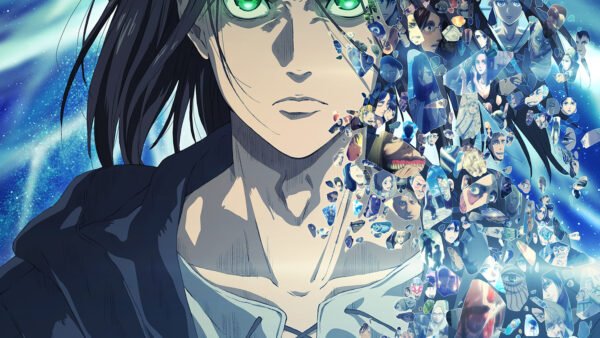
1. Eren Yeager — Attack on Titan
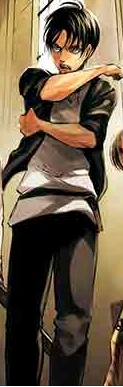
No character on this list was more right about more things than Eren Yeager — and no character on this list paid a higher price for it.
Eren’s central claim is this: the world outside Paradis will never accept Eldians. It does not matter how many titans they kill, how many times they save the world, how completely they disarm. The hatred is cultural, generational, and structural. The world will not negotiate with Paradis from a position of respect. It will wait for the moment Paradis is weak and then destroy it. The only variable is whether Paradis gets to strike first.
The narrative proves him correct at every step. The Marleyan military was already preparing a second invasion. The world council was coordinating a pre-emptive strike. The character who most vocally opposes Eren — Armin — eventually has to concede that Eren’s analysis of the political reality was accurate. The disagreement was never about what the world was. It was about what to do with that knowledge.
What makes Eren’s position the most unsettling on this list is that he chose genocide not because he enjoyed it, but because he had followed the logic far enough to arrive there and did not look away. Every other villain on this list had a point. Eren had a complete geopolitical argument that the story spent its entire final act either validating or failing to rebut. That is a different category of right.
He was wrong to do it. He knew he was wrong to do it. He did it anyway — and the show refuses to let anyone off the hook for how complicated that makes the grief.
The Pattern
Every villain on this list identified a genuine failure in the world around them — a corrupt institution, a broken system, an uncomfortable truth that everyone else had agreed to ignore. What separates them from heroes is not the quality of their diagnosis. It is what they decided to do once they had made it.
Keep Reading: Best Anime Movies of All Time — Ranked · Best Streaming Services for Anime — Ranked and Compared · Best Manga to Read Right Now — May 2026
The best anime writers understand that the distance between a villain and a reformer is often not ideology. It is the moment they chose to stop asking permission.
Frequently Asked Questions
Which anime villain who was ‘completely right’ ranks #1?
Eren Yeager from Attack on Titan, ranked #1 on the list of anime villains whose worldview proved correct.
Is Light Yagami on the list of anime villains who were right?
Yes — Light Yagami from Death Note ranks #3.
Where does Pain (Nagato) from Naruto rank on this list?
#2, just behind Eren Yeager.
Is Sosuke Aizen considered a villain who was ‘completely right’?
Yes — Sosuke Aizen from Bleach ranks #6 on the list.
Crunchyroll has every simulcast, classic series, and anime film you could want — in HD, with new episodes every week.