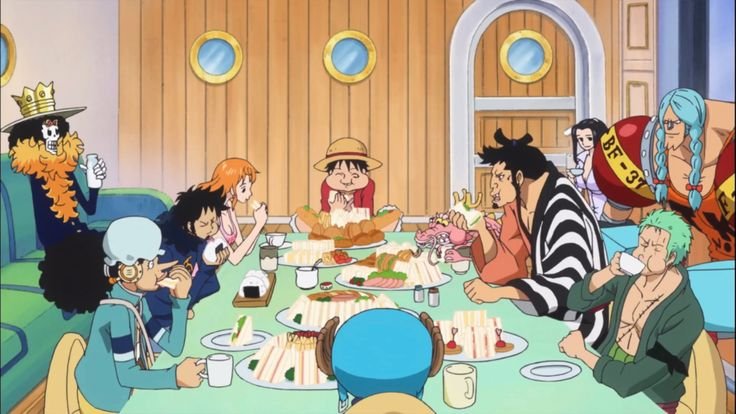
Verdict: One Piece’s food canon comes straight from Eiichiro Oda. In the SBS Q&A in Volume 45, he listed every Straw Hat’s favorite food: Luffy loves all kinds of meat, Zoro loves white rice, Sea Beast meat and anything that goes with sake, Nami loves mikans, and Sanji’s favorite is spicy seafood pasta. Here’s the whole crew, plus their least favorite foods and favorite Wano dishes.
Updated October 2, 2026 · Favorite foods from Oda’s SBS Q&As (Volumes 45, 73, 86 and 99) and the Vivre Card databook, via the One Piece Wiki
Who this is for: One Piece fans who want to know what the Straw Hats really eat, and anyone planning a themed watch party or a day of eating like the crew.
What are the Straw Hats’ favorite foods?
Oda answered this himself when a fan asked, “If Luffy’s favorite food is meat, what about everyone else?” Later SBS answers added Brook and Jinbe, plus each crew member’s least favorite food:
| Straw Hat | Favorite food | Least favorite |
|---|---|---|
| Monkey D. Luffy | All kinds of meat | Cherry pie “from a certain place” |
| Roronoa Zoro | White rice, Sea Beast meat, food that goes with sake | Chocolate (too sweet) |
| Nami | Mikans and other fruit | Orangettes (she prefers real fruit) |
| Usopp | Pike from an autumn island and other seasonal fish | Mushrooms (he got sick once) |
| Sanji | Spicy seafood pasta, food that goes with black tea | Konjac (not nutritious) |
| Tony Tony Chopper | Cotton candy, chocolate and other sweets | Anything spicy |
| Nico Robin | Sandwiches, not-too-sweet cakes, food that goes with coffee | Chewing gum (she can’t swallow it) |
| Franky | Hamburgers, fries, food that goes with cola | Marshmallows (not hard enough) |
| Brook | Curry | Lemons (no cheeks to make a sour face) |
| Jinbe | Mozuku seaweed in vinegar, and fruit | Parfait (hard to eat) |
What is Luffy’s favorite food?
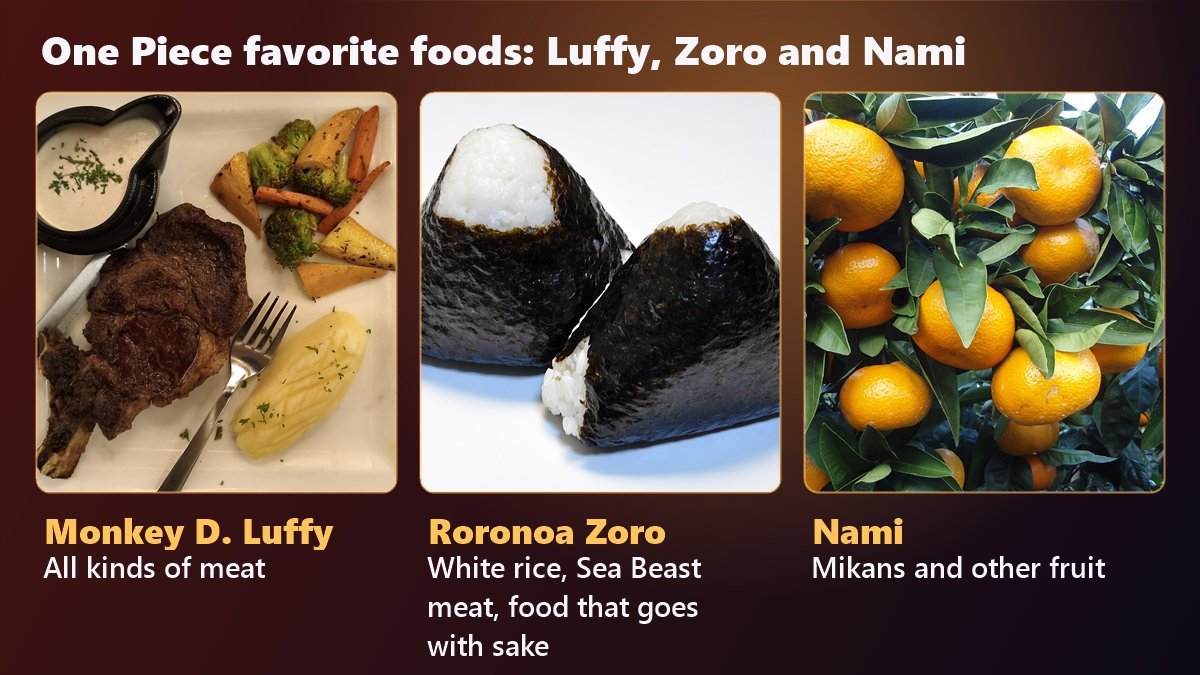
Luffy’s meat, Zoro’s rice and Nami’s mikans. Photos via Wikimedia Commons: Dr. Chinchu C. (CC BY 4.0), Ocdp (CC0), Batholith (public domain), cropped.
All kinds of meat. It’s the most consistent thing about him: when Oda was asked which kind of island Luffy likes best, the answer was basically anywhere there’s meat. Asked about each Straw Hat’s cooking specialty, Oda gave Luffy “raw meat on a plate.”
His least favorite food is a cherry pie “from a certain place,” and his favorite dish from Wano is oden.
Roronoa Zoro
White rice, Sea Beast meat and anything that goes well with sake. He dislikes chocolate because it’s too sweet. In Oda’s alcohol-tolerance ranking, Zoro comes second, behind only Jinbe.
Nami
Mikans and other fruit, a nod to Bellemere’s mikan grove in Cocoyasi Village. Her least favorite is orangettes, candied orange peel dipped in chocolate, because she’d rather have the real fruit. Her cooking specialty is roast duck with mikan sauce.
What is Sanji’s favorite food?
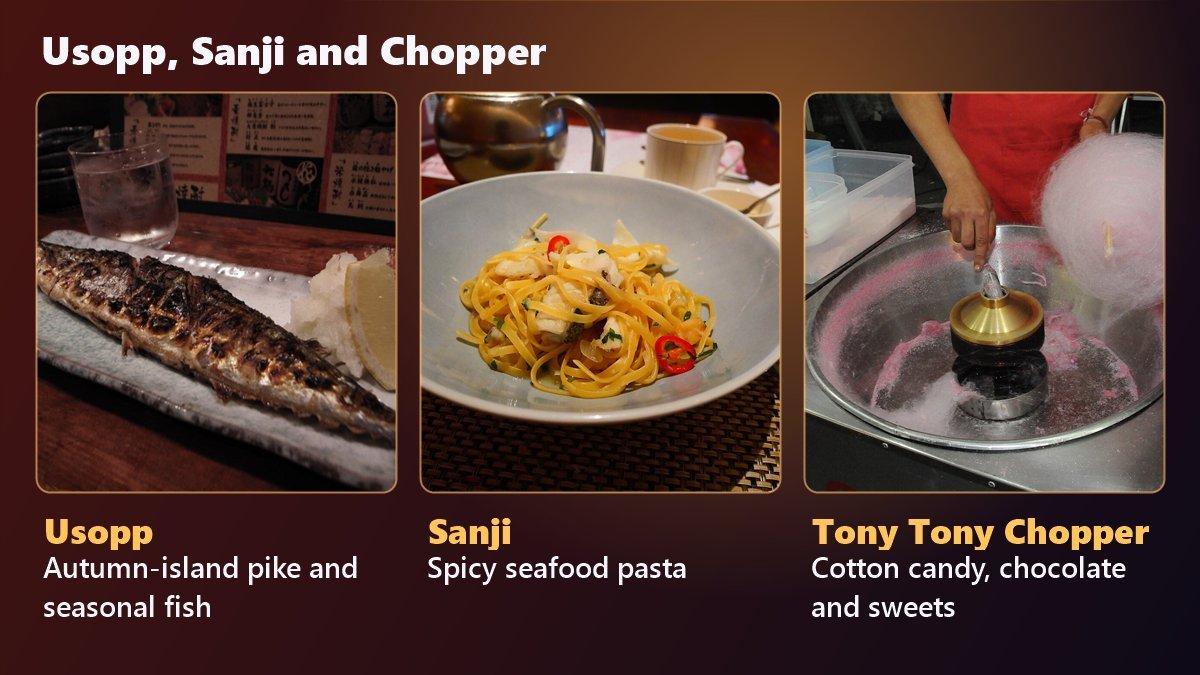
Usopp’s pike, Sanji’s seafood pasta and Chopper’s cotton candy. Photos via Wikimedia Commons: sakura_chihaya+ (CC BY-SA 2.0), Peachyeung316 (CC BY-SA 4.0), Joseolgon (CC BY-SA 3.0), cropped. This banner is shared under CC BY-SA 4.0.
Spicy seafood pasta, and anything that goes well with black tea. The crew’s cook hates konjac because it isn’t nutritious, and his cooking specialty is “anything,” with a lean toward seafood.
Sanji also packs the crew’s favorites without thinking about it. In the Whole Cake Island arc, a bento he makes turns out to hold the crew’s favorite foods, and Oda confirmed it in SBS Volume 86. In Wano, he even runs a soba stall, which is how he ends up known as “Soba Mask.”
Usopp and Chopper
Usopp’s favorite is pike from an autumn island and other fish in season. He avoids mushrooms after getting sick from them once.
Chopper loves cotton candy, chocolate and other sweets, and hates anything spicy because it isn’t sweet. He’s also last in the crew’s alcohol-tolerance ranking.
Keep Reading: Jujutsu Kaisen Food: Every JJK Character's Favorite Food · Demon Slayer Food: Every Character's Favorite Food · Luffy Diet: What Luffy Eats and How Much (One Piece)
What do Robin, Franky, Brook and Jinbe eat?
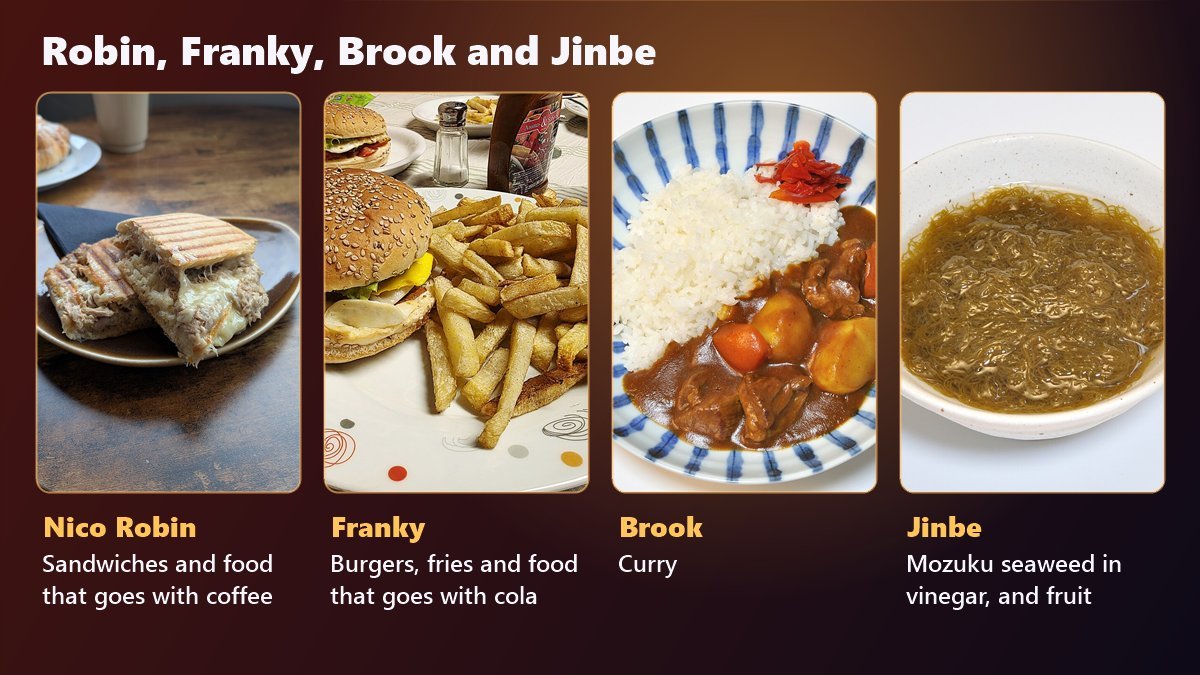
Robin’s sandwich, Franky’s burger and fries, Brook’s curry and Jinbe’s mozuku. Photos via Wikimedia Commons: Andy Li (CC0), Horacio Cambeiro (CC BY-SA 3.0), Ocdp (CC0), Ocdp (CC0), cropped. This banner is shared under CC BY-SA 4.0.
- Nico Robin: sandwiches, cakes that aren’t too sweet, and food that goes with coffee. She dislikes chewing gum because she can’t swallow it.
- Franky: hamburgers, fries and food that goes with cola, the drink that powers his cyborg body. He dislikes marshmallows because they’re not hard.
- Brook: curry, confirmed in SBS Volume 86. He dislikes lemons because he has no cheeks to make a sour face.
- Jinbe: mozuku seaweed in vinegar, and fruit. He dislikes parfaits because they’re hard to eat.
What do the Straw Hats eat in Wano?
Oda also named each crew member’s favorite Wano dish:
| Straw Hat | Favorite Wano food |
|---|---|
| Luffy | Oden |
| Zoro | Sushi |
| Nami | Oshiruko (sweet red bean soup) |
| Usopp | Saba misoni (mackerel simmered in miso) |
| Sanji | Chawanmushi (savory egg custard) |
| Chopper | Ichigo daifuku (strawberry mochi) |
| Robin | Soba |
| Franky | Tendon (tempura rice bowl) |
| Brook | Mitarashi dango |
| Jinbe | Ochazuke (tea poured over rice) |
How do you eat like the Straw Hats for a day?
Give each meal to a different crew member. Everything here is easy to find:
| Meal | What to eat | Whose favorite |
|---|---|---|
| Breakfast | A sandwich, coffee and a couple of mikans | Robin, Nami |
| Lunch | Spicy seafood pasta | Sanji |
| Snack | Chocolate or cotton candy | Chopper |
| Dinner | A huge plate of meat with white rice | Luffy, Zoro |
| Late night | Curry, or burgers and fries with a cola | Brook, Franky |
Skip the cherry pie, the chocolate-dipped orange peel and the lemons, and nobody on the crew will complain.
Is there an official One Piece cookbook?
Yes. One Piece: Pirate Recipes is the official cookbook, written as Sanji’s recipes for the crew. VIZ published it in English in November 2021 (96 pages), and it’s $14.97 on Amazon, sold by Amazon.
Frequently Asked Questions
What is Luffy’s favorite food?
All kinds of meat. His favorite Wano dish is oden.
What is Zoro’s favorite food?
White rice, Sea Beast meat and food that goes well with sake. He dislikes chocolate because it’s too sweet.
What is Sanji’s favorite food?
Spicy seafood pasta and food that goes with black tea. His least favorite is konjac.
What food does Luffy hate?
A cherry pie “from a certain place,” according to Oda’s answer in SBS Volume 73.
What is Nami’s favorite food?
Mikans and other fruit. She dislikes orangettes because she prefers the real fruit.
Next step: pick a Straw Hat and cook their favorite for your next episode. For more anime food, see our Jujutsu Kaisen food guide, Goku’s diet and Demon Slayer favorite foods, or start the One Piece Card Game.
Sources: favorite foods, least favorite foods, Wano favorites, cooking specialties and the alcohol ranking from Eiichiro Oda’s SBS Q&As and the Vivre Card databook, as compiled by the One Piece Wiki, checked October 2, 2026. Book details and Amazon price checked October 2, 2026. Photos: Wikimedia Commons, credited under each image.
The Weekly Pull
The biggest card price moves, every Friday.
The week’s biggest card and collectible price moves, plus the movie, anime and game releases worth knowing about. Sign up and get our free Black Friday 2026 price-to-beat cheat sheet. Free. Unsubscribe anytime.
Related Posts:
Talk to us
Got a question, a tip or a request? Email us.
A real person reads every message at hello@nerdsnack.com, and we usually reply within 1–2 business days.
Prefer a form? Use our contact page.