MTG Marvel Super Heroes is a full draft-legal set and the Limited environment is shaped by the same mechanics that define the Commander products — Hero typal, Villain typal, Plans, Teamwork, and Power-Up transforms. Drafting it successfully requires understanding how those mechanics interact in a 40-card context where the synergies are tighter and the card pool is smaller. This is the complete guide to drafting MTG Marvel Super Heroes.
Bombs and Payoffs to Watch For in Each Archetype
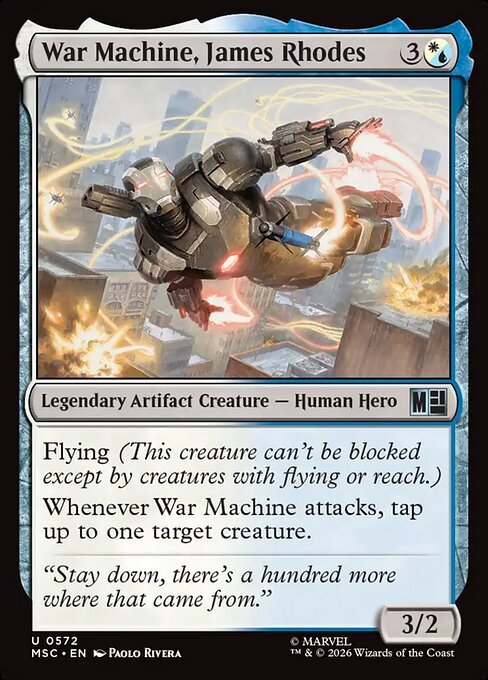
War Machine, James Rhodes
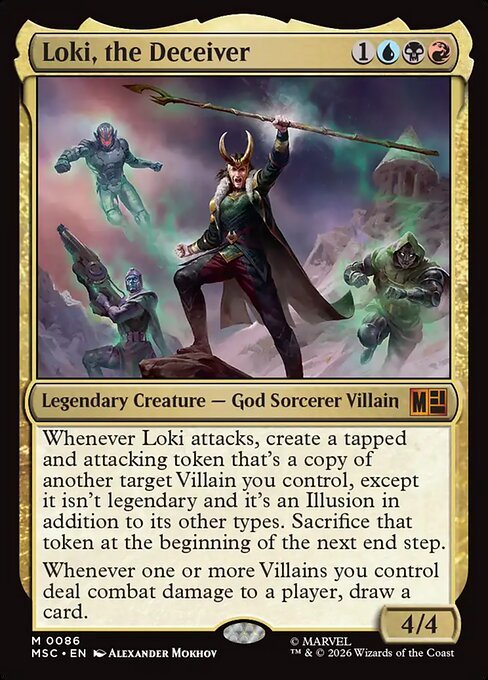
Loki, the Deceiver
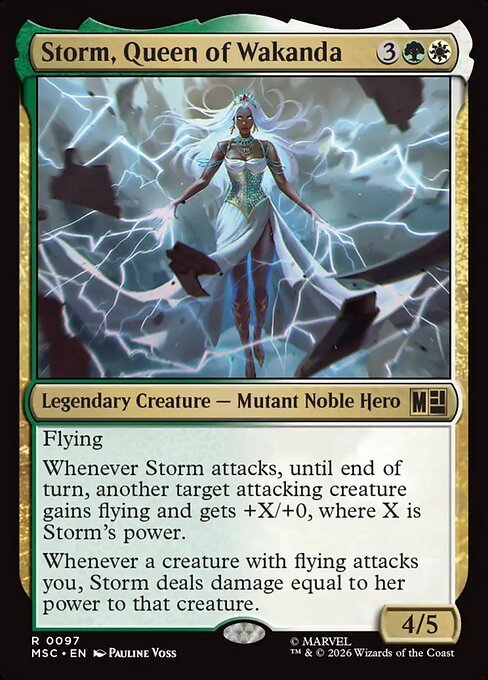
Storm, Queen of Wakanda
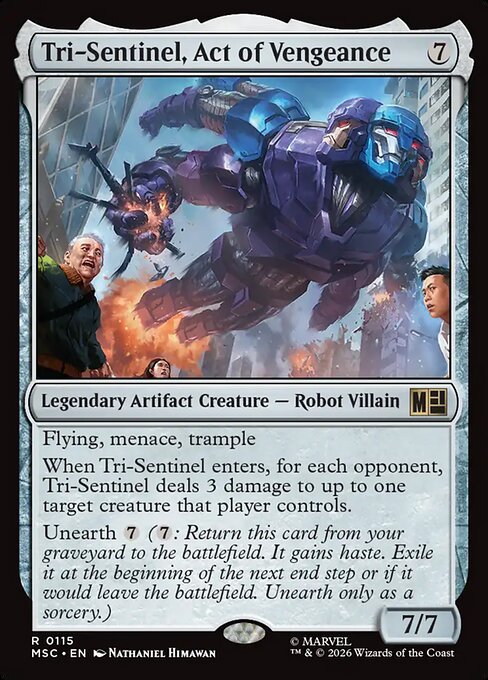
Tri-Sentinel, Act of Vengeance
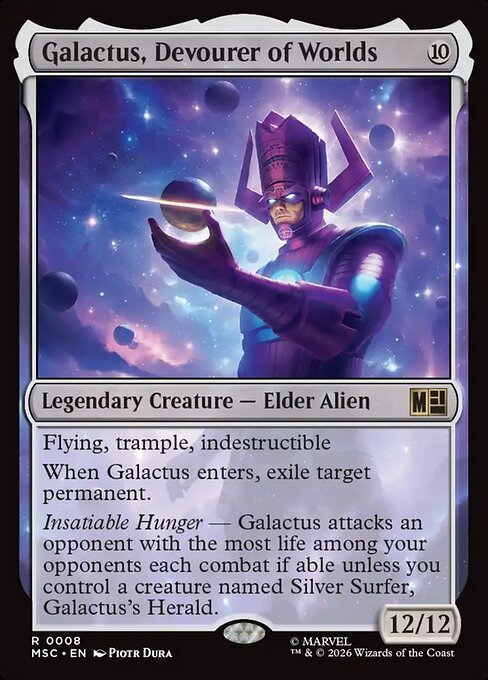
Galactus, Devourer of Worlds
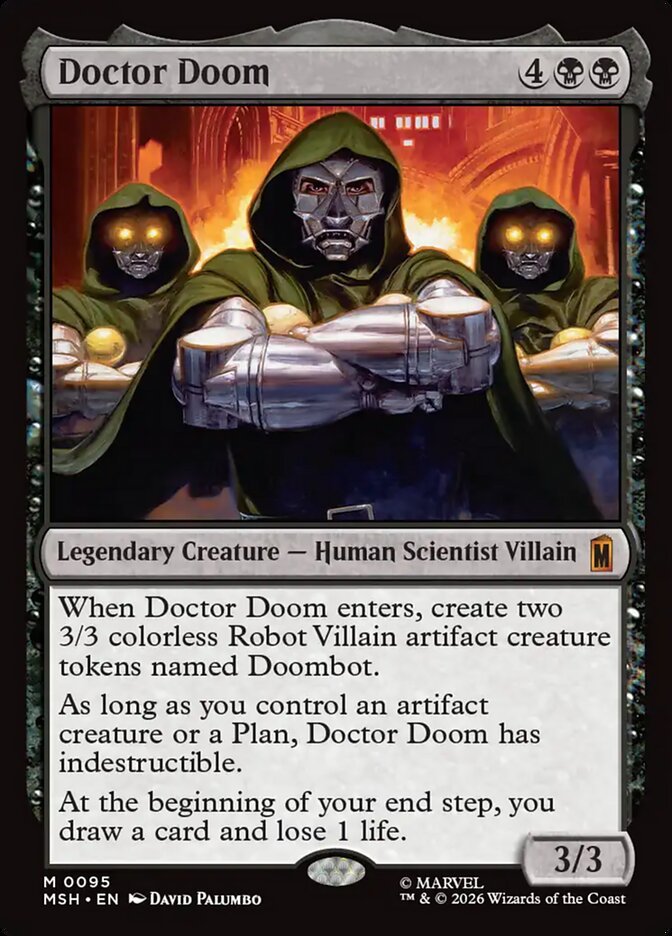
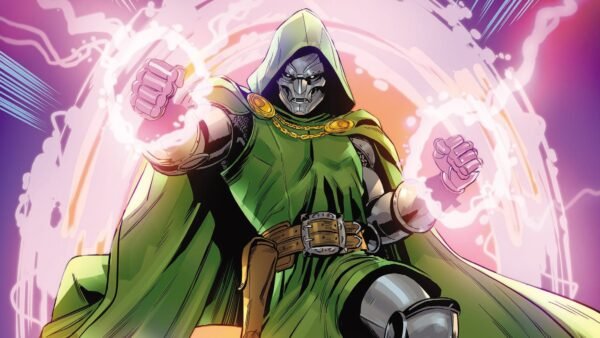
Doctor Doom
Lightning Greaves
Keep Reading: MTG Marvel Super Heroes: Card List, Every Product & Prices (October 2026) · The 10 Most Valuable MTG Marvel Super Heroes Cards (October 2026)
How the Set Is Designed for Draft
Marvel Super Heroes follows the two-pack structure of Play Boosters, which means each draft pod opens three Play Boosters per player. The set is built with clear two-color archetypes anchored by the Hero and Villain creature types, with the Plans mechanic serving as an “above the line” build-around for decks that can support the enchantment investment.
Hero typal rewards white and red — the Avengers colors. Villain typal rewards blue and black — the Doom and Loki colors. Green bridges into Selesnya (White/Green) for the Wakanda and artifact-token archetype and into four-color for Fantastic Four builds when the mana support is available. Each two-color pair has a defined identity and a supporting uncommon signpost that tells you which seat at the draft table you are in.
The Core Draft Archetypes
White/Red — Hero Aggro (Avengers)
The most linear archetype in the set. White/Red drafts want as many Hero creatures as possible, efficient removal to clear the path for attacks, and payoffs that reward a wide Hero board. The Teamwork mechanic is most active here — tapping your team cooperatively to execute Teamwork costs while also threatening with combat creates the kind of multi-axis pressure aggressive decks need in Limited.
Key Signals: Early Hero creatures at common and uncommon. Teamwork-costed spells in your colors. Any uncommon or rare that rewards Hero creature count.
What to Prioritize: Two-mana Hero creatures, removal at instant speed, any card that generates multiple Heroes from a single card, and Teamwork payoffs at two to three mana.
Blue/Black — Villain Control (Doom/Loki)
The most controlling archetype. Blue/Black uses connive triggers to filter toward powerful cards, builds board presence through Villain creatures that generate value as they enter or die, and closes games with life drain effects and recursive threats that opponents cannot permanently answer. Plans appear frequently in this color pair and reward patient development.
Key Signals: Connive creatures at common. Villain-matters payoffs. Plans enchantments in your colors.
What to Prioritize: Connive creatures at any rarity, targeted removal that puts cards in graveyards (enabling future recursion), and Plans that advance through Villain casting.
White/Green — Artifacts and Tokens (Wakanda)
White/Green drafts the Vibranium subtheme — artifacts, counters, and token generation that scales with each additional piece added. This archetype is midrange by nature: it does not win as quickly as Hero Aggro but accumulates resources faster than Villain Control can answer.
Key Signals: Artifact token producers. Cards referencing Vibranium or Wakanda. Counter-generation at common.
What to Prioritize: Cards that create artifact tokens, anything that puts +1/+1 counters on multiple creatures simultaneously, and mana acceleration that comes attached to an artifact body.
Blue/Red — Spells and Triggers (Fantastic Four)
The most skill-intensive archetype, centered on the Mister Fantastic identity of copying triggered abilities and chaining noncreature spells. Blue/Red wants instants and sorceries that trigger repeatedly, creatures that generate value from spellcasting, and the occasional Plans enchantment that advances through spell casting.
Key Signals: Spellslinger payoffs at common. Creatures with “whenever you cast a noncreature spell” triggers. Instants and sorceries that produce multiple effects.
What to Prioritize: Efficient instants and sorceries with two relevant modes, any creature that draws or deals damage when you cast noncreature spells, and copy effects at lower mana costs.
How Plans Work in Draft
Plans are build-arounds — they are not cards you take early and build around blindly, but cards you take once you know your archetype and can confirm the trigger condition is met repeatedly in your deck. A Plan that advances when you cast a Villain is excellent in Blue/Black Villain Control and unplayable in White/Red Hero Aggro.
Evaluate each Plan by three criteria: (1) Does my deck’s primary actions advance this Plan naturally? (2) Is the payoff strong enough to justify the enchantment slot? (3) Can I protect the Plan long enough for it to pay out? In Limited, Plans are more fragile than in Commander — enchantment removal exists and opponents know to answer them once they understand what they do. Draft removal protection alongside your Plans when possible.
How Connive Works in Draft
Connive is one of the strongest Limited mechanics in the set. Drawing and discarding while putting a +1/+1 counter on the creature that connived creates a self-filtering value machine that improves the quality of your hand while growing your board simultaneously. Connive creatures are high picks in Blue/Black regardless of their base stats because their floor is always higher than the raw numbers suggest.
The key interaction to know: connive triggers from combat damage, spell resolution, and ability activations depending on the card. Identify whether your connive creatures connive on attack, on entry, or on activation — the timing determines whether they are combat-focused or value-focused, and you draft and play them differently based on that answer.
Power-Up in Draft: The Transform Bonus
Power-Up transforms — like Bruce Banner into The Incredible Hulk — are the most exciting Limited moments in the set. In Draft, the condition to transform is usually achievable but requires deliberate setup, making Power-Up cards inherently two-sided: excellent when the condition is met, more modest before it is.
Draft Power-Up cards knowing you need to build toward the transform condition. Bruce Banner, for example, requires managing counters carefully before The Incredible Hulk emerges. Evaluate Power-Up cards by their front face first — if the front face is already a reasonable Limited play, the back face is pure upside. If the front face is too weak to play without transforming, be cautious about how high you take it.
Removal Hierarchy
Removal in Marvel Super Heroes Draft follows the standard hierarchy: instant speed beats sorcery speed, unconditional beats conditional, two to three mana beats four-plus mana. The set has efficient removal at common and uncommon in white (destroy or exile effects), black (destroy creature effects), and red (direct damage), with blue relying more on bounce and counterspells.
Prioritize: instant-speed unconditional removal above almost everything. Swords to Plowshares effects at any rarity are first-pick material. Two-mana destroy effects at instant speed are top five picks. Three-mana sorcery removal is fine filler. Four-plus mana removal is situational — take it to fill out the curve but not over a strong creature or Plans card in your archetype.
Key Common and Uncommon Signals
White: Efficient Hero creatures, Teamwork-costed spells, exile removal. White commons in this set are among the strongest in recent memory for aggressive Hero strategies.
Blue: Connive enablers, bounce spells, Plans that advance through spellcasting. Blue is the connive color and rewards being taken seriously as a first-pick archetype.
Black: Villain creatures, destroy removal, graveyard interaction. Black pairs with blue for the strongest connive and Villain synergies.
Red: Aggressive Heroes, direct damage, Power-Up creatures. Red is the aggro color supporting both Hero Aggro with white and Spells with blue.
Green: Ramp, artifact synergy, counter generation. Green bridges into Wakanda strategies and provides the mana acceleration that four-color Fantastic Four builds need.
Drafting Bruce Banner
Bruce Banner is the mythic rare most likely to come around in a Pack 1 or Pack 2 and generate a difficult decision. He is genuinely powerful in Limited — the transform condition is achievable, The Incredible Hulk is a back face that wins games, and the front face provides real value while you set up the transform. However, he is a blue and green card in a set that does not naturally push Blue/Green as a core two-color pair.
If you take Bruce Banner early, commit to it: draft Blue/Green aggressively, prioritize the cards that help you manage his counter removal condition, and build a deck around protecting him long enough to transform. Do not take him early and then drift into another color pair — a Bruce Banner stuck on the front face is not worth the pick.
Final Draft Tips
Stay open through Pack 1. The Marvel Super Heroes archetypes are clearly defined but the signals vary widely by draft pod. Do not commit to a specific two-color pair before Pack 2 unless the signals are overwhelming early.
Prioritize fixing in four-color and three-color strategies. Marvel Super Heroes has serviceable mana fixing at common but it goes fast in pods where multiple players chase the same multi-color archetype. Take dual lands and fixing artifacts higher than you might in a single-color-heavy set.
Connive cards are never bad filler. Any connive creature is a minimum fine pick in Blue because of the inherent card quality improvement. In Blue/Black Villain Control they are premium. Even in splash situations, connive filters you toward your best cards consistently.
Keep Reading: The 10 Most Valuable MTG Marvel Super Heroes Cards (October 2026) · Are MTG Marvel Collector Boosters Worth It? (October 2026 Prices)
Keep Reading: MTG Marvel Super Heroes: Card List, Every Product & Prices (October 2026)
Frequently Asked Questions
What archetypes shape MTG Marvel Super Heroes draft?
Hero typal, Villain typal, Plans, Teamwork, and Power-Up transforms — the same mechanics that define the set’s Commander products, adapted for a 40-card Limited context.
Is MTG Marvel Super Heroes a full draft-legal set?
Yes — it’s a full draft-legal set with a Limited environment shaped by the same core mechanics as its Commander products.
Pull your own Marvel cards.
Grab an MTG Marvel Play Booster on Amazon and build the deck yourself.
Add NerdSnack as a preferred source on Google
The Weekly Pull
The biggest card price moves, every Friday.
The cards that jumped or crashed in price this week, plus what’s releasing next. Sign up and get our free Black Friday 2026 price-to-beat cheat sheet. Free. Unsubscribe anytime.
Related Posts:
Talk to us
Got a card, a tip or a request? Email us.
A real person reads every message at hello@nerdsnack.com, and we usually reply within 1–2 business days.
Prefer a form? Use our contact page.
TCGPlayer has the best prices on Magic, Pokemon, Dragon Ball, and Riftbound singles — with seller ratings and buyer protection.