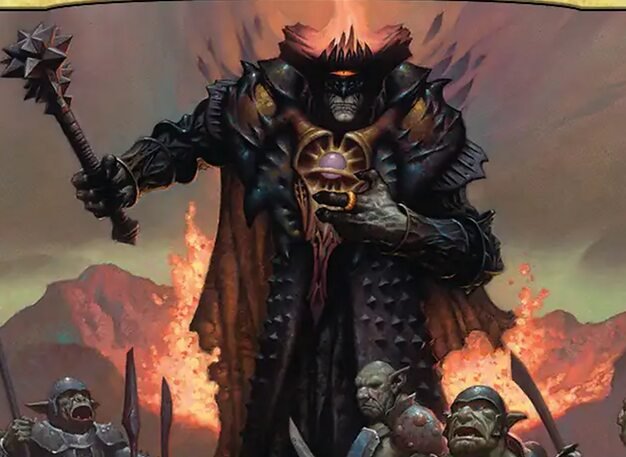
Sauron, the Dark Lord is the villain payoff Magic’s Amass mechanic has been building toward — a 7/6 Grixis mythic that turns every opponent’s spell into a growing Orc army, and every hit from that army into a card advantage engine. Unlike most legendary creatures that ask you to build a narrow synergy pile, Sauron rewards a deck you were probably already going to build: a spell-dense, removal-heavy Grixis control shell that just happens to also be assembling a threat on the side. Here’s how to actually build around him, what the deck wants to be doing turn to turn, and where to spend your budget first.
The Commander
Ward by sacrificing a legendary permanent, passive Amass off opponents’ turns, and a built-in loot engine once your Army connects. Sauron does almost everything himself.
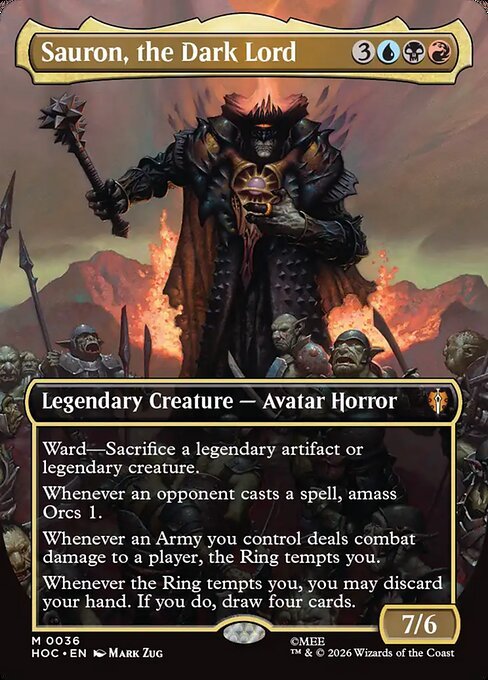
Sauron, the Dark Lord costs {3}{U}{B}{R} and comes down as a 7/6 that’s genuinely hard to remove outright — his ward cost is sacrificing a legendary artifact or creature, which most opponents simply won’t have spare, and even decks that do will think twice about it. Every time an opponent casts a spell, you amass Orcs 1, meaning your Army grows on their turns too, not just yours — a control deck that’s countering and removing things all game is building a board presence for free while doing it. Once that Army connects with a player in combat, “the Ring tempts you” triggers, letting you discard your entire hand and draw four fresh cards — a real reload button for exactly the moment your hand runs dry after a long grindy game.
The design is worth appreciating on its own terms: Sauron doesn’t care whether the spells being cast are yours or your opponents’, which means he actively wants you to sit back, hold up interaction, and let the table develop board states for you to answer. That’s a very different commander experience from an aggressive tribal deck — you’re playing a patient, reactive game, and Sauron is quietly rewarding every turn that passes.
Why Grixis Amass Works
The core insight behind this archetype is that Amass isn’t a tax you pay to build a board — it’s a bonus attached to cards a Grixis control deck already wants. Counterspells, removal, card draw, and reanimation spells are the backbone of any good Grixis list, and every one of them either triggers Sauron’s passive ability when an opponent casts something in response, or comes with its own built-in Amass trigger if you pick support cards carefully. That means you’re not sacrificing deck power to fit the theme; the Army just shows up as a side effect of playing well.
The other piece worth understanding is the Ring-tempts-you payoff. Because it triggers off combat damage from an Army specifically, this deck cares more about pushing through a single unblocked hit than it does about wide boards — removal that clears a blocker, or evasion effects that let your Army connect, are worth more here than they would be in a go-wide strategy.
Key Support Cards
Five real, EDHREC-ranked staples that plug straight into a Grixis Amass shell.
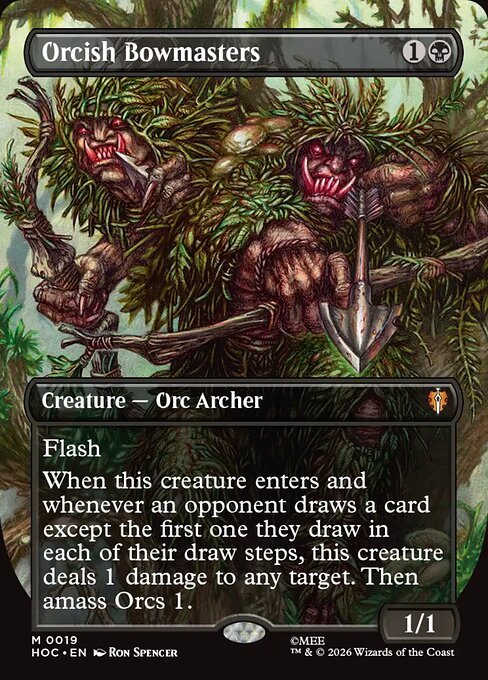
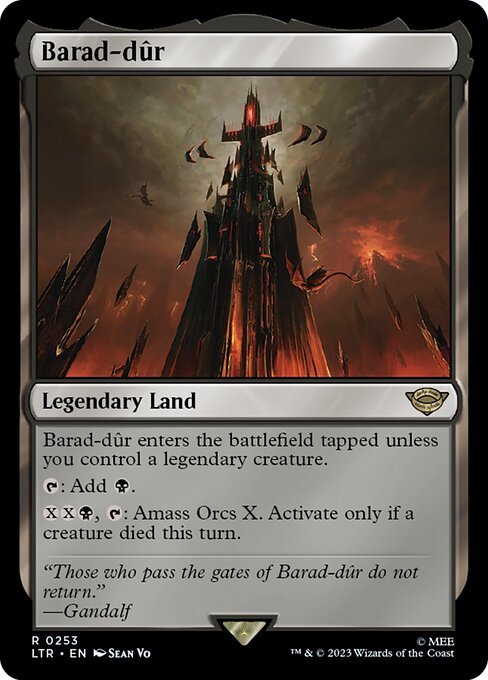
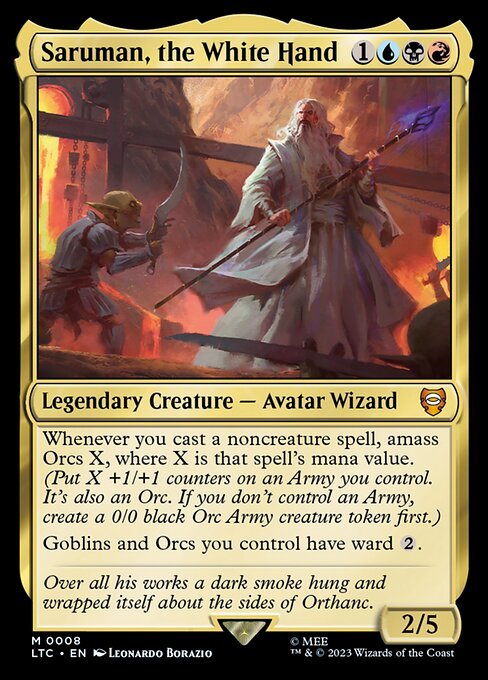
Orcish Bowmasters is one of the most efficient two-mana threats printed in years — flash, a free ping on opponents’ extra card draws, and an Amass trigger attached, all for {1}{B}. Barad-dûr is a land that taps for black and can Amass for X once a creature has died that turn, turning your removal spells and combat trades into Army growth without costing you a card slot. Saruman, the White Hand converts every noncreature spell you cast into Amass equal to its mana value, which snowballs fast in a deck full of removal and card draw, and also hands your Orcs and Goblins a ward on top.
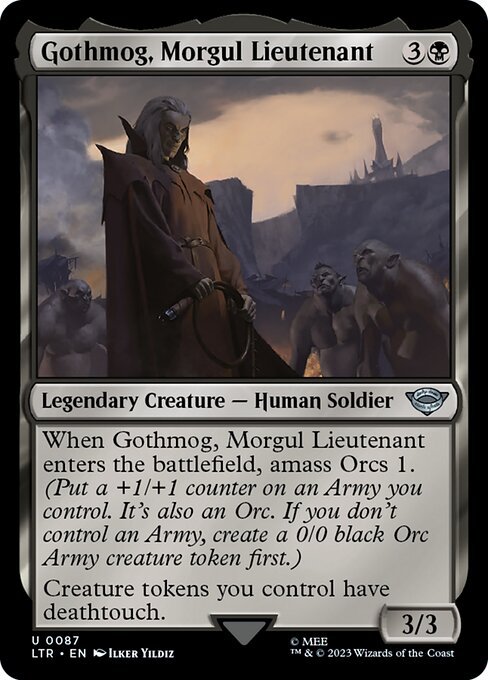
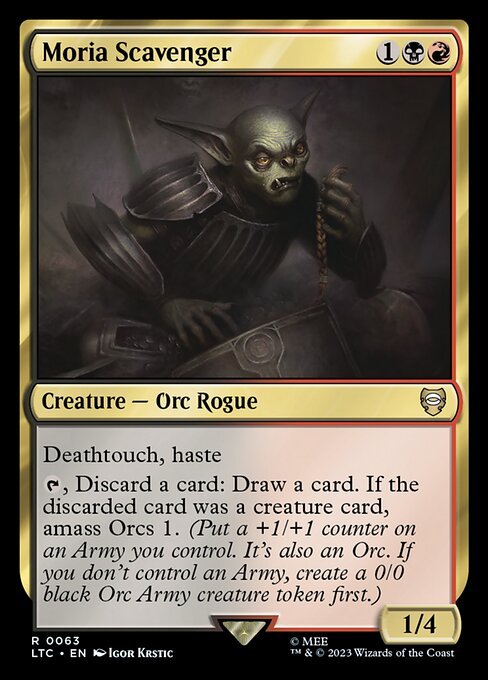
Gothmog, Morgul Lieutenant gives every creature token you control deathtouch the moment it enters — including your Army — which turns your one blocker or attacker into something every opponent has to respect. Moria Scavenger is a repeatable loot engine with deathtouch and haste of its own; discarding a creature card off its ability triggers Amass again, so it doubles as both card selection and Army growth in the same activation.
Keep Reading: Tom Bombadil Commander Deck Guide: Five-Color Sagas (MTG Hobbit) · Thranduil Commander Deck Guide: Elf Graveyard Recursion (MTG Hobbit) · Thorin Commander Deck Guide: Dwarf Equipment Tribal (MTG Hobbit)
Sample Early Turns
A typical game starts quietly: ramp or ramp-adjacent cards in the first couple turns, holding up interaction rather than developing a board. By turn three or four, Sauron himself or an early Amass piece like Orcish Bowmasters should be in play, and from there the deck is reactive — counter or remove what matters, let your Army grow off the noise, and look for a turn where your Army can connect safely rather than forcing damage through a wide board. Because the Ring-tempts payoff only needs one connection, a single well-timed removal spell to clear a blocker is often the entire plan for closing out a game once your Army has grown large enough to matter.
Keep Reading: Thorin Commander Deck Guide: Dwarf Equipment Tribal (MTG Hobbit) · Thranduil Commander Deck Guide: Elf Graveyard Recursion (MTG Hobbit)
Upgrade Priority by Budget
If you’re building this on a budget, prioritize efficient card draw and removal first — Sauron’s Amass triggers off spells you were already going to cast, so you don’t need to overload on dedicated Amass payoffs beyond Sauron himself, Barad-dûr, and Gothmog. Once the core removal-and-draw package is solid, look at ways to protect the Army token itself, since losing your one Army resets the whole engine and represents a real tempo loss. Auras and equipment that grant hexproof or indestructible are worth prioritizing over raw stat boosts for exactly that reason — a 6/6 unkillable Army that connects once is worth more than a 12/12 that dies to a single removal spell.
Final Verdict
Sauron, the Dark Lord rewards decks that already want to play a grindy, spell-dense Grixis control shell — the Amass and Ring-tempts triggers are upside on cards you’re running anyway, not a tax you pay to enable a gimmick. That makes him one of the more forgiving Hobbit-era commanders to pick up — even though he’s a reprint from Tales of Middle-earth rather than a brand-new card, this new borderless printing puts him back in the spotlight — and even for players who don’t already own a pile of Amass-specific support, “just play good Grixis cards” is a legitimate deckbuilding strategy on its own.
Where to Buy
As an Amazon Associate, NerdSnack earns from qualifying purchases.
Frequently Asked Questions
What does Sauron, the Dark Lord do as a Commander?
A 7/6 Grixis mythic that turns every opponent’s spell into a growing Orc army via Amass, and every hit from that army into a card advantage engine.
What kind of deck does Sauron want?
A spell-dense, removal-heavy Grixis control shell — unlike most legendary creatures that need a narrow synergy pile, Sauron rewards a deck you were probably already building.
Is Sauron a good Commander for control players?
Yes — he’s built around Grixis Amass, rewarding a control-style deck that plays lots of spells and removal rather than a dedicated tribal synergy build.
Add NerdSnack as a preferred source on Google
The Weekly Pull
The biggest card price moves, every Friday.
The cards that jumped or crashed in price this week, plus what’s releasing next. Sign up and get our free Black Friday 2026 price-to-beat cheat sheet. Free. Unsubscribe anytime.
Related Posts:


Talk to us
Got a card, a tip or a request? Email us.
A real person reads every message at hello@nerdsnack.com, and we usually reply within 1–2 business days.
Prefer a form? Use our contact page.
TCGPlayer has the best prices on Magic, Pokemon, Dragon Ball, and Riftbound singles — with seller ratings and buyer protection.