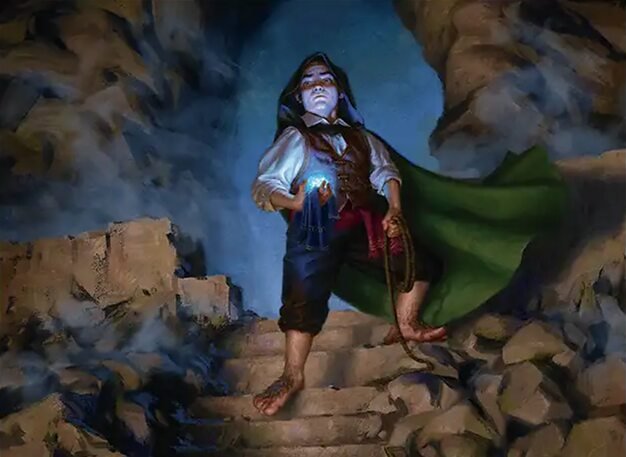
MTG: The Hobbit didn’t ship with official preconstructed Commander decks — the set’s Scene Boxes are Play Booster products, not ready-built 100-card decks. But two of the set’s legendary creatures are genuinely excellent Commander build-arounds in their own right: Bilbo, Thief in the Night and Smaug, Wicked Worm. Here’s how to build a real, functional Commander deck around each one — what they do, why they work, and the key cards that make each strategy click.
Bilbo, Thief in the Night — Mono-Blue Spellslinger Recursion
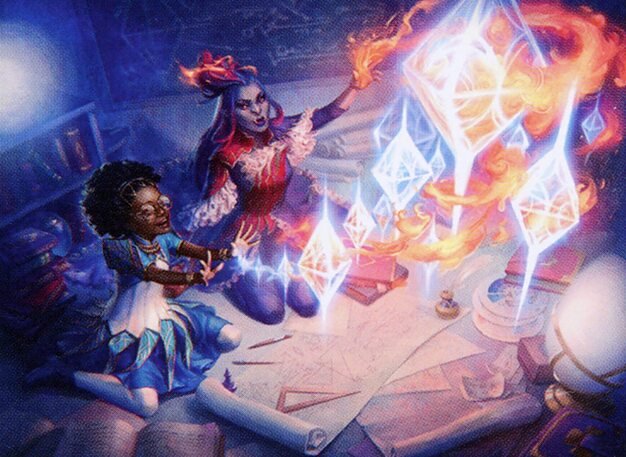
Bilbo is a two-mana Legendary Halfling Rogue: “Spells you cast from anywhere other than your hand cost {1} less to cast. Whenever Bilbo attacks, you may cast an artifact, instant, or sorcery spell from your graveyard. If an instant or sorcery spell cast this way would be put into your graveyard, exile it instead.” Translation: every time Bilbo connects, you get to replay something from your graveyard at a discount. The deck writes itself from there — fill the graveyard cheaply, attack, and recast your best spells for value.
The Strategy
Mono-blue doesn’t have a lot of natural graveyard filling, so this deck leans on cheap cantrips (draw-a-card spells) that get used once for their initial effect and then sit in the graveyard as a second copy waiting for Bilbo to attack. Recursive value creatures like Snapcaster Mage and Archaeomancer double as both spells to cast normally and targets Bilbo can flashback-cast a second time via his ability once they’re in the graveyard (as artifacts or by returning other spells). The deck wants to attack every turn — Bilbo is only a 2/2, so protecting him with counterspells and bounce effects matters more than usual.
Key Cards by Category
Ramp: Sol Ring, Arcane Signet, Mind Stone, Fellwar Stone, Thran Dynamo
Card Draw & Selection: Fact or Fiction, Mystic Confluence, Windfall, Brainstorm, Ponder, Preordain, Consider, Behold the Multiverse, Opt, Anticipate, Serum Visions, Sleight of Hand, Frantic Search
Recursion Payoffs: Snapcaster Mage, Archaeomancer, Mnemonic Wall, Muddle the Mixture, Merchant Scroll
Card Advantage & Protection: Rhystic Study, Swan Song, Counterspell, Cyclonic Rift, Repeal, Reality Shift
Win Conditions: Thassa’s Oracle, Aetherflux Reservoir
Utility Artifacts: Sensei’s Divining Top, Grim Monolith
Fill the remaining ~55 slots with a mono-blue Commander manabase (Islands plus your usual utility lands and colorless rocks) and any additional cheap blue cantrips and card-selection spells you own — this archetype wants quantity of cheap, replayable spells over any single powerful card.
Smaug, Wicked Worm — Rakdos Treasure Payoff
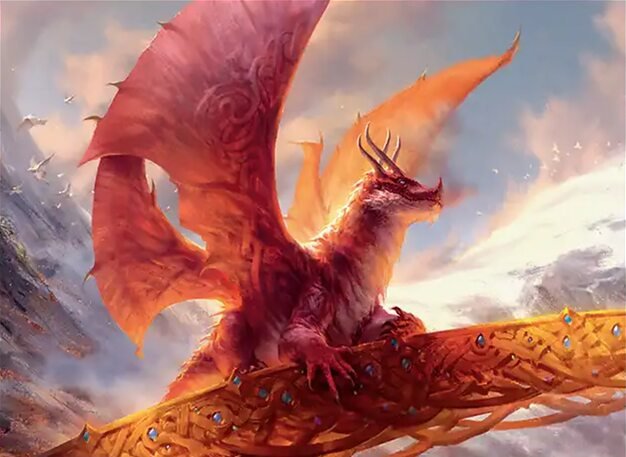
Smaug is a five-mana 5/5 flying Dragon: “When Smaug enters, create X tapped Treasure tokens, where X is the number of artifacts your opponents control. Whenever you cast a spell, if mana from a Treasure was spent to cast it, you draw a card and lose 1 life.” This is a Treasures-matter payoff wrapped around a genuinely scary flying body — every spell you cast off Treasure mana replaces itself, so the deck wants to make Treasures fast and then spend them on impactful spells rather than hoarding them.
The Strategy
Black-red already has some of the best Treasure generation in the game, so this build leans into that instead of reinventing it — Dockside Extortionist and Goldspan Dragon (a second Dragon, which matters for Dragon’s Hoard below) make a pile of Treasures on their own, and cards like Revel in Riches or Trove of Temptation keep the token count climbing every turn. Because Smaug rewards spending Treasures rather than sitting on them, the deck wants big mana sinks — X-spells like Torment of Hailfire, Comet Storm, and Crackle with Power turn a wide Treasure count directly into a kill, all while triggering Smaug’s card draw along the way.
Key Cards by Category
Treasure Generators & Synergy: Dockside Extortionist, Goldspan Dragon, Revel in Riches, Treasure Map, Reckless Fireweaver, Magda, Brazen Outlaw, Trove of Temptation, Storm-Kiln Artist
Ramp: Sol Ring, Arcane Signet, Mind Stone, Fellwar Stone
Removal: Terminate, Doom Blade, Chaos Warp, Fiery Cannonade, Blasphemous Act, Toxic Deluge
Card Draw: Painful Truths, Read the Bones, Faithless Looting, Light Up the Stage
Finishers: Torment of Hailfire, Comet Storm, Crackle with Power
Aristocrats & Utility: Zulaport Cutthroat, Bolas’s Citadel, Dragon’s Hoard
Dragon’s Hoard is a small but genuinely perfect inclusion here — it puts a counter on itself whenever a Dragon you control enters (Smaug and Goldspan Dragon both qualify), and those counters convert into card draw later. Round out the rest of the deck with black-red removal, a handful of additional Dragons if you want to lean further into the tribal angle, and a standard Rakdos Commander manabase.
Keep Reading: MTG Best LOTR Commander Cards: Building With Middle-earth · Tom Bombadil Commander Deck Guide: Five-Color Sagas (MTG Hobbit) · Sauron, the Dark Lord Commander Deck Guide: Grixis Amass (MTG Hobbit)
Which One Should You Build First?
Bilbo is the better pick if you want a lower-curve, more controlling deck that wins through incremental card advantage and grinding opponents out — it’s also the cheaper of the two to assemble, since mono-blue card selection spells are some of the most reprinted, least expensive cards in Magic. Smaug is the better pick if you want to actually attack people, close games faster, and build around a genuinely powerful two-color synergy engine (Treasures) that has a lot of room to expand as you add more copies later. Neither commander requires expensive staples to function — both lists above are built almost entirely around cards under $10.
The Hobbit Booster Box, If You Want to Pull Bilbo or Smaug Yourself
Both commanders are mythic rares from the base MTG: The Hobbit set — the Play Booster Box and Bundle below are the most direct way to chase your own copies alongside the rest of the set.
Get Into MTG: The Hobbit
Frequently Asked Questions
Is Bilbo, Thief in the Night a good Commander?
Yes — mono-blue spellslinger decks are a well-established, budget-friendly archetype, and Bilbo’s attack trigger gives the deck a built-in win condition beyond just accumulating card advantage.
Is Smaug, Wicked Worm good in Commander?
Yes, especially if you already have Rakdos (black-red) Treasure pieces — the card draw from spending Treasure mana snowballs quickly, and X-spell finishers like Torment of Hailfire scale directly with how many Treasures you’ve made.
Can Bilbo and Smaug be played together as partner commanders?
No — neither card has the Partner keyword, and their color identities (mono-blue and black-red) don’t overlap enough to combine into one deck anyway. Build them as two separate decks.
Are these expensive decks to build?
No — both lists lean on widely-reprinted staples (Sol Ring, Arcane Signet, basic card-draw spells) rather than chase rares, so either deck is realistic to assemble on a budget.



TCGPlayer has the best prices on Magic, Pokemon, Dragon Ball, and Riftbound singles — with seller ratings and buyer protection.