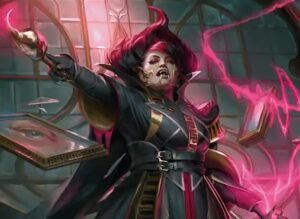
Magic: The Gathering | The Hobbit prerelease weekend starts Friday, August 7, 2026, with events running through August 13 ahead of the set’s global release on August 14. If you have never sat down for a prerelease before, or you just want to know exactly what you are walking into at your local game store this weekend, here is everything confirmed: what is in the box, how the format works, and how to build a deck that actually wins games.
When and Where Prerelease Happens
Prerelease events are scheduled by individual Wizards Play Network stores, so exact times vary by location, but the official window runs from 12 p.m. local time on Friday, August 7 through Thursday, August 13, 2026. Most stores run their main events Friday night and Saturday, with some adding a Sunday sitting for players who could not make the first two days. The set becomes legal everywhere on August 14, and it lands on MTG Arena and Magic Online on August 11 — a few days early, if you would rather test the format digitally before your in-person event.
To find a store running an event near you, search the Wizards Play Network event locator and filter by “Prerelease.” Most shops ask you to preregister since prerelease kits are limited and stores order stock based on signups.
What’s Actually in a Prerelease Pack
Every Hobbit Prerelease Pack contains the same core kit, regardless of which store you play at:
- 6 Play Boosters from The Hobbit
- 1 traditional foil promo card — a rare or mythic rare, guaranteed foil, exclusive to prerelease kits
- 1 deck box themed to the set
- 1 spindown life counter die
That is 36 total packs’ worth of cards across the 6 boosters plus your guaranteed foil, which is enough raw card pool to build a real 40-card sealed deck without needing a single card from outside the box. Unlike Draft Night kits or bundles, prerelease packs are only available at the event itself — you cannot buy the exact kit off a shelf, though the individual Play Boosters and Collector Boosters inside it are.
Cards Worth Watching For
Every Prerelease Pack ships with a guaranteed foil rare or mythic, and on top of that you’re opening six Play Boosters that can turn up any of the set’s legendary showstoppers. A few of the cards most likely to make your pod go quiet when you flip them:
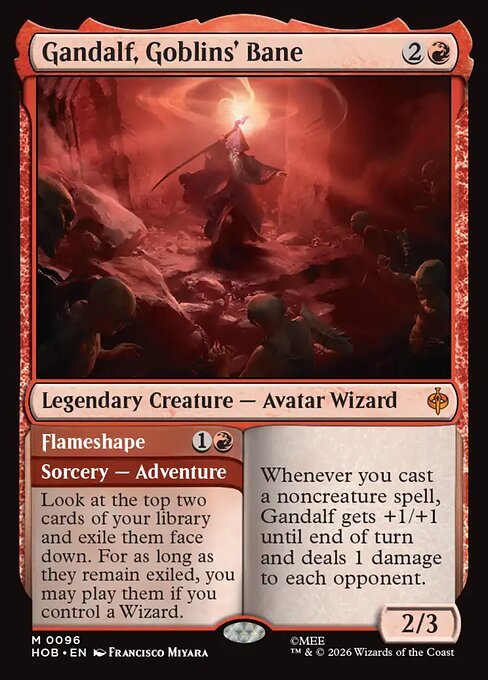
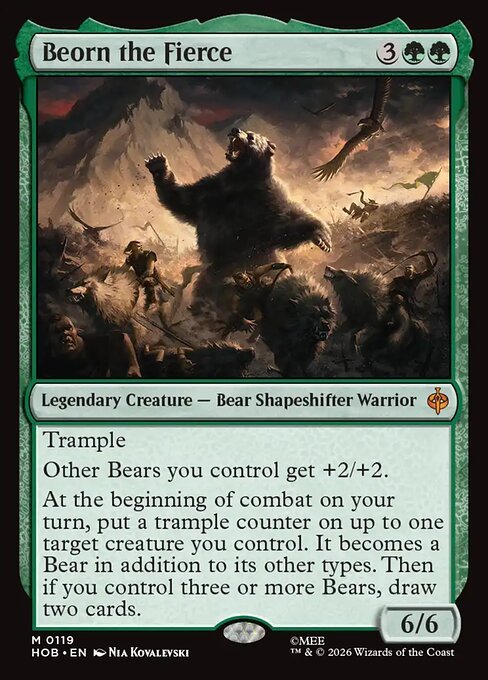
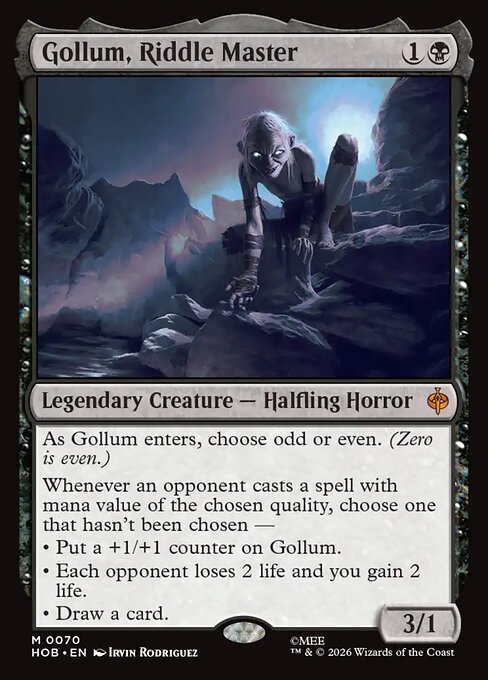
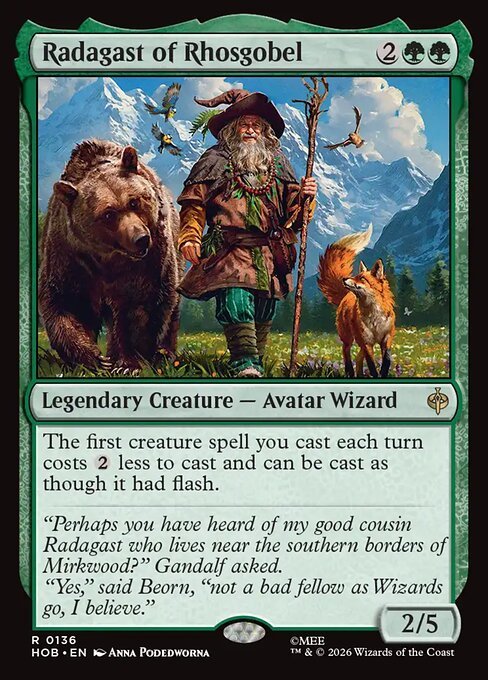
Gandalf, Goblins’ Bane and Radagast of Rhosgobel are both build-around wizards that can anchor a sealed deck on their own — Gandalf trades up against aggressive boards while Radagast’s ramp lets you cheat out your bigger green and red bombs a turn early. Beorn the Fierce is exactly the kind of oversized green threat the Ferocious archetype wants, and Gollum, Riddle Master gives black decks a cheap, disruptive body that punishes opponents for holding cards back. None of these are guaranteed pulls, but if you open one, build around it — sealed rewards leaning into your best card far more than it rewards a balanced curve with no real payoff.
How Sealed Deck Building Actually Works
Prerelease uses the Sealed format: you open your six boosters, sort everything you pulled, and build the best possible 40-card deck using only those cards plus as many basic lands as you want (basics don’t count against your card pool). You are not drafting from other players’ pools and you are not restricted to two colors — you play whatever your boosters gave you.
The standard curve target that works for the vast majority of sealed pools:
- 17 lands
- 1-2 cards at 1 mana
- 7-8 cards at 2 mana
- 5-6 cards at 3 mana
- 3-4 cards at 4 mana
- 2-3 cards at 5 mana
- 0-1 cards at 6+ mana
In practice, that means: pick your two strongest colors based on what you actually opened (not what you wish you opened), prioritize removal and evasive creatures over cute synergy pieces, and cut anything that only works if you are already ahead. Sealed rewards raw power and a clean curve far more than it rewards a cute deck idea — save the archetype synergy decks for draft.
Keep Reading: MTG The Hobbit: What to Buy · MTG Hobbit Chase Cards: Most Expensive Cards
The Five Draft Archetypes, in Brief
Prerelease is Sealed, not Draft, so archetypes matter less than raw card quality — but if you are keeping your packs for a draft night afterward, or you just want to recognize what your bombs are pointing you toward, The Hobbit runs on five two-color archetypes:
- White-Blue — card draw and Recruit tokens
- Black-Red — Goblins and Amass
- Black-Green — Ferocious, built around big creatures
- Red-White — Dwarves and the new Storied mechanic
- Green-Blue — Elves and Landfall
We broke down the signpost uncommons and best commons for every one of these archetypes in a full draft guide if you want to go deeper before your next event.
Ready to crack packs?
Great Prices
Easy Returns
Tips for First-Time Prerelease Players
A few things nobody tells you before your first prerelease: bring basic lands if you have spares, since most stores run out of the good foil ones fast. Sleeve your deck if you can — you are handling other people’s cards during trades and want to protect your promo foil. And do not be afraid to ask the store’s judge or a nearby player for a rules check; prerelease crowds skew toward newer and returning players, and everyone running the event expects questions.
Play your six rounds (or however many your store schedules), keep your pool sorted by color afterward, and hang onto anything you did not use — leftover commons and uncommons are exactly what you will want if you draft The Hobbit later with friends.
Frequently Asked Questions
Do I need to already own Magic cards to play? No. Everything you need to build and play a deck is in the Prerelease Pack itself, and most stores have loaner supplies (dice, extra basics) if you show up empty-handed.
Can I keep my cards afterward? Yes — unlike a draft where the packs are shared, a Prerelease Pack is yours to open, build with, and keep in full, win or lose.
What if I can’t make it during the official window? Some stores run “at-home” prerelease kits you can buy and open on your own schedule, and the set is fully legal for casual play the moment you crack it, even before August 14. Ask your local store what they’re offering if the weekend doesn’t work for you.
Is Prerelease beginner-friendly? It’s one of the most beginner-friendly events Magic runs. Turnout skews toward newer and returning players specifically because Sealed doesn’t punish an unfamiliar card pool the way competitive Draft does — you’re building with a fixed set of cards against other players doing the same, not reacting to picks in real time.
Final Verdict
The Hobbit prerelease is a low-stakes, high-fun way to get your hands on the set four days before anyone can buy singles off the shelf, and the sealed format is forgiving enough that a first-timer with a good curve can beat a veteran with a messy one. Six boosters, a guaranteed foil, and a weekend with your local game store — that is the whole pitch, and it delivers every time. See you at the table on August 7.
Frequently Asked Questions
When is MTG The Hobbit prerelease weekend?
Friday, August 7 through Thursday, August 13, 2026, with the set becoming legal everywhere on August 14.
What’s in a Hobbit prerelease pack?
6 Play Boosters from The Hobbit, 1 guaranteed traditional foil promo (a rare or mythic rare exclusive to prerelease kits), a themed deck box, and a spindown life counter die.
Can I buy a prerelease kit off the shelf?
No. Prerelease packs are only available at the event itself, though the individual Play Boosters and Collector Boosters inside them are sold separately elsewhere.
How do I find a Hobbit prerelease event near me?
Search the Wizards Play Network event locator and filter by “Prerelease.” Most shops ask you to preregister since kits are limited.



TCGPlayer has the best prices on Magic, Pokemon, Dragon Ball, and Riftbound singles — with seller ratings and buyer protection.