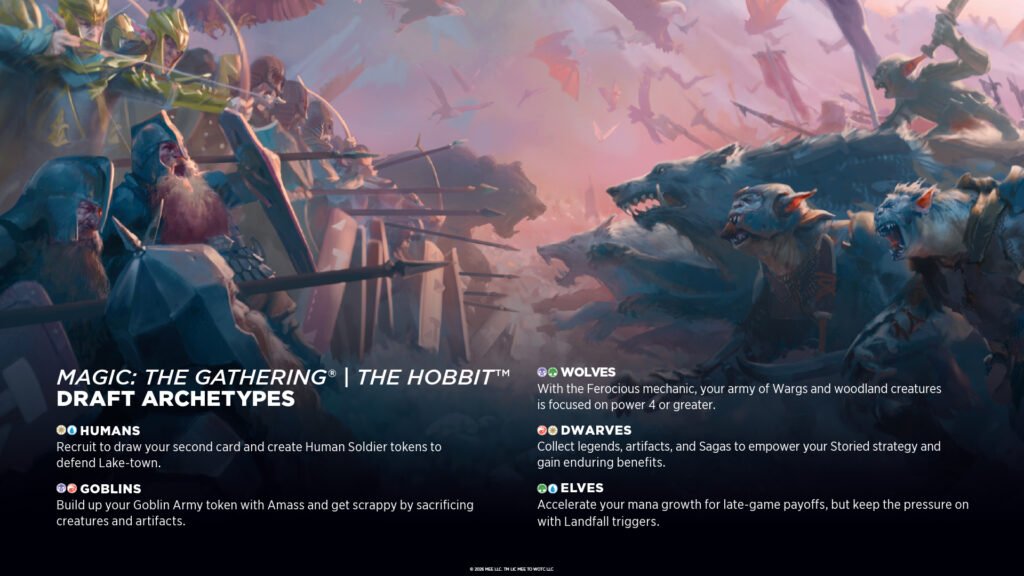
The Hobbit runs on five two-color archetypes, and knowing them before you sit down for a draft is the difference between a coherent 23-spell deck and a pile of good cards that don’t do anything together. Wizards confirmed the full wheel with the prerelease materials: White-Blue, Black-Red, Black-Green, Red-White, and Green-Blue, each with its own signpost uncommon and mechanical identity. Here is every archetype, its signpost, and the commons and uncommons worth first-picking around it.
The Five Archetypes at a Glance
White-Blue — Humans and Recruit
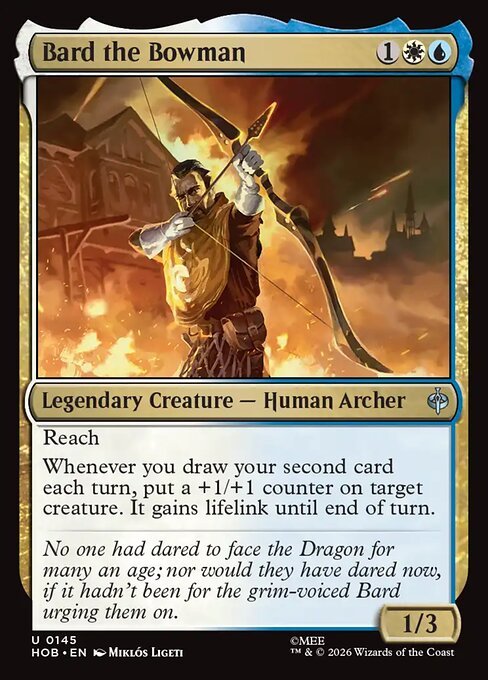
This is the “draw two cards in a turn” deck. Recruit triggers whenever you draw your second card in a turn, netting you a card, a discard, and a 1/1 Human Soldier token if the discard was a nonland. Bard the Bowman is the signpost, and it wants you stacking extra draw effects on top of your normal draw step to keep the tokens coming.
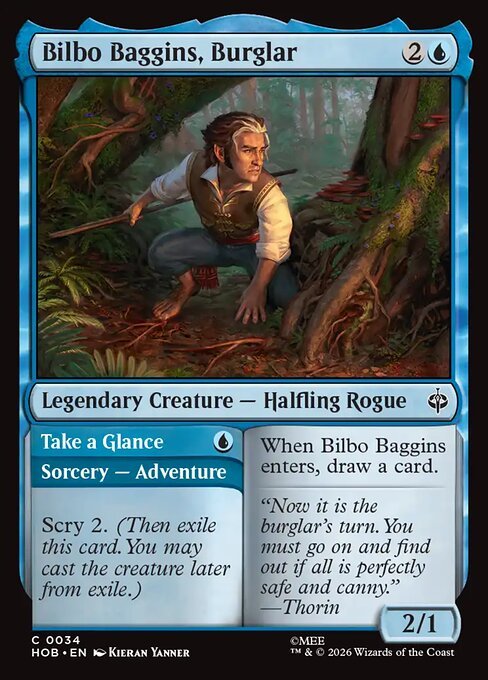
Bilbo Baggins, Burglar is blue’s best uncommon in the archetype — a 3-mana 2/1 that draws a card when it enters, with an Adventure half (Take a Glance) that provides even more selection before he ever hits the battlefield. The Queen of Dale is a cheap 2-drop payoff that rewards you the first time an opponent casts a noncreature spell each turn, which fires constantly in a format full of removal and combat tricks. Prioritize any card that says “draw a card” on a body with a relevant stat line, and this deck builds itself.
Black-Red — Goblins and Amass
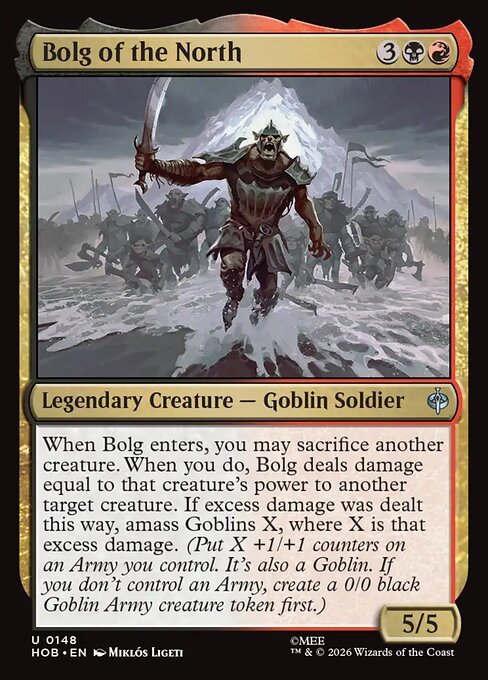
Amass returns from The Lord of the Rings, this time building a Goblin Army token instead of an Orc one. Bolg of the North is the signpost uncommon, doubling as removal and an Amass enabler that grows your army every time it connects.
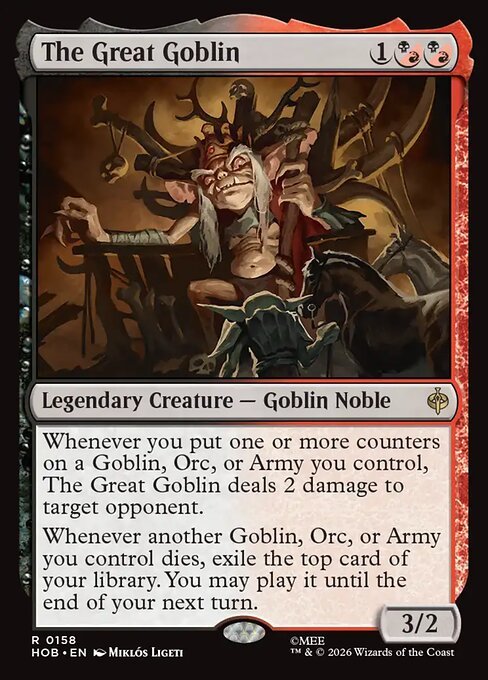
The Great Goblin is the best build-around in the archetype: it pings your opponent whenever a Goblin you control gets a +1/+1 counter, and it exiles cards off the top of your library to cast when your creatures die, turning your Army tokens into a genuine damage clock. This is the most aggressive of the five archetypes — take removal highly, curve out, and let the Army token do the rest of the work.
Black-Green — Ferocious Wolves
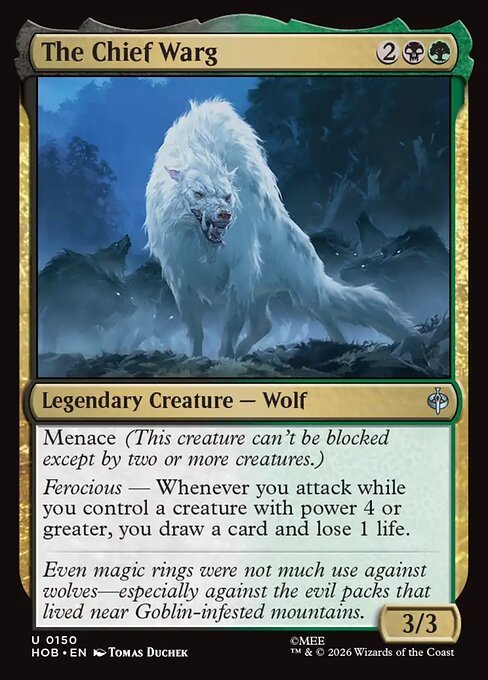
Ferocious checks whether you control a creature with power 4 or greater, and The Chief Warg is the signpost that rewards you for clearing that bar. This archetype plays the biggest creatures in the format and turns them into a value engine rather than just big dumb bodies — Ferocious triggers tend to be removal, card advantage, or both. Prioritize anything with power 4+ on curve over smaller creatures, even if the smaller card looks individually stronger, since hitting your Ferocious threshold consistently is what makes the whole deck function.
Keep Reading: MTG The Hobbit Prerelease Guide · Thorin Commander Deck Guide
Red-White — Dwarves and Storied
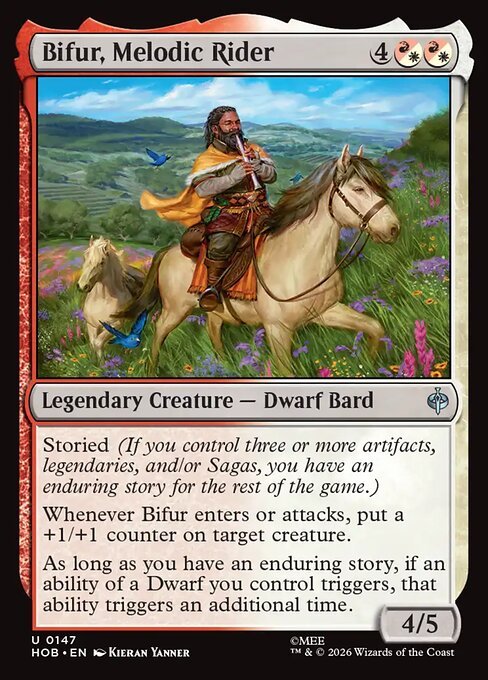
Storied is this set’s answer to Ascend — it checks whether you control three or more artifacts, legendaries, and/or Sagas, then rewards you when you do. Dwarves lean legendary-heavy by design, so this archetype trips its own payoff more often than you’d expect. Bifur, Melodic Rider and Thorin Oakenshield share signpost duties here, which tells you how legendary-dense this archetype wants to be — if you are already building around Thorin as a Commander, the Storied synergy in limited draft is the same core idea scaled down.
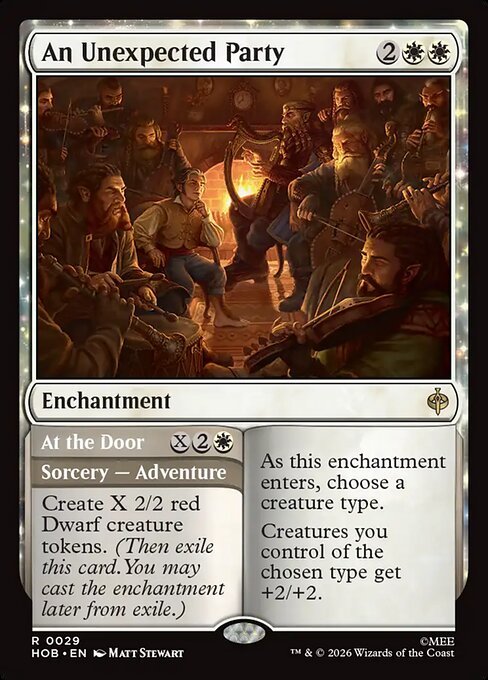
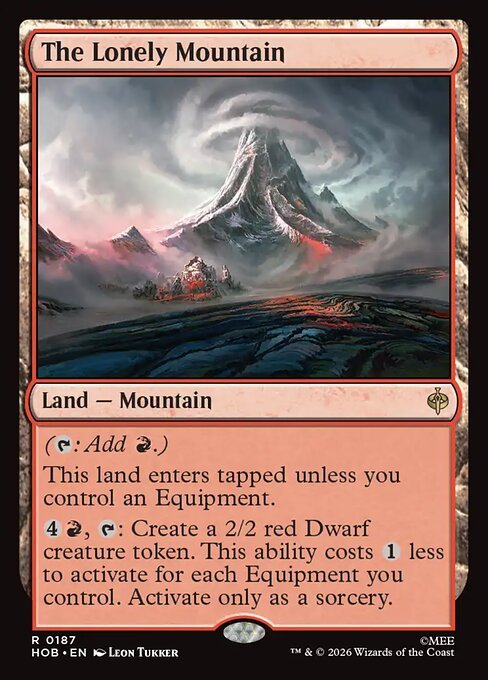
An Unexpected Party is a strong pickup in this lane — a 4-mana enchantment with an Adventure half that tutors for any legendary creature, which both fixes your draws and ticks up your Storied count on its own. The Lonely Mountain is a colorless land that supports the deck’s legendary-matters plan without costing you a card slot.
Green-Blue — Elves and Landfall
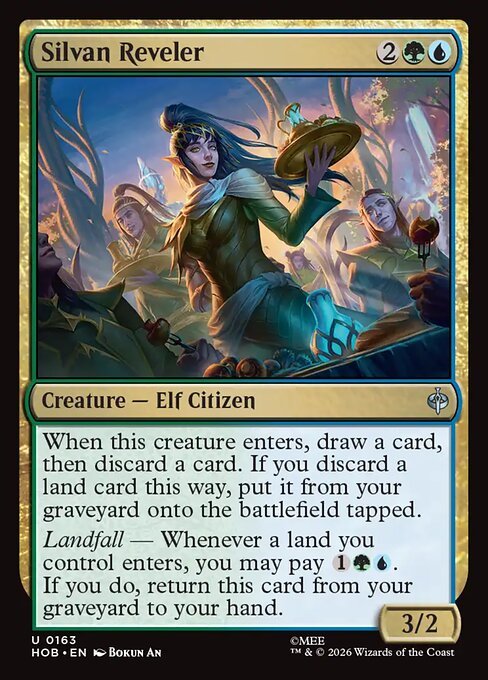
Landfall triggers whenever a land enters the battlefield under your control, and Silvan Reveler is the signpost payoff — a citizen that gets bigger and better the more you ramp. This archetype wants extra land drops and land-fetch effects far more than it wants raw card quality, since every additional land is functionally a free spell.
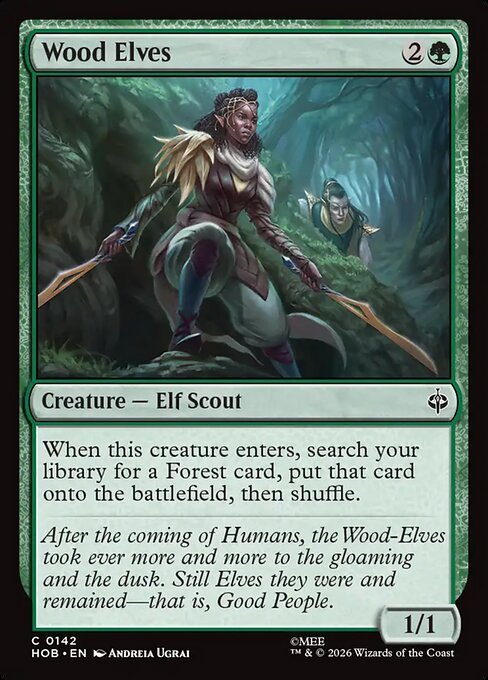
Wood Elves is the archetype’s backbone common — a 3-mana 2/2 that fetches a basic Forest onto the battlefield, triggering Landfall immediately and smoothing your draws for the rest of the game. Take every land-fetch effect you see here over generically “good” cards; the archetype’s power level lives entirely in how many Landfall triggers you can chain together, not in any single bomb.
Signal Reading and Pack 1 Priorities
The first three or four picks of your draft should almost always go to the strongest card in the pack, regardless of color — Ferocious bombs, efficient removal, and anything that reads “draw a card” on a reasonable body are all safe first picks that don’t commit you to a lane yet. Somewhere around pick five or six, start paying attention to what’s still open. If you’re seeing multiple signpost uncommons for the same archetype wheel late in a pack, that’s a strong signal the players ahead of you aren’t in that lane, and it’s usually correct to pivot toward it even if it means abandoning an early pick or two.
Removal is at a premium in every archetype here, which makes it the safest category to prioritize highly regardless of what lane you end up in. Ferocious and Storied decks in particular want removal that also advances their own game plan — a removal spell attached to a legendary creature or a 4-power body does double duty in a way generic removal doesn’t.
Building Your Draft Deck
Once you know your lane, stay in it. The Hobbit’s five archetypes are tightly built around their mechanics — a Ferocious deck without big creatures or a Landfall deck without extra land drops just plays as a worse two-color pile with none of the payoff. First-pick the best card in your first few packs regardless of color, then commit to whichever two colors are open by pack two. Signpost uncommons are a strong late-pack-one signal that a lane is open, since most tables only support two or three archetypes at once before they start fighting each other for cards.
Ready to draft The Hobbit yourself?
Great Prices
Easy Returns
Final Verdict
The Hobbit’s five archetypes are some of the most mechanically distinct in recent memory — Ferocious, Storied, and Landfall all reward genuinely different deckbuilding instincts, which makes staying open through your first five or six picks more valuable than usual. Read your signpost uncommons, respect what’s open at your table, and you will walk away from draft night with a deck that actually plays like it was built on purpose.
Frequently Asked Questions
How many draft archetypes does MTG The Hobbit have?
Five two-color archetypes: White-Blue, Black-Red, Black-Green, Red-White, and Green-Blue, each with its own signpost uncommon.
What is the White-Blue archetype in The Hobbit draft?
A “draw two cards in a turn” deck built around Humans and the Recruit mechanic, signposted by Bard the Bowman.
Who are the signpost uncommons for each color pair?
Bard the Bowman (White-Blue), Bolg of the North (Black-Red), The Chief Warg (Black-Green), Bifur, Melodic Rider (Red-White), and Silvan Reveler (Green-Blue).
How do I know which archetype to draft?
Follow the signpost uncommons and their supporting commons — each archetype has its own mechanical identity, so first-picking around a signpost early is the most reliable way into a coherent 23-spell deck.

TCGPlayer has the best prices on Magic, Pokemon, Dragon Ball, and Riftbound singles — with seller ratings and buyer protection.